

Buying a period property: the checklist to use before you buy


Quick answer
Before buying a period property, get a Level 3 building survey, check the roof, gutters and walls for water problems, look for cracks and movement, check whether it is listed or in a conservation area, ask about the age of the wiring, plumbing and heating, and look for original features you would want to keep [1][3][4]. Budget for repairs before you agree a price.
Period houses are some of the most loved homes in Britain, and also some of the most misunderstood. A sagging roof line or a bit of damp might be a minor fix or a five-figure problem. This checklist covers what to look for at a viewing, which survey to commission, the legal questions to ask, and how to spot the original features that add value.
Which survey should you get?
| RICS survey | What it covers | Best for |
|---|---|---|
| Level 1 (Condition report) | Basic condition ratings, no advice on repairs [1] | Newer, conventional homes in good condition |
| Level 2 (HomeBuyer survey) | Condition plus advice on defects and repairs [1] | Conventional homes in reasonable condition |
| Level 3 (Building survey) | Detailed inspection of construction and condition, with repair advice [1][2] | Older, larger, altered or unusual homes, including most period houses |
RICS's own guidance recommends the most detailed survey for older or altered properties [1]. Ask whether the surveyor has experience of traditional buildings; someone used to modern houses may recommend inappropriate modern fixes for damp [5].
At the viewing: the outside
- Roof: a wavy or sagging ridge, slipped or missing slates, moss and leaning chimneys.
- Gutters and downpipes: green staining on walls usually means a leak.
- Walls: cracks wider than a coin, stepped cracks in brickwork, bulging walls and cement render or pointing on old brick or stone [4].
- Ground levels: soil, paths or patios higher than the inside floor can push water into walls [5].
- Windows: original sashes are a selling point; rotten or poorly fitted replacements are a cost.
At the viewing: the inside
- Damp: a musty smell, peeling paint at the base of walls, tide marks and mould in corners.
- Floors: springy boards and sloping floors.
- Electrics: old fuse boxes, round-pin sockets or rubber cable mean rewiring.
- Heating: age of the boiler and radiators; ask for service records.
- Ceilings: cracks and bulges in lath and plaster ceilings, especially around ceiling roses.
Legal questions to ask
- Is it listed? If so, what has been altered, and was consent obtained? Owners can be liable for unauthorised past works [3].
- Is it in a conservation area or covered by an Article 4 direction?
- Has any work been done without building regulations approval?
- Is it freehold or leasehold?
- Are there shared walls, chimneys, drains or rights of way?
- GOV.UK's buying guide covers the legal steps from offer to completion [6].
Features worth paying for
Original features are part of what you are paying for. Victorian and Edwardian builders used standard catalogue mouldings, tiles and fireplaces, so their presence (or absence) tells you how much a house has been altered [7].
| Feature | Why it matters |
|---|---|
| Cornices and ceiling roses | Signs of an unaltered interior; damaged ones can usually be repaired. |
| Sash windows | Repairable, and valued by buyers. |
| Fireplaces | Even blocked ones can often be reopened. |
| Encaustic tiles | Hall floors are expensive to replace. |
| Panelled doors | Often removed or covered with hardboard in the 1960s. |
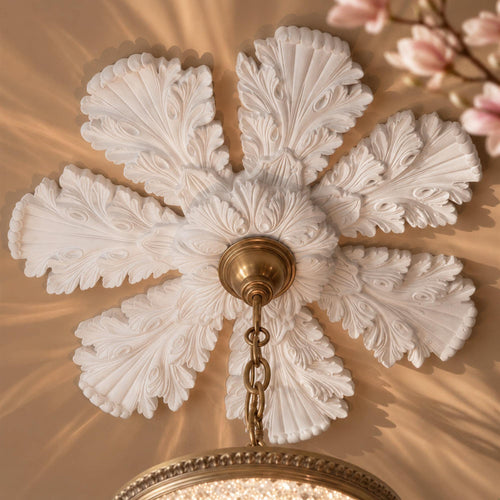
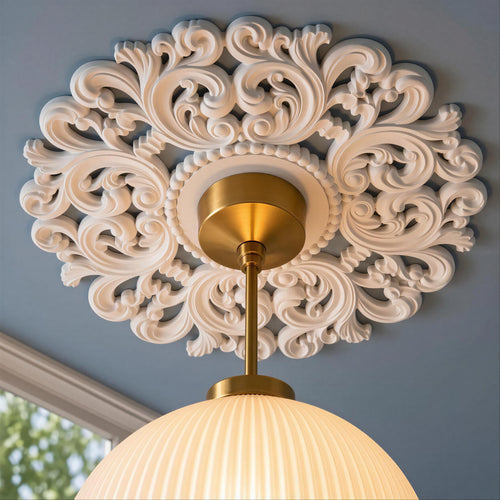
 Victorian-style rose to replace a lost original
 Georgian-style overdoor
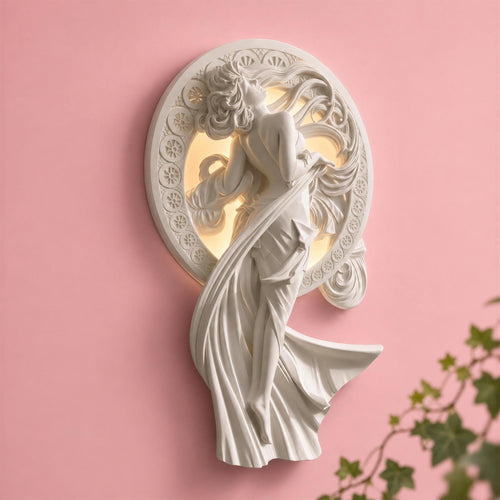
 Victorian shell wall light
 Period-style switch surround
A chartered surveyor explains the pros and cons of buying a Victorian house [8].
Video: Woodward Surveyors, “The benefits and drawbacks of buying a Victorian property”, via YouTube.
Good to know
Common questions
What survey do I need for a period property?
A Level 3 building survey, ideally from a surveyor experienced with traditional buildings.
What should I check when buying an old house?
Roof, gutters, walls and cracks, damp, ground levels, electrics, heating, windows, listing status and original features.
Is damp in an old house a deal breaker?
Not always. It is often caused by gutters, ground levels or modern coatings and can be fixed by removing the cause.
Can I make changes to a listed house?
Only with listed building consent for works that affect its character.
Sources
References and further reading
Harvard style. Web pages were checked on the access date shown.
- RICS (n.d.) Helping you choose the right survey. Available at: www.ricsfirms.com/residential/moving-home/buying/helping-... (Accessed: 14 November 2026).
- RICS (n.d.) Home surveys. Available at: www.rics.org/profession-standards/rics-standards-and-guid... (Accessed: 14 November 2026).
- Homebuilding & Renovating (n.d.) 9 things I wish I'd known before buying a listed building. Available at: homebuilding.co.uk/advice/9-things-i-wish-id-known-before... (Accessed: 14 November 2026).
- Society for the Protection of Ancient Buildings (n.d.) Breathability and old buildings. Available at: www.spab.org.uk/node/484 (Accessed: 14 November 2026).
- Society for the Protection of Ancient Buildings (n.d.) Control of dampness [Technical advice note]. Available at: www.spab.org.uk/sites/default/files/SPAB%20Technical%20ad... (Accessed: 14 November 2026).
- GOV.UK (n.d.) Buying a home. Available at: www.gov.uk/buying-a-home (Accessed: 14 November 2026).
- Muthesius, S. (1982) The English terraced house. New Haven and London: Yale University Press.
- Woodward Surveyors (n.d.) The benefits and drawbacks of buying a Victorian property [Video]. YouTube. Available at: www.youtube.com/watch?v=Ls7wnyMox8s (Accessed: 14 November 2026).
How to cite this article
van Locke, J. (2026) ‘Buying a period property: the checklist to use before you buy’, The Flare Journal. Flare Studio UK. Available at: https://flarestudio.uk/blogs/journal/buying-a-period-property-checklist (Accessed: 15 November 2026).
Shop the style




Conversation
Join the conversation
Questions about the history, a room you are planning, or a piece you have seen in the wild? Leave a comment and Joseph will reply.