

Dining room ideas: lighting, colour and layout for the evening


Quick answer
The best dining rooms are designed for the evening: hang a pendant or chandelier on a dimmer centred over the table (about 75cm above it), add wall lights and candles for low, warm light, choose a deep or warm wall colour, a table with at least 60cm of width per person, and one large piece of art [1][3]. Period details such as a cornice and ceiling rose frame the table beautifully.
Dining rooms are used mostly after dark, and that changes the rules. A colour that seems heavy at midday becomes rich and intimate by candlelight; a light that is fine in a kitchen is far too bright over a dinner table. These ideas work for formal dining rooms, kitchen-diners and small dining corners.
Lighting: dim, warm and centred
Centre the main light over the table, not the room, and put it on a dimmer. Lighting guidance generally recommends lower, warmer light for dining than for working [1]. A pendant usually hangs about 75cm above the tabletop; wall lights and candles do the rest. See our dining room lighting guide and ceiling rose size for a chandelier.
Colour: go deeper than you think
Georgian and Victorian dining rooms were often painted in strong reds, greens and deep colours that glowed by candlelight [3][4]. Deep colours still work best in dining rooms because you are there in the evening. If you are nervous, colour the lower half below a dado rail.
Space and proportion
| Measurement | Guide |
|---|---|
| Width per diner | About 60cm |
| Clearance behind chairs | At least 90cm to walk past |
| Pendant above table | About 75cm |
| Rug | Big enough that chairs stay on it when pulled out (table + about 60cm each side) |
Good proportion is easier to feel than to describe, but these rules of thumb come from the same ideas of human scale that architects have used for centuries [5].
Ideas for kitchen-diners and small spaces
- Use a pendant to define the dining zone in an open-plan room; see zoning an open-plan room.
- A round table seats more people in a small space.
- A banquette along a wall saves space and adds softness.
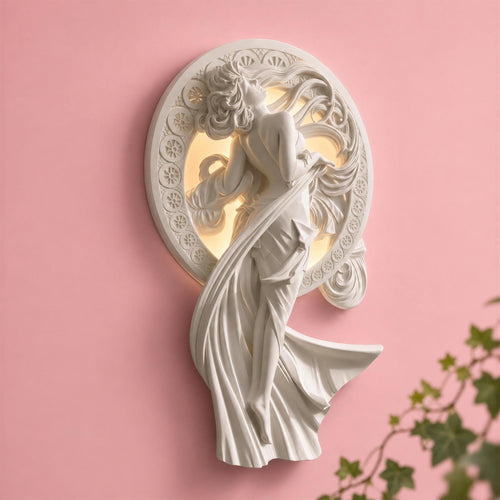
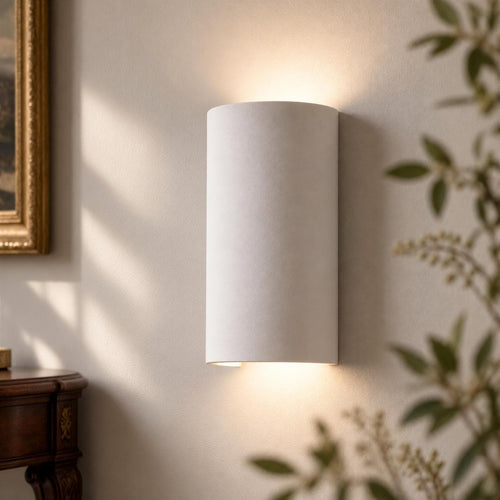
- Wall lights frame a dining corner without needing a ceiling point.
Ideas by style
| Style | Ingredients |
|---|---|
| Georgian | Symmetry, a central rose, candle-style wall lights, a strong colour. |
| Victorian | Deep red or green, a big rose and chandelier, dark wood. |
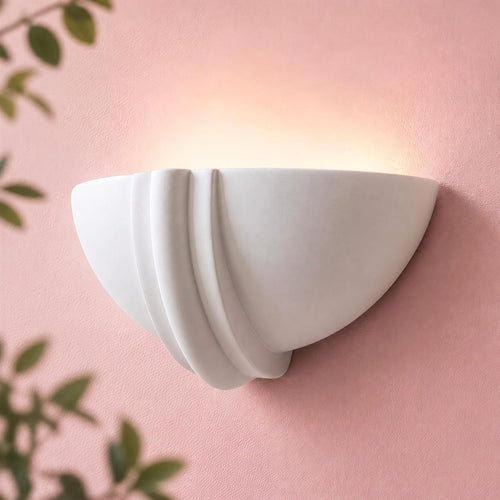
| Art Deco | Stepped wall lights, lacquer, mirror and geometric rug. |
| Modern | Sculptural pendant, plaster walls, curved chairs. |
| Cottage | Scrubbed table, mismatched chairs, dresser and lamps. |
Designers expect softer, more sociable rooms and collected furniture in 2027, which suits dining rooms built up over time [2].


An architect's view of common dining room mistakes [6].
Video: baixu, “6 Dining Room Design Mistakes + How To Fix Them!”, via YouTube.
Size the light to the table, then the rose to the light
Height is only half of it. Lighting retailers commonly suggest a chandelier about half to three-quarters the width of the table, so it lights the whole surface without crowding the people at each end.[7] On a 90 cm wide table that means a fitting of roughly 45 to 68 cm across. Then choose the ceiling rose to suit the fitting: a rose a little wider than the canopy looks deliberate, and a larger one turns the whole arrangement into the room's centrepiece. Centre both on the table, not on the room, if the table is off-centre.

Good to know
Common questions
How high should a light be above a dining table?
About 75cm above the tabletop, centred over the table.
What colour should a dining room be?
Deep, warm colours work beautifully because dining rooms are used mainly in the evening.
What size rug for a dining room?
Large enough for chairs to stay on it when pulled out: the table plus about 60cm each side.
Should a dining room have a ceiling rose?
A rose centred over the table frames the pendant or chandelier and adds period character.
Sources
References and further reading
Harvard style. Web pages were checked on the access date shown.
- Society of Light and Lighting (2018) SLL Lighting Handbook. London: CIBSE.
- Richardson, E. (2026) The 10 biggest interior design trends of 2027 for a more considered, authentic home. Homes & Gardens, 2 October. Available at: www.homesandgardens.com/decor/interior-design-trends-2027 (Accessed: 14 November 2026).
- Calloway, S. and Cromley, E. (eds) (1996) The elements of style: a practical encyclopedia of interior architectural details from 1485 to the present. Rev. edn. London: Mitchell Beazley.
- Cornforth, J. (2004) Early Georgian interiors. New Haven and London: Yale University Press.
- Ching, F.D.K. (2014) Architecture: form, space, and order. 4th edn. Hoboken, NJ: Wiley.
- baixu (n.d.) 6 dining room design mistakes and how to fix them [Video]. YouTube. Available at: www.youtube.com/watch?v=sNgvDN5dVVM (Accessed: 14 November 2026).
- Mod Lighting (n.d.) How to choose a dining room chandelier. Available at: mod-lighting.com/blogs/read/how-to-choose-a-dining-room-c... (Accessed: 16 November 2026).
How to cite this article
van Locke, J. (2026) ‘Dining room ideas: lighting, colour and layout for the evening’, The Flare Journal. Flare Studio UK. Available at: https://flarestudio.uk/blogs/journal/dining-room-ideas (Accessed: 16 November 2026).
Shop the style


Conversation
Join the conversation
Questions about the history, a room you are planning, or a piece you have seen in the wild? Leave a comment and Joseph will reply.