

Bedroom wall lights: placement, height and power options

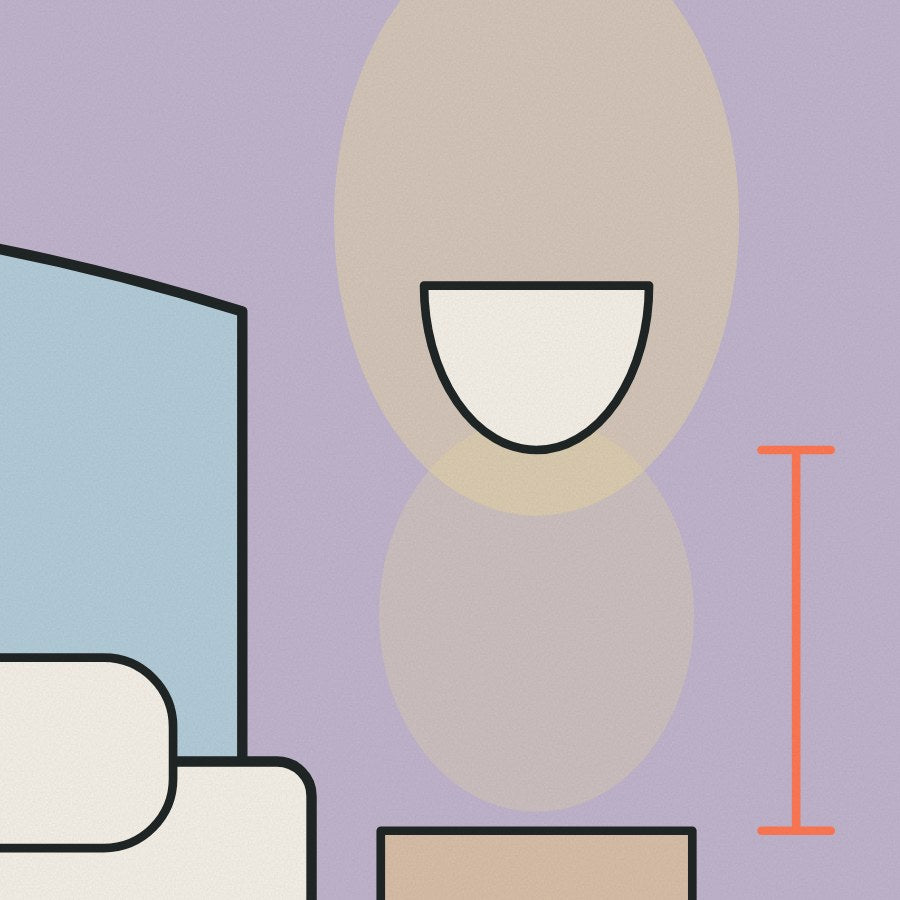
For bedside wall lights, a good starting point is to set the fitting so it sits roughly 50 to 60 centimetres above the top of the mattress, and about 20 to 30 centimetres out from the side of the headboard. That puts the light near shoulder height when you sit up to read, so it falls on the page rather than in your eyes. Fix the height with the bed in place, not on an empty wall.
Wall lights suit bedrooms better than almost any other room. They free up bedside tables, give a soft glow at the end of the day, and replace the harsh overhead light that nobody wants at bedtime. The trick is deciding what each light is for.
Measure from the bed, not the floor
Beds vary hugely in height. A low platform bed and a tall divan with a deep mattress can differ by 30 centimetres or more, so a measurement from the floor means little. Instead:
- Sit up in bed. Lean against the headboard as you would to read and have someone mark your shoulder height on the wall.
- Check the side clearance. The light should sit beyond the headboard so you will not knock it with a pillow or your head.
- Match both sides. Set left and right at the same height even if one of you reads more. Symmetry matters in a bedroom.
- Allow for the table. If you keep a bedside table, the bottom of the fitting should clear a lamp, books and a glass of water.
Reading light or mood light?
These are two different jobs, and one fitting rarely does both perfectly.
Reading light needs to be directed and close. A light that throws its glow downward or forward onto the page, placed at the height described above, lets one person read without waking the other.
Mood light is the soft, indirect glow for winding down. Uplighters are ideal here: they wash the wall above the bed and bounce light off the ceiling. A plaster uplighter either side of the bed, painted to match the wall, gives a calm frame to the headboard. If you love reading in bed, pair the uplighters with a small directional lamp or clip-on light for the page.
Light the wall behind the bed, not the pillow, and the whole room softens.
Warm, dim and gentle
Bedrooms want the warmest light in the house. Choose bulbs of 2700K or lower; 2200K gives a candle-like glow that suits the last half hour before sleep. Fit dimmers where you can, and check that both bulb and dimmer are rated for LEDs to avoid flicker. Plan switches so you can turn the lights off from the bed: nothing undoes a calm scheme like getting up in the dark to find the switch by the door.
Other places that work well for bedroom wall lights:
- Either side of a dressing table mirror, at roughly face height, for even light without shadows.
- Above a chest of drawers, as a pair or a single accent.
- Beside a reading chair in the corner, if you have the space.
Battery or hardwired?
Our wall lights come in three versions: shade only, battery LED with a remote, or UK mains hardwired. Each suits a different situation.
- Battery LED with remote. No cables, no chasing walls, no electrician. Ideal for rented homes, for testing a position before committing, or for walls where wiring would be awkward. The remote means you can switch them from bed.
- UK mains hardwired. The tidy, permanent choice. No batteries to change, and the lights can be wired to wall switches, dimmers or two-way switching by the door and the bed.
- Shade only. For when you already have a suitable fitting on the wall and want to change its look.
Hardwired lights must be installed by a qualified electrician. In England and Wales, notifiable electrical work falls under Part P of the Building Regulations, and a registered electrician can sign it off. If you are redecorating, book them before the painter: chasing cables into a wall after it has been finished is a waste of good paint.
Paint them in
All our wall lights are hand-cast in Shrewsbury from natural plaster and made to order. They arrive unpainted, so you can brush them with the same emulsion as the wall for a quiet, built-in look, or choose a soft contrast. In a bedroom, matching the wall almost always looks best. The shape of the light and the shadows it throws do the talking.
Next steps
Mark your heights with masking tape and live with them for a day or two before anything goes on the wall. Then browse our wall lights and read the fitting instructions. For wall colours that look good under warm bedside light, see our guide to heritage colour palettes.
Good to know
Common questions
How high should bedside wall lights be?
A good starting point is roughly 50 to 60 centimetres above the top of the mattress and 20 to 30 centimetres out from the headboard, so the light sits near shoulder height when you sit up to read. Measure with the bed in place and mark the position with tape first.
Can I have bedroom wall lights without wiring?
Yes. Battery LED wall lights need no cables, chasing or electrician, which suits rented homes and awkward walls, and a remote lets you switch them from bed. Hardwired lights are the permanent alternative but must be installed by a qualified electrician, under Part P in England and Wales where notifiable.
What bulb is best for a bedroom?
Choose warm white bulbs of 2700K or lower; 2200K gives a candle-like glow for winding down. Fit dimmers where possible and make sure both bulb and dimmer are rated for LEDs to avoid flicker. Plan switching so the lights can be turned off from the bed.
Sources
References and further reading
Harvard style. Web pages were checked on the access date shown.
- Innes, M. (2012) Lighting for Interior Design. London: Laurence King.
- Energy Saving Trust (n.d.) Energy saving light bulbs and lighting. Available at: energysavingtrust.org.uk/advice/lighting/ (Accessed: 8 October 2026).
- Electrical Safety First (n.d.) Part P of the building regulations - Explained. Available at: www.electricalsafetyfirst.org.uk/find-a-registered-electr... (Accessed: 8 October 2026).
- Ministry of Housing, Communities and Local Government (2013) Electrical safety: Approved Document P. Available at: www.gov.uk/government/publications/electrical-safety-appr... (Accessed: 8 October 2026).
How to cite this article
Meredith, S. (2026) ‘Bedroom wall lights: placement, height and power options’, The Flare Journal. Flare Studio UK. Available at: https://flarestudio.uk/blogs/journal/bedroom-wall-lights-guide (Accessed: 12 October 2026).
Shop the style






