

Victorian wall lights: what suits a terrace and what looks wrong


Quick answer
Victorian wall lights suit a terrace when they are generous, warm and ornamental: shells, fluted fans, leaves and scrolls, glowing upwards like the gas brackets they replaced. Choose a matched pair either side of a chimney breast or mirror, keep bulbs very warm, and avoid stark modern shapes that fight the cornice and ceiling rose.
Victorian homes were lit by candles, oil and, increasingly, gas, and electricity reached only a handful of houses before the end of the century [1][4]. That history explains why Victorian-style wall lights look the way they do: they echo the gas brackets fixed to walls, with flames pointing upwards and ornament around them. This guide explains what suits a Victorian terrace, and what looks wrong.
How were Victorian homes lit?
Gas spread from factories and streets into houses, and Victorians made ornate gasoliers and wall brackets, often with glass shades [2]. It was not a clean light. Country Life notes that impure gas smelled, blackened walls and ceilings and tarnished metal, and that poor joints caused fires and explosions [2]. The ceiling rose was partly a practical answer to this, a decorative centre around the gasolier; our history of the Victorian ceiling rose explains more.
Electric light arrived at the very top of society first. Cragside in Northumberland, William Armstrong's house, had carbon-arc lamps in its Gallery in 1878 and Joseph Swan's incandescent bulbs in its Library in 1880 [3]. Public supply began in 1888 [4], but even in 1919 only around 6% of homes were wired [5], and gas remained the most popular form of lighting until the National Grid arrived in the 1930s [2]. Our history of light switches tells the story of the first switches.
To see how Victorian households actually lit their rooms, from candles to gas, this short film from Glanmore, a restored Victorian house museum, is a good start [8].
Video: Glanmore National Historic Site of Canada, “Glanmore presents- Victorian lighting”, via YouTube.
What makes a wall light look Victorian?
Victorian ornament is generous and layered. Shells, fluted fans, acanthus and other leaves, rosettes and scrolls all appear on cornices, ceiling roses and fireplaces of the period, so a wall light that uses the same vocabulary sits naturally beside them [1]. Our guide to the acanthus leaf and the scallop shell in design trace those motifs.

- 1Light pours from the open top, washing warm light up the wall.
- 2Curled leaf tips along the rim, a Victorian love of foliage.
- 3A small rosette at the centre, a classic Victorian motif.
- 4Fluted ribs fan out like a shell.
- 5Scrolls at the base: the C-curves Victorians borrowed from earlier styles.
What looks wrong in a Victorian room?
| Mistake | Why it fails |
|---|---|
| Stark chrome and spotlights | They light the floor, not the walls, and fight the ornament of the cornice and rose. |
| Tiny fittings | Victorian rooms are tall; a small light disappears. Go generous in scale. |
| Cool white bulbs | Victorian light was warm. Cool bulbs make plaster and paint look grey [6]. |
| Mismatched pairs | Victorian rooms are symmetrical; matching lights either side of a fireplace look right. |
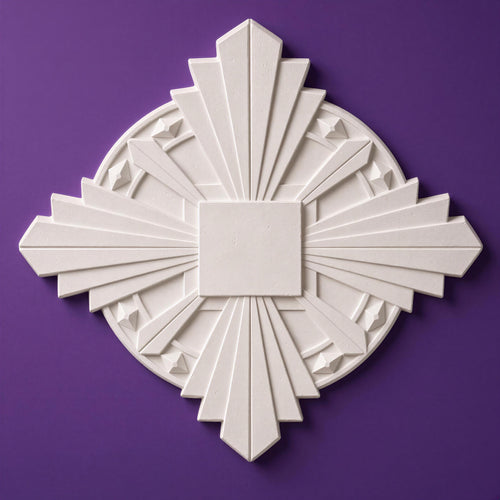
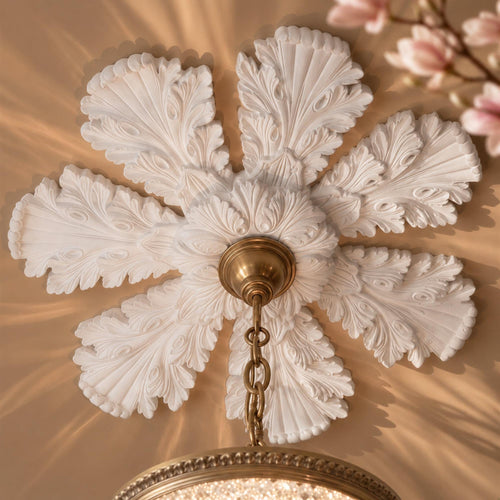
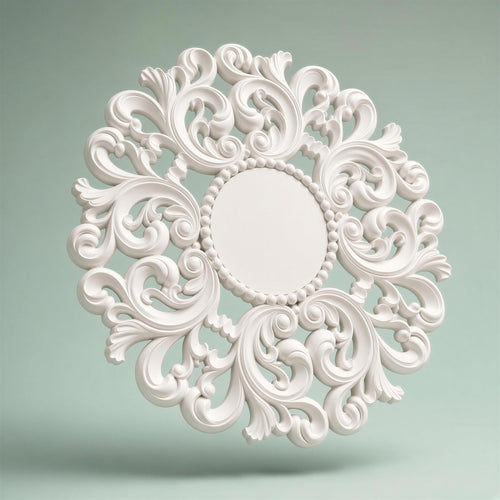
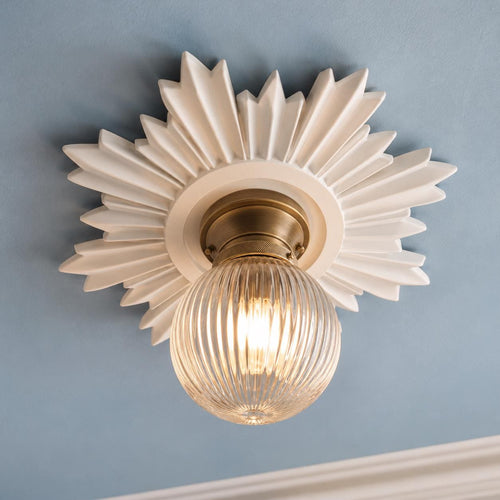
These pieces from our studio suit Victorian rooms. Every wall light is hand-cast in Shrewsbury and comes as shade only, battery LED with a remote, or UK mains hardwired.


Where should wall lights go in a Victorian terrace?
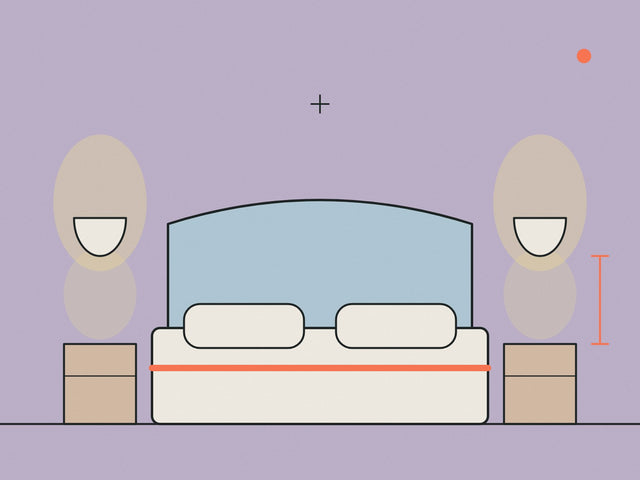
Start with the chimney breast. In the front room of most terraces it is the focal point, and a pair of wall lights either side of it, at the same height, frames the fireplace the way a pair of gas brackets once did. In the hall, a single light near the stairs or a pair along a long wall breaks up the length; our guide to lighting a hallway with wall lights has the details. In the bedroom, lights either side of the bed free up the bedside tables.
For height, most people start at about 1.6 to 1.8 metres to the centre of the fitting; tall Victorian rooms can take a little more. See wall light height and spacing. If the house is listed, check before changing fixed features; how to find out if your house is listed explains the steps.
What bulb and wiring do you need?
Choose very warm white bulbs, around 2700K, which the Energy Saving Trust describes as suiting living rooms and bedrooms [6]. For hardwired lights, notifiable electrical work in England and Wales falls under Part P of the Building Regulations, so use a registered electrician [7]. Old Victorian walls often hide uneven plaster and old cables, so a battery version is a useful way to test a position first; battery wall lights that look hardwired shows how.
A new reign
Queen Victoria comes to the throne; homes are lit by candles, oil lamps and, increasingly, gas [1].
Gas at home
Gas brackets and gasoliers spread, but impure gas blackens ceilings and tarnishes metal [2].
Cragside
William Armstrong lights the Gallery at Cragside with carbon-arc lamps powered by water [3].
| Term | What it means |
|---|---|
| Gasolier | A branched ceiling fitting for gas lights [2]. |
| Gas bracket | A wall-mounted gas light, the ancestor of the wall light [2]. |
| Ceiling rose | The decorative plaster centre around a ceiling light. |
| Fluting | Parallel grooves, as on a classical column. |
| Acanthus | A spiky leaf used in ornament since ancient Greece. |
Good to know
Common questions
What wall lights suit a Victorian house?
Generous, ornamental shapes such as shells, fluted fans and leaves, ideally in matching pairs and with very warm white bulbs.
Did Victorian houses have electric lights?
Very few. A handful of wealthy homes such as Cragside had electric light from about 1880, public supply began in 1888, and only about 6% of homes were wired by 1919.
Where should wall lights go in a Victorian front room?
Either side of the chimney breast, at the same height, framing the fireplace as pairs of gas brackets once did.
Why do Victorian houses have ceiling roses?
They framed the gasolier or pendant at the centre of the ceiling and became a decorative focal point.
Sources
References and further reading
Harvard style. Web pages were checked on the access date shown.
- Flanders, J. (2003) The Victorian House: Domestic Life from Childbirth to Deathbed. London: HarperCollins.
- Country Life (2011) Gas lighting in Victorian times. 23 August. Available at: www.countrylife.co.uk/property/guides-advice/gas-lighting... (Accessed: 10 November 2026).
- National Trust (n.d.) History of Cragside. Available at: www.nationaltrust.org.uk/visit/north-east/cragside/histor... (Accessed: 7 November 2026).
- IET (n.d.) Domestic electricity. Available at: savoyplace.theiet.org/100-ideas-gallery/100-ideas/domesti... (Accessed: 12 October 2026).
- Science Museum Group (n.d.) Ceiling rose, c. 1922. Available at: collection.sciencemuseumgroup.org.uk/objects/co8419519/ce... (Accessed: 12 October 2026).
- Energy Saving Trust (n.d.) Energy saving light bulbs and lighting. Available at: energysavingtrust.org.uk/advice/lighting/ (Accessed: 8 October 2026).
- Ministry of Housing, Communities and Local Government (2013) Electrical safety: Approved Document P. Available at: www.gov.uk/government/publications/electrical-safety-appr... (Accessed: 8 October 2026).
- Glanmore National Historic Site of Canada (n.d.) Glanmore presents- Victorian lighting [Video]. YouTube. Available at: www.youtube.com/watch?v=gtrlMFpkAYM (Accessed: 10 November 2026).
How to cite this article
van Locke, J. (2026) ‘Victorian wall lights: what suits a terrace and what looks wrong’, The Flare Journal. Flare Studio UK. Available at: https://flarestudio.uk/blogs/journal/victorian-wall-lights-guide (Accessed: 12 November 2026).
Shop the style


Conversation
Join the conversation
Questions about the history, a room you are planning, or a piece you have seen in the wild? Leave a comment and Joseph will reply.