

Lighting for older eyes: brighter, more even, less glare


Quick answer
Older eyes generally need more light, more even light and less glare. Use several shaded wall lights rather than one bright ceiling bulb, keep light levels similar from room to room, light stairs and the route to the bathroom at night, fit dimmers and easy-to-find switches, and add a strong reading light where detail matters. If sight changes, see an optometrist.
As we get older, most of us find we need more light to read, and are more bothered by glare from bright bulbs. Professional guidance such as the SLL Lighting Handbook covers how vision changes with age [3]. Thomas Pocklington Trust, a UK sight loss charity, found that the homes of people with sight loss commonly had low levels of lighting, uneven lighting, shadows and dark areas [2]. Good lighting is one of the simplest ways to make a home safer and more comfortable. This guide is about lighting, not medical advice: if your sight is changing, see an optometrist.
Why do wall lights help older eyes?
Wall lights spread light around a room instead of from one point in the middle. Shaded and uplit fittings hide the bulb, which cuts glare, and several lights at once fill in the dark corners where trips happen. The UK sight loss charities behind the Sight Advice FAQ note that good lighting can increase contrast and clarity, but also that some eye conditions cause uncomfortable glare, so simply making every light brighter is not always the answer [1].
How do you make lighting even?
Use several sources in each room, and aim for similar brightness from room to room. The Sight Advice FAQ explains that adjusting from a bright room to a dark one can take several minutes, so consistent, even and controllable lighting helps [1]. Wall lights in halls and on landings stop them becoming dark tunnels between bright rooms; see lighting hallways and stairs.
- 1Low, dim wall lights along the route to the bathroom: enough to see, not enough to wake you fully.
- 2A switch by the bedroom door, at an easy height, with good contrast.
- 3A light just inside the bathroom door, so you never step into the dark.
- 4A clear, uncluttered floor along the route.
- 5Sensor or remote-controlled lights mean no hunting for switches.
How should stairs and landings be lit?
- Light the whole flight evenly, top and bottom, so no step is in shadow.
- Consider sensor lights that come on as you climb, as the sight loss charities suggest [1].
- Fit switches at both the top and the bottom.
- Mark step edges with contrasting tape or paint if they are hard to see.
What about switches and controls?
Fit dimmer switches so brightness can be adjusted [1], choose switches that contrast with the wall, and put them by every door at a comfortable height. Battery wall lights with a remote mean you can switch lights on from your chair or bed; see battery wall lights that look hardwired.
Which wall lights work best?
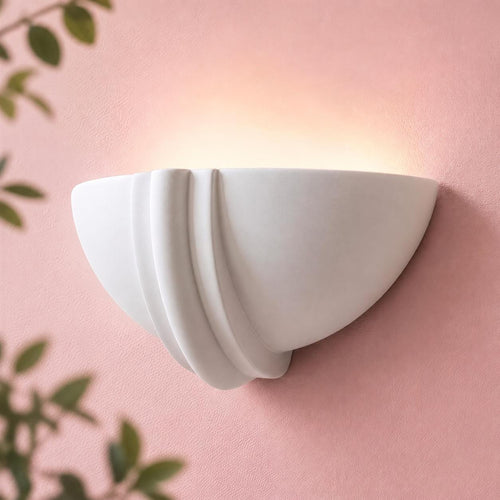
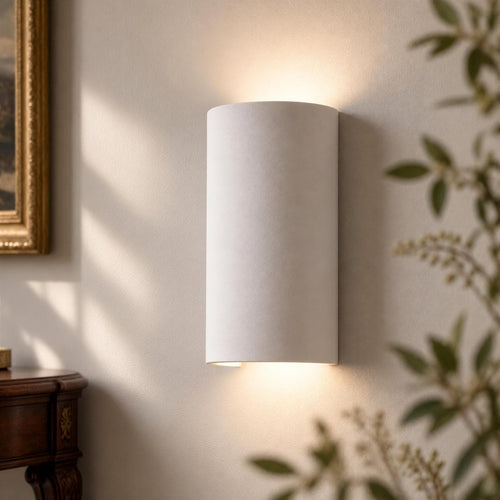
Ones that hide the bulb completely, and spread light softly over the wall and ceiling. Plaster uplighters are ideal, because the bright source is out of sight.
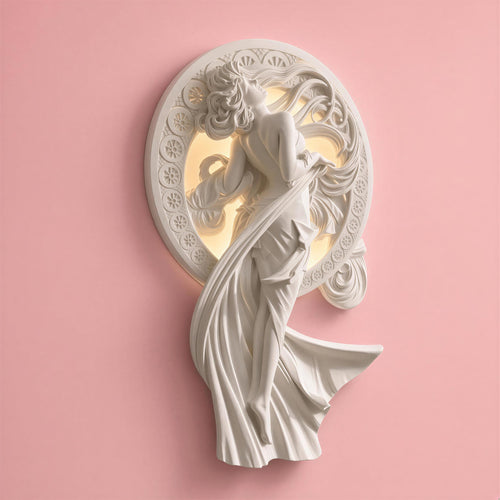
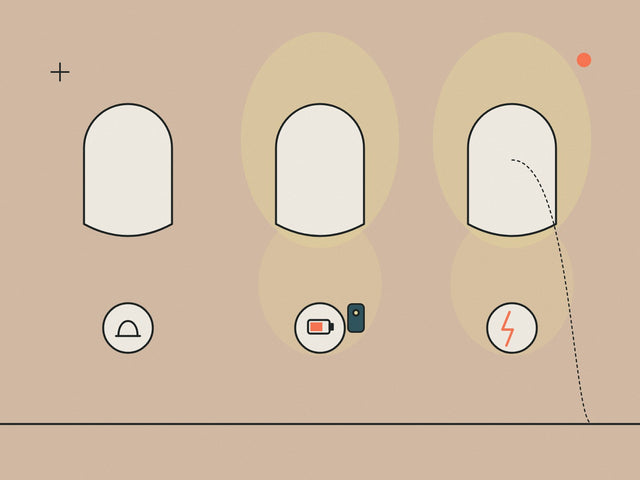
These shaded designs from our Shrewsbury studio hide the bulb to reduce glare. Each comes as shade only, battery LED with a remote, or UK mains hardwired.


The Macular Society, a UK charity for people with macular disease, explains why good lighting matters so much for people living with sight loss [6].
Video: Macular Society, “The importance of good lighting”, via YouTube.
Which bulbs should I choose?
Choose by lumens, the measure of brightness, as the Energy Saving Trust explains [4]; you may want brighter bulbs than you used to. Warm white suits living rooms and bedrooms, while some people find a slightly cooler white easier for reading and close work. New hardwired lights should be fitted by a registered electrician under Part P [5]. See lumens and colour temperature for each room.
Even
Keep light levels consistent between rooms; adjusting from bright to dark can take minutes [1].
Task
Add a strong, shaded reading light beside the chair.
Route
Low lights from bedroom to bathroom.
| Term | What it means |
|---|---|
| Glare | Discomfort or reduced vision from a bright light in view [1]. |
| Contrast | The difference between light and dark, which helps edges stand out [1]. |
| Lumens | A measure of how much light a bulb gives [4]. |
| Dimmer | A control that adjusts brightness [1]. |
| Sensor light | A light that switches on when it detects movement. |
Good to know
Common questions
What is the best lighting for older eyes?
Several shaded lights giving even light with little glare, plus a strong reading light where you need detail.
Do older people need brighter light?
Generally yes, but evenly spread and without glare. Making a single bulb brighter can make glare worse.
How should stairs be lit for older people?
Evenly, top and bottom, with switches at both ends; sensor lights that come on as you climb can help.
Are wall lights good for people with sight loss?
Shaded wall lights help by spreading light evenly and hiding the bright bulb.
Sources
References and further reading
Harvard style. Web pages were checked on the access date shown.
- Sight Advice FAQ (n.d.) How can improving the lighting in my home help with sight loss, and do you have any tips? RNIB, Guide Dogs, Thomas Pocklington Trust et al. Available at: www.sightadvicefaq.org.uk/independent-living/homes-housin... (Accessed: 10 November 2026).
- Thomas Pocklington Trust (n.d.) Lighting in and around the home: a guide to better lighting for people with sight loss. Available at: www.pocklington-trust.org.uk/project/lighting-around-home... (Accessed: 10 November 2026).
- Society of Light and Lighting (2018) SLL Lighting Handbook. London: CIBSE.
- Energy Saving Trust (n.d.) Energy saving light bulbs and lighting. Available at: energysavingtrust.org.uk/advice/lighting/ (Accessed: 8 October 2026).
- Ministry of Housing, Communities and Local Government (2013) Electrical safety: Approved Document P. Available at: www.gov.uk/government/publications/electrical-safety-appr... (Accessed: 8 October 2026).
- Macular Society (n.d.) The importance of good lighting [Video]. YouTube. Available at: www.youtube.com/watch?v=iNTqqm-nx3I (Accessed: 10 November 2026).
How to cite this article
van Locke, J. (2026) ‘Lighting for older eyes: brighter, more even, less glare’, The Flare Journal. Flare Studio UK. Available at: https://flarestudio.uk/blogs/journal/lighting-for-older-eyes (Accessed: 12 November 2026).
Shop the style



Conversation
Join the conversation
Questions about the history, a room you are planning, or a piece you have seen in the wild? Leave a comment and Joseph will reply.