

How Much Does It Cost to Fit a Ceiling Rose in the UK?

Typical prices
Tradespeople answering on the UK quote-comparison site MyJobQuote (answers from 2022 to 2024) most often said around £50 to £100 to fit a ceiling rose, with most of the rest running from under £50 to about £120 and one decorator giving a wider £75 to £250 range, depending on the size of the rose, the ceiling surface and travel distance.[1] Those are informal answers from a comparison site, not firm quotes, and prices will have moved since, so treat them as a sense of scale and get two or three written quotes.
Two things are worth knowing straight away. First, the figure is for fitting, not for the rose: the piece itself is priced separately (see how much a plaster ceiling rose costs). Second, fitting a rose is a small job, so the price is often shaped as much by the call-out and access as by the work itself.
One caution on the source: the MyJobQuote page does not say which kind of rose the question meant. It sits in the plasterer category and several answers talk about roses being stuck up, so it most likely means a decorative one, but nobody states it. Treat the figures as a guide to scale.
What changes the cost
| Factor | Effect on the price |
|---|---|
| Size and weight of the rose | Larger pieces need more fixing and two people to hold them while the adhesive grips |
| Ceiling height | In general trade practice, ceilings much above standard height need a tower or scaffolding, which adds time and equipment |
| Ceiling condition | Cracked, flaking or damp-stained plaster must be repaired first; a rose will not stay up on a failing surface |
| Electrical work | Moving, removing or replacing a light fitting needs a qualified electrician, priced separately |
| Painting | Decorating is usually extra, and a rose looks best painted with the ceiling |
| Number of roses | Several in one visit usually cost less each than separate trips, but ask |
| Location and travel | Call-out and minimum charges vary a lot between areas and trades |
If the job touches wiring at all, the cost splits in two: the person who fits the rose (plasterer, decorator or builder) and the electrician who handles the light. Many people hire both on the same day.
Worked examples
These sums multiply the MyJobQuote "most often" range of £50 to £100 per rose. They show scale only: a real quote may be lower for several roses in one visit, and it excludes painting, access equipment and any electrical work.
- One rose in a living room: about £50 to £100.
- Two roses (living room and hall): about £100 to £200.
- Three roses (a downstairs refresh): about £150 to £300.
Compare that with doing it yourself: the cost is the adhesive, filler, caulk and paint, plus the afternoon. Many people fit a decorative rose themselves; see how to fit a plaster ceiling rose.
Who fits a ceiling rose
Almost any competent tradesperson can: a plasterer, a decorator, a joiner or a general builder or handyperson. A plasterer is the most natural choice if the ceiling also needs repair. A decorator is the most natural if you want it painted in the same visit. An electrician is needed only for the light.
| Trade | Good for | Not for |
|---|---|---|
| Plasterer | Fitting, filling, repairing the ceiling | Wiring |
| Decorator | Fitting and painting in one visit | Structural or electrical work |
| Handyperson or builder | Straightforward small jobs | Anything needing a certificate |
| Qualified electrician | Light fittings, wiring, anything live | Decorating |
Electrics: what to leave to a professional
A decorative rose is not an electrical fitting. It sits on the ceiling and the light fitting passes through or hangs below it. Anything involving the cable, the ceiling rose connector block, a junction box or a new light should be done by a qualified electrician. In England, Approved Document P to the Building Regulations covers electrical safety in homes and explains when work must be notified to building control;[2] the 2013 edition treats installing a new circuit, replacing a consumer unit and any addition or alteration to existing circuits in a special location (a room with a bath or shower, or a swimming pool or sauna room) as notifiable, while replacements, repairs and maintenance elsewhere are not notifiable but should still follow the wiring standard BS 7671.[2] Your electrician will know which applies to your job. The document is for use in England; rules differ in Wales, Scotland and Northern Ireland. On choosing one, NICEIC (itself a certification body) points out that the electrical trade has no official regulator and that anybody can call themselves an electrician, so ask for proof of registration with a certification scheme.[3]
For a rose that must sit around an existing fitting, check the centre opening in the product listing before you order. For fire safety, keep a rose clear of recessed downlights and smoke alarms. Local Authority Building Control advises fitting a ceiling smoke alarm as centrally as possible in the room and about 300 mm from walls and light fittings,[4] and a manufacturer's technical article warns that cutting a ceiling for a downlight creates a fire hazard and that heat must be able to dissipate at a safe distance from nearby materials;[5] a rose over either would defeat the point. For more, see ceiling roses, smoke alarms and downlights. If you want to hang something heavy from it, read how much weight a ceiling rose can hold.
Fitting it yourself
A DIYer can fit most decorative roses. The job is marking the centre, dry fitting, applying adhesive, holding the piece while it grips, caulking the edge and painting. The step cards below summarise it; always follow the fitting and painting guides for the specific adhesive and any screws your piece needs.
Work out first whether DIY suits you. The decision card below is a quick filter.
Getting a good quote
Ask for a written, itemised quote and check the following before saying yes.
- Does it include access equipment and making good?
- Is the painting included or not?
- Are you supplying the rose or are they? If you are, who is responsible if it is damaged during fitting?
- Is an electrician needed, and is that in this price or separate?
- Is there a call-out or minimum charge?
- When can they start and how long will it take?
Know which you are being given. Citizens Advice explains that a quote is a promise to do the work at an agreed price, which a trader generally cannot raise afterwards, whereas an estimate is only the trader's best guess and the final bill can be disputed if it is much higher.[6] So ask for a quote, not an estimate, and keep it in writing.
If you are renting, ask your landlord before drilling or fixing anything to the ceiling.
What happens on the day
A straightforward fitting is a short visit. Most of the elapsed time is waiting: for the adhesive to grip, for the caulk to skin over and for paint to dry. In practice it runs like this.
- Check the ceiling. The fitter taps and looks for loose or hollow plaster, damp stains and cracks. Anything unsound is dealt with before the rose goes up.
- Isolate and protect. If a light fitting is involved, the electrician isolates the circuit first. Floors and furniture are covered.
- Mark and dry fit. The centre is marked and the rose is held up to check position and level before any adhesive is used.
- Fix. Adhesive (and screws where the fitting instructions call for them) goes on, the rose is pressed up and held or propped until it grips.
- Make good. The edge is caulked and any nicks filled. The caulk and filler are left to dry.
- Paint. If painting is included, rose and ceiling are painted together, usually in two coats.
If you are paying by the hour, ask for an estimate of how long each stage will take. If you are paying a fixed price, ask what is excluded.
Mistakes that cost more later
- Fitting onto a weak ceiling. A rose on crumbling plaster comes off, and the repair then costs more than the fitting.
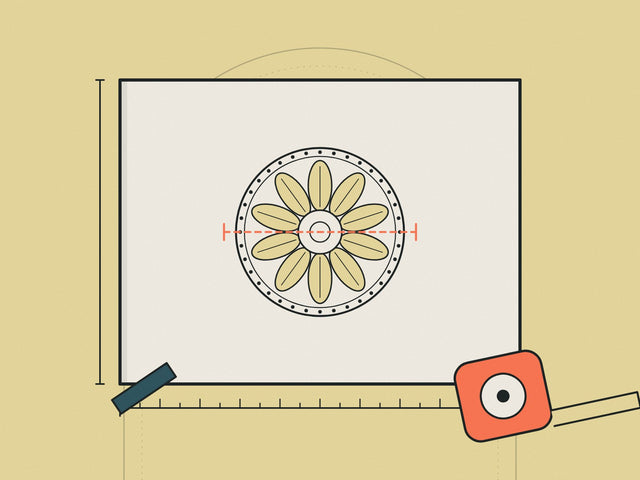
- Ordering the wrong size. Too big a rose in a small room looks heavy and too small gets lost. Use a paper template first; see how to choose ceiling rose size.
- Covering something that must stay accessible. Never cover a junction box, downlight or smoke alarm. See what a rose can and cannot cover.
- Hanging a heavy fitting without checking. Weight must be carried by the structure above, not by the plaster alone.
- Paying for a rose you will paint later and then not painting it. Decide who paints before the visit.
If you are weighing whether a rose is worth the money at all, our guide to whether ceiling roses add value to a home covers it.
Ways to keep the cost down
- Fit the rose before decorating the room, so rose and ceiling are painted together.
- Choose a smaller rose: it is lighter, easier to fit and often safer for the ceiling. See which ceiling rose for your home.
- Bundle jobs: have the electrician and fitter work on the same day.
- Paint it yourself. See how to paint a plaster ceiling rose.
- If you only want to hide a mark or small patch, see ceiling roses and patches.
Reading the answers: what the figures do and do not tell you
The MyJobQuote page[1] collects ten tradesperson answers to one question, dated between 30 May 2022 and 20 November 2024, from firms in places including Tyne and Wear, Essex, Cambridgeshire, Kent, the West Midlands, West Sussex, Merseyside and West Yorkshire. Reading them shows how loose the evidence is, which is worth knowing before you budget.
- Most answers cluster at £50 to £100. Two say about £100, one says £50 to £100, one says £60 to £90, one says less than £100 and one says around £50.
- Two sit below. One answer says under £50 and another says £45 to £65, depending on the contractor.
- A few sit above. One says a minimum of £50 and possibly £120; a September 2023 answer gave £75 to £250 depending on size, which is the one outlier above £120. That answer also lists a second range written as £300 to £100, which looks like a typo, so we ignore that part.[1]
- Several answerers say price depends on the rose's size, the ceiling surface and how far they have to travel.
These are quotes people typed into a comparison site, not invoices. Costs rise over time and vary by region, and a firm that spends most of its week on bigger jobs may charge more for a small one. Use the range to sense-check a quote, not to negotiate one down.
A short brief to send when asking for quotes
Quotes are only comparable if every tradesperson has been given the same information. A message with the following lines gets better answers and saves a site visit.
- What and where: one ceiling rose, in which room, in which town or postcode area.
- The rose: diameter, rough weight if the listing states it, and whether you are supplying it.
- The ceiling: plasterboard or lath and plaster if you know, the approximate height, and whether it is flat or textured. If the house is older than 2000 and the ceiling is textured, say so: HSE says asbestos may be found in any building built or refurbished before 2000 and lists textured decorative coatings, commonly called Artex, among the materials that can contain it.[7]
- Access: whether a ladder reaches it comfortably or a tower is needed.
- The light: whether a light fitting is staying in the middle, moving or being replaced, since that is the electrician's part.
- Painting: whether you want it painted in the same visit.
- Timing: when you would like it done, and whether evenings or weekends are possible.
Photographs of the ceiling and the room help. Ask each tradesperson to put the price, what it includes and what it excludes in writing, then compare like with like.
Old, textured and lath-and-plaster ceilings: why quotes differ
Two kinds of ceiling can change a quote more than the rose does, and both are worth mentioning when you ask.
Textured ceilings in older homes
HSE's FAQ says it can be difficult to identify asbestos because it is often mixed with other materials, lists using power tools to drill or cut most asbestos-containing materials among the activities that can release a significant concentration of fibres, and says that if a material is in good condition and unlikely to be damaged it should be left where it is and checked from time to time.[7] Its guidance on locations adds that textured coatings such as Artex are hard, were originally white and are often painted over, and that work on them, even low-risk work such as drilling or fixing, should be done by someone trained to recognise and handle asbestos.[8] That page is written for trained workers rather than householders. It would be reasonable, and this is our inference, for a careful tradesperson to ask about the ceiling coating before quoting, and to price in a test or decline the job.
Lath-and-plaster ceilings
Many older ceilings are lime plaster pushed through gaps in timber laths to form the nibs that hold it, with further coats on top.[9] The same source lists causes of failure including timber decay, rusting nails and leaking pipes, and notes that saturated plaster is heavy for ageing laths.[9] A rose adds weight to a ceiling like that, so a fitter may want to check it first; our guide to how much weight a ceiling rose can hold goes into the limits. A visit to look is worth more than a guess over the phone.
Keep reading
- How much does a plaster ceiling rose cost?
- How to fit a plaster ceiling rose
- Which ceiling rose for your home
- How to paint a plaster ceiling rose
- Ceiling roses, smoke alarms and downlights
- How much weight can a ceiling rose hold?
Shop the look


Frequently asked questions
How much does it cost to have a ceiling rose fitted?
Tradespeople answering on MyJobQuote (2022 to 2024) most often said around £50 to £100, with most of the rest from under £50 to about £120 and one answer of £75 to £250 depending on size. These are informal answers, so get written quotes.
Can I fit a ceiling rose myself?
Usually yes for a decorative rose. Follow the fitting instructions, and leave any electrical work to a qualified electrician.
Who fits a ceiling rose?
A plasterer, decorator, joiner or general builder. An electrician is needed for the light fitting or wiring.
Do I need an electrician to fit a ceiling rose?
Only for the electrical part. A decorative rose is not an electrical fitting, but moving or replacing a light should be done by a qualified electrician.
Is painting included in the fitting price?
Often not. Ask for it to be stated in the quote, or paint the rose with the ceiling yourself.
Does ceiling height change the cost?
Yes. High ceilings can need a tower or scaffolding, which adds time and equipment.
Can I hang a pendant from a plaster ceiling rose?
Check how much weight the rose and the ceiling can hold first. See our guide to how much weight a ceiling rose can hold.
Is it cheaper to fit several ceiling roses at once?
It can be, because the call-out is shared, but ask. The sums in this guide multiply the typical range and are illustrative only.
Sources
References and further reading
Harvard style. Web pages were checked on the access date shown.
- MyJobQuote (n.d.) Cost of a ceiling rose installation?, MyJobQuote. Available at: myjobquote.co.uk/questions/cost-of-a-ceiling-rose-install... (Accessed: 27 October 2026). Tradesperson answers dated 30 May 2022 to 20 November 2024.
- Ministry of Housing, Communities and Local Government (2013) Electrical safety: Approved Document P, GOV.UK. Available at: www.gov.uk/government/publications/electrical-safety-appr... (Accessed: 27 October 2026). Published 1 January 2013; the page links the PDF "Approved Document P: electrical safety, dwellings" (2013 edition, for use in England), whose Section 2 covers notifiable work.
- NICEIC (2025) What you need to know about choosing an electrician, NICEIC. Available at: niceic.com/views/everything-you-need-to-know-about-choosi... (Accessed: 27 October 2026). Published 21 November 2025. NICEIC is an electrical certification body, so it has an interest in registration.
- Local Authority Building Control (LABC) (2022) Where to install smoke alarms and heat alarms, LABC. Available at: labc.co.uk/news/where-install-smoke-alarms-and-heat-alarms (Accessed: 27 October 2026). Blog post headed "Match and smoke - fire alarms and heat alarms"; last updated 22 March 2022.
- Bettson, S. (2015) Downlights and fire safety, Voltimum UK (Scolmore Group). Available at: www.voltimum.co.uk/news/downlights-and-fire-safety (Accessed: 27 October 2026). Manufacturer technical article published 30 September 2015, written against the wiring regulations of that time; check current requirements.
- Citizens Advice (n.d.) Problem with building work, decorating or home improvements, Citizens Advice. Available at: www.citizensadvice.org.uk/consumer/builders-and-home-impr... (Accessed: 27 October 2026). Page shows only a 2026 copyright date.
- Health and Safety Executive (2025) Asbestos - FAQs, HSE. Available at: www.hse.gov.uk/asbestos/faq.htm (Accessed: 27 October 2026). Page updated 4 September 2025.
- Health and Safety Executive (2023) Locations of asbestos and taking the right action, HSE. Available at: www.hse.gov.uk/asbestos/location-materials.htm (Accessed: 27 October 2026). Page updated 16 March 2023; written mainly for trained workers.
- Wheatley, S. (2014) Repairing lime plaster ceilings, The Building Conservation Directory. Available at: buildingconservation.com/articles/lime-plaster-ceilings/l... (Accessed: 27 October 2026).
How to cite this article
Tire, G. (2026) ‘How Much Does It Cost to Fit a Ceiling Rose in the UK?’, The Flare Journal. Flare Studio UK. Available at: https://flarestudio.uk/blogs/journal/ceiling-rose-fitting-cost-uk (Accessed: 12 November 2026).
Shop the style






Conversation
Join the conversation
Questions about the history, a room you are planning, or a piece you have seen in the wild? Leave a comment and Joseph will reply.