

Interior design trends 2027: what is in, what is out and how to use them


Quick answer
The big interior design trends for 2027 are warmer and more personal than the last few years: pale sage and earthy browns instead of grey, rooms layered in one colour family, screen-free 'analogue' spaces, collected rather than bought-in-one-go furnishings, and a return of old-fashioned detail such as fringe, mouldings and ceiling roses [1][2][3]. Dulux and AkzoNobel named Soulful Sage, a pale silvery green, as their 2027 colour [4].
Every autumn the magazines, paint companies and design fairs publish their predictions, and every year it is hard to tell which ones will last. This guide pulls together what the main 2027 forecasts actually say, what they have in common, and how to use them in a real home without redecorating every January. Where a trend suits a period house or a plain new build, we say so, and we show where small architectural details do more work than a new sofa.
The short version: warmth, character and fewer screens
Read across the forecasts and the same idea keeps coming back: homes that feel lived in rather than staged. Homes & Gardens' 2027 list is built around 'considered, authentic' rooms [1]; Archiscene describes 'the end of the neutral shell', with earthy browns, ochre, terracotta and moss replacing crisp white and cool grey [2]; and Ideal Home's colour round-up says green will dominate, supported by earthy pinks and mid-tone browns [3]. None of these is a wild new look. They are a correction after a decade of white walls, grey sofas and very bare rooms.
1. Analogue rooms: spaces for reading, making and playing
The most talked-about idea for 2027 is the 'analogue room': a reading nook, games table, music corner or craft space designed for time away from screens [1][2]. Designer Roisin Giese of Twelve Chairs Interiors told Homes & Gardens that clients increasingly ask for puzzles, books and games to be planned into a scheme [1]. You do not need a spare room for this. A good chair, a shelf and a well-placed light will do it.
- Put a reading light on the wall at shoulder height beside the chair, so you are not reaching for a lamp cable.
- Use warm white bulbs (around 2700K) so the corner feels like evening, not an office.
- Give it a boundary: a rug, a change of paint colour or a picture rail line makes a corner feel like a place.
2. Tonal schemes: one colour family, many layers
Instead of a single 'feature wall', 2027 rooms are wrapped in related shades of one colour on walls, woodwork, ceiling and fabrics, sometimes called colour or hue drenching [1][2]. Archiscene quotes designers who pick a shade 'slightly to the left or right' of the familiar version, so a room feels considered rather than catalogue [2]. Texture is what stops it feeling flat: limewash, linen, wood grain and plaster relief all catch the light differently even when the colour is the same. This is where a plaster ceiling rose or wall light painted in the wall colour earns its place; it reads as architecture rather than an object.
3. Pale green is the new neutral
Green is the clearest colour story of the year. Dulux's Soulful Sage, AkzoNobel's global 2027 colour, is described as a pale, airy green with a soft silvery quality, chosen to create 'lighter spaces for a lighter life' [4]. Sherwin-Williams chose Celery, a bright yellow-green, and Behr chose Grounded, a deep moss [5]. Homes & Gardens calls pale greens such as sage, mint and celadon the new neutrals, replacing plain whites and beiges [1]. Part of the appeal is biophilic: a long research tradition links natural colours and materials with calmer, more restorative rooms [6].
4. Earthy browns and plaster pinks
Brown is back, but not the flat brown of a 1970s kitchen. Little Greene's new Marle and Johnstone's Country Soil are mid-tone, warm browns; Graham & Brown's Rose Earth is a dusty pink with faded terracotta and plaster notes [3][5]. These colours flatter natural light, wood and old furniture, which is why they suit period homes so well. They also make white plaster detail look softer and warmer than brilliant white does.
5. Old-fashioned details are welcome again
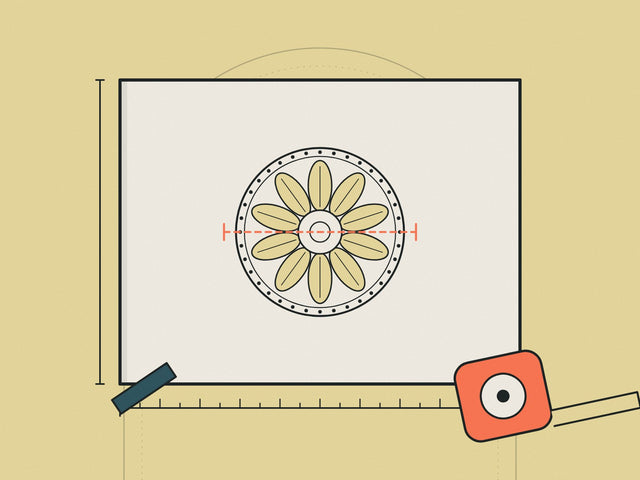
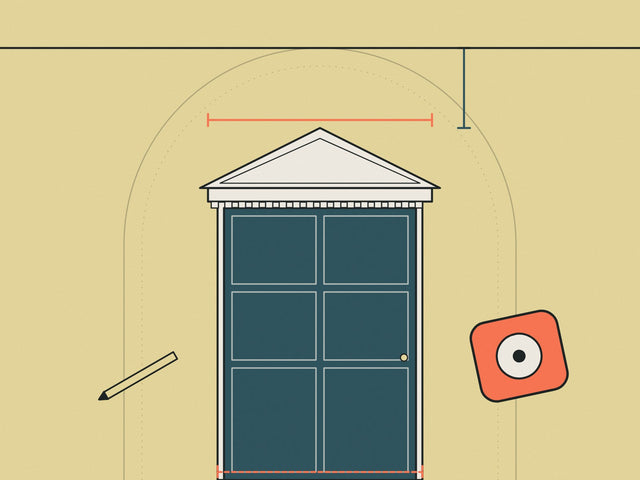
Homes & Gardens lists 'old-fashioned details' as a 2027 trend: skirted furniture, fringe, pleats and tassels, offset with warmer modern touches [1]. In architecture the same mood shows up as mouldings, panelling, overdoor pediments and ceiling roses: features that were stripped out of many British homes in the 1960s and 70s and are now being put back. The trick is restraint. One good rose in the right size, or a pediment over the main door, says more than ornament on every surface.
6. Found luxury: collect, do not buy the whole room
'Found luxury' means building a room slowly from inherited, second-hand and meaningful objects rather than ordering everything at once [1]. Emma Sims Hilditch describes valuing pieces with history and character [1]. It is good news for sustainability and budgets. Handmade pieces sit naturally alongside antiques because they carry the small irregularities that mass-produced items lack.
7. Kitchens that feel like living rooms, and pantries on show
Kitchens are softening: designers are adding upholstered seats, curtains, rugs and wall lights so the room feels lived in rather than clinical [1][2]. Pantries are becoming features with glass doors, painted joinery and their own lighting [1]. A pair of wall lights either side of a window or dresser does more for this look than another row of downlights.
8. Colourful storage and soft silhouettes
Bright shelving and painted built-ins are replacing the feature wall as the place to be brave with colour [1]. Furniture is lower, rounder and more relaxed: daybeds, curved armchairs and platform beds [1]. Both trends benefit from good side lighting, which models curves and shows off colour better than flat overhead light.
What is on the way out
| Fading | Why |
|---|---|
| All-grey schemes | Cool grey walls and sofas are being replaced by warmer neutrals and greens [2][3]. |
| The single feature wall | Colour is moving onto shelves, joinery and whole rooms instead [1]. |
| Bare, stripped-back rooms | Character, pattern and detail are returning [1][2]. |
| Smart everything | Designers report clients asking for simpler, more intuitive, lower-tech homes [1]. |
How to use 2027 trends without redecorating every year
- Change the things that are easy to change (paint, cushions, lampshades) and invest in things that never date: good proportions, natural materials and architectural detail.
- Pick one colour family for the year and test it in your light. North-facing rooms suit warmer greens and browns; see paint colours by room orientation.
- Add one 'old' detail per room: a ceiling rose, a picture rail, an overdoor or a pair of wall lights.
- Make one analogue corner with a chair, a shelf and a wall light.
- Buy slowly. A room collected over two years always looks better than one bought in a weekend.
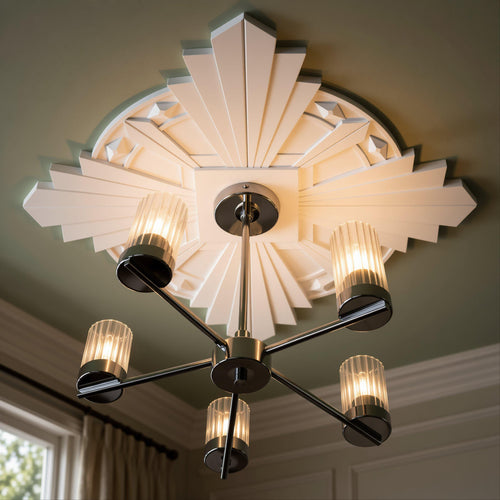
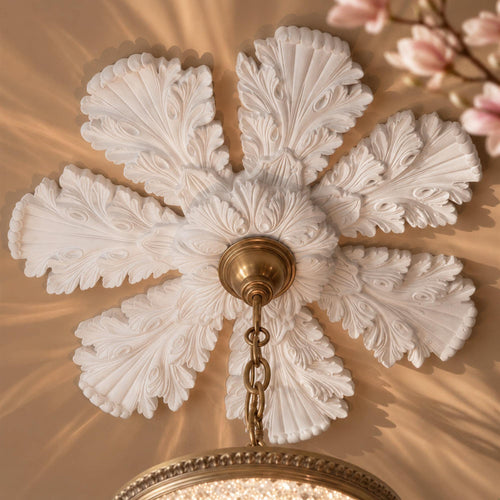
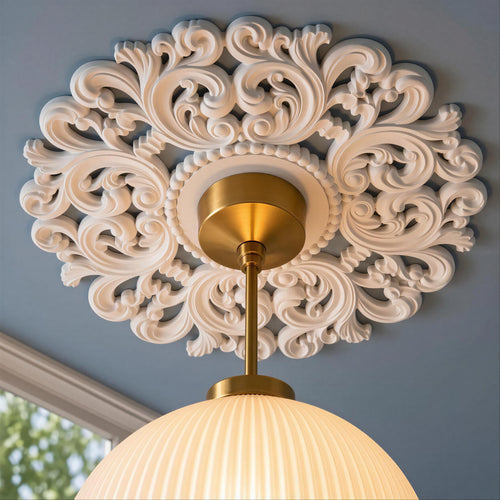
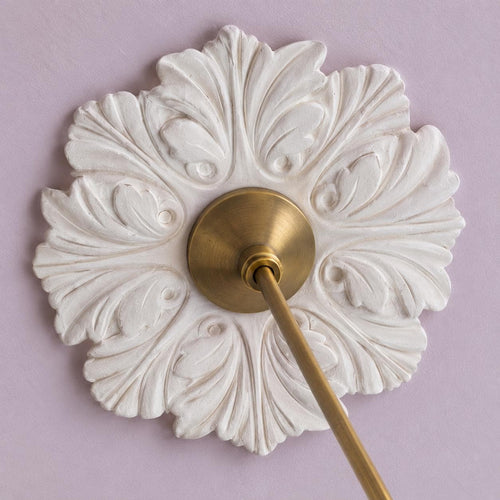
Pieces from the studio that suit the 2027 mood. All are hand-cast in Shrewsbury and can be ordered raw, primed or painted.


For a designer's view on how to use (and not misuse) the 2027 trends, this video is a useful counterpoint [7].
Video: Lisa Holt Design, “What Everyone Will Get Wrong About 2027 Interior Design”, via YouTube.
Good to know
Common questions
What are the interior design trends for 2027?
Warm, personal rooms: pale greens and earthy browns, tonal colour schemes, analogue reading and hobby spaces, collected furnishings, softer kitchens and a return of traditional details.
What is the colour of the year 2027?
Dulux and AkzoNobel chose Soulful Sage, a pale silvery green. Other brands chose greens, terracottas, dusty pink and grey-blue.
Is grey out in 2027?
Cool grey is fading in favour of warmer neutrals, pale greens and mid-tone browns.
Are ceiling roses in fashion in 2027?
Yes. Traditional architectural details are part of the move back to characterful, lived-in rooms.
Sources
References and further reading
Harvard style. Web pages were checked on the access date shown.
- Richardson, E. (2026) The 10 biggest interior design trends of 2027 for a more considered, authentic home. Homes & Gardens, 2 October. Available at: www.homesandgardens.com/decor/interior-design-trends-2027 (Accessed: 14 November 2026).
- Davinic, Z. (2026) Interior design trends 2027: warmth, character and the return of the analogue home. Archiscene, 11 November. Available at: www.archiscene.net/interior-design/interior-design-trends... (Accessed: 14 November 2026).
- Hesikova, S. (2026) These are the colour trends taking over in 2027. Ideal Home, 4 November. Available at: www.idealhome.co.uk/all-rooms/colour-trends-2027 (Accessed: 14 November 2026).
- AkzoNobel (2026) AkzoNobel's 2027 Color of the Year invites you to live lightly [Media release], 8 September. Available at: www.akzonobel.com/en/media/media-releases/akzonobels-2027... (Accessed: 14 November 2026).
- Homes & Gardens (2026) Every color of the year we know so far: the 2027 shades from the biggest paint brands, 22 September. Available at: www.homesandgardens.com/decor/paint/colors-of-the-year-2027 (Accessed: 14 November 2026).
- Kellert, S.R. (2018) Nature by design: the practice of biophilic design. New Haven: Yale University Press.
- Lisa Holt Design (2026) What everyone will get wrong about 2027 interior design [Video]. YouTube. Available at: www.youtube.com/watch?v=dCPnhl701h0 (Accessed: 14 November 2026).
How to cite this article
van Locke, J. (2026) ‘Interior design trends 2027: what is in, what is out and how to use them’, The Flare Journal. Flare Studio UK. Available at: https://flarestudio.uk/blogs/journal/interior-design-trends-2027 (Accessed: 15 November 2026).
Shop the style


Conversation
Join the conversation
Questions about the history, a room you are planning, or a piece you have seen in the wild? Leave a comment and Joseph will reply.