

Wabi-Sabi and Limewash: Why Imperfect Plaster Looks So Good

What wabi-sabi means
Wabi-sabi is a Japanese way of seeing beauty in what is simple, modest and marked by time. The two words were once separate ideas. Wabi may be translated as subdued, austere beauty and sabi as rustic patina, though the meanings are open to personal interpretation (Wikipedia, citing the Stanford Encyclopedia of Philosophy).[1] The Stanford Encyclopedia entry itself treats the two terms separately: wabi is "subdued, austere beauty", first praised in poetry and fully developed in the tea ceremony and Zen context, while sabi came to mean something that has aged well or acquired a patina.[4] Together they describe a taste for things that are simple, rough and slightly worn, and for natural materials and the way they change.
Wabi-sabi has roots in Zen Buddhism and is linked to the Japanese tea ceremony.[1][4] Murata Jukō (1423–1502) modified the tea ceremony by introducing simple, rough wooden and clay instruments in place of the gold, jade and porcelain then popular (the Stanford Encyclopedia spells his name Shukō and describes him as a Zen tea master who began incorporating wabi into the tea ceremony).[1][4] Sen no Rikyū (1522–1591) is associated with a tea room entered through a very low door. In the Stanford Encyclopedia’s account the low entrance barred samurai swords and oversized hats, part of a non-hierarchical view of beauty, and Rikyū prized utensils that were “less than adequate”, so that a slightly flawed or well-repaired piece could rank above a perfect one.[4] A popular telling that even the emperor would have to bow to enter comes, according to Wikipedia, from Mark Reibstein’s children’s book Wabi Sabi (2008), so treat that version as a story rather than history.[1]
The version that reached Western interiors owes a lot to Leonard Koren’s Wabi-Sabi for Artists, Designers, Poets & Philosophers, which Wikipedia dates to 1994 in its text (its reference list cites a 2008 edition).[1] A common short summary, from Richard Powell’s Wabi Sabi Simple (2004), is that wabi-sabi acknowledges that nothing lasts, nothing is finished and nothing is perfect.[1] The Stanford Encyclopedia does not use the combined term “wabi-sabi” or define it through those three realities, so they are best read as a modern, popular summary.[4] It is a philosophy first and a style second, so be wary of any “wabi-sabi look” that is simply a shopping list.
The three realities, applied to a room
Take Powell’s three realities one at a time and they turn into practical decisions about a house.
| Reality | What it means in a room | What to do |
|---|---|---|
| Nothing lasts | Materials age, and the ageing is part of the beauty | Choose materials that wear well and develop a patina: lime, clay, oak, linen, unlacquered metal |
| Nothing is finished | A room is never “done”; it grows slowly | Leave space. Add a handmade piece when you find the right one rather than filling shelves in a weekend |
| Nothing is perfect | Small flaws are signs of a human hand | Accept brush marks, uneven glaze and hand-finished plaster. Do not sand and fill every wall to mirror-flat |
This is why plaster suits the look so well. Plaster is applied, worked and left to dry by hand, so it records how it was made. A handmade plaster light or ceiling rose will have slight differences in edge, thickness and surface from the next one. In a wabi-sabi room that is the point, not a defect. See our guide to handmade versus mass-produced ceiling roses for what to expect from the real thing.
Wabi-sabi, Japandi and minimalism: what is the difference?
The three get lumped together because they all use pale, quiet rooms. They are not the same.
| Wabi-sabi | Japandi | Minimalism | |
|---|---|---|---|
| Core idea | Beauty in imperfection and age | Japanese calm blended with Scandinavian comfort | Remove everything unnecessary |
| Surfaces | Rough, uneven, hand-finished | Smooth natural wood, pale and clean | Flat, crisp and precise |
| Objects | Worn, handmade, one of a kind | Considered, functional, crafted | As few as possible |
| Risk | Looks neglected if not edited | Looks like a showroom | Looks cold |
Our Japandi style guide covers the Scandinavian blend in full. If you want the Japanese idea without the catalogue polish, wabi-sabi is the more forgiving of the two: a slightly uneven wall is welcome in it, not a mistake.
Limewash: what it is and why it looks the way it does
Lime wash is slaked lime (calcium hydroxide) in water, with earth colourants for colour; whitewash is the closely related product family, and both cure to the same material. As it dries it reacts with carbon dioxide in the air to form calcium carbonate, in the form of calcite.[2] That cure is why limewash is chalky and slightly translucent, and why it has a soft glow that modern paint does not quite copy. Historic Scotland guidance, summarised by Designing Buildings, describes the cured product as containing tiny crystals that scatter light, which fits that soft look.[9]
Three properties matter when you choose it:
- It soaks in rather than sitting on top. Limewash relies on being drawn into a substrate, unlike modern paint, which adheres to the surface.[2] That is why it suits absorbent surfaces such as lime plaster, bare plaster, brick and stone, and why it can look patchy on sealed or glossy walls without proper preparation. Conservation guidance lists lime plaster and render as suitable and says limewash bonds poorly to masonry paint.[5]
- It is breathable. Heritage conservation advice says limewash allows a building to “breathe”, so that damp can evaporate and not be trapped in the walls, unlike relatively unbreathable masonry paint.[5] Wikipedia adds that cement restricts the breathable aspects of limewash and is inadvisable for preserved historic buildings.[2]
- It varies. It starts translucent and becomes more opaque as it dries and cures, and the brushwork shows. This variation is what people mean when they call a wall “soft”.
Whitewash has mildly antibacterial properties and was usually applied in rural dairies.[2] Lime is also alkaline and caustic, so wear gloves, eye protection and protective clothing when mixing and applying it, and follow the label.[6] For comparison, the HSE warns that wet cement, which is also highly alkaline, can cause serious skin burns and chemical burns to the eyes, and advises waterproof alkali-resistant gloves and washing it off the skin promptly.[7] Treat limewash with the same caution and keep an eyewash to hand.
How to limewash a wall, step by step
A good result depends on preparation and patience more than skill. Always follow the instructions on your own product, because ready-mixed limewashes differ from site-mixed ones.
- Test. Do a patch somewhere hidden and let it dry fully before judging. The colour is darker wet and lightens as it cures.[6]
- Prepare. Fill cracks, scrape off flaking paint and brush down dust. Existing gloss, vinyl or heavily sealed paint will need advice from the supplier, because limewash needs something to grip.
- Dampen the wall. A dry wall can leave the coating powdery; a saturated wall can make it fail. A light mist is the aim. One lime supplier’s guide advises dampening with clean water before each coat to control suction and reduce dusting and cracking.[6]
- Apply thin coats. Use a wide, soft brush and cross the strokes. Beginners often put it on too thickly because it looks thin when wet; thick coats can craze as they dry.[6]
- Build up. Thin coats are the rule (Wikipedia notes that novices tend to overthicken);[2] the same supplier suggests three coats on new internal lime plaster and two or three on a surface that has been limewashed before, ideally leaving 24 hours between coats.[6] Our own rule of thumb is two to four thin coats for depth, but follow your product’s instructions. Stop when the variation looks natural, not when it looks even.
- Leave it. It keeps curing for days. Avoid scrubbing it, and expect it to mark slightly with use. Heritage guidance notes that limewash can rub off exposed areas and was traditionally renewed annually, so expect to touch it up.[5] For a wabi-sabi wall that is fine.
Limewash behaves differently on every surface, so do not judge the colour from a paint chart. If you want the look without the learning curve, many brands sell limewash-effect or mineral paints, which imitate the cloudy finish but sit on the wall like ordinary paint rather than being absorbed by it. (Conservation guidance notes that true mineral paint performs more like limewash than masonry paint does, so check what a given product actually is.)[5]
Tadelakt: the polished alternative
Tadelakt is a Moroccan lime plaster finish, the traditional coating of hammams and of bathrooms in palaces and riad residences. The name means “to rub in”, from the Arabic tadlīk. The plaster is applied in one thick coat and smoothed with a wooden float; before it sets a flat, hard stone compresses it, it is polished with stones or other abrasives, and the surface is sealed with an olive-oil soap solution. The soap reacts with the lime to form calcium soaps, which are insoluble in water.[3] Modern ready-mixed tadelakt products differ from the traditional method: one manufacturer describes two thin layers of about 1 to 1.5 mm applied on the same day, burnished in small circles with a polishing stone until the pores close, then brushed with dilute soap and burnished again.[8]
Because it goes on as a paste, tadelakt is seamless and can curve around baths, niches and shelves. Pigment can give it any colour, though deep red is traditional, and long-term upkeep means regularly resealing the surface with soap solution.[3] That manufacturer advises re-soaping every one to two months in wet areas, and says its product is for interior use and not for floors or constantly damp areas, so check the limits of whichever product you choose.[8] In our experience of the trade it is more labour-intensive than limewash and usually needs a specialist.
For a bathroom or a wet area it is one of the few lime finishes that suits the room, provided the maker confirms the product for that use. Everywhere else, limewash or a plain clay or lime plaster will give a similar mood for much less money.

Where handmade plaster fits
In a wabi-sabi room the objects do the talking, so each one has to earn its place. Handmade plaster pieces are a natural fit for three reasons: they are made from the same family of materials as the walls, they carry small variations by design, and they are quiet.
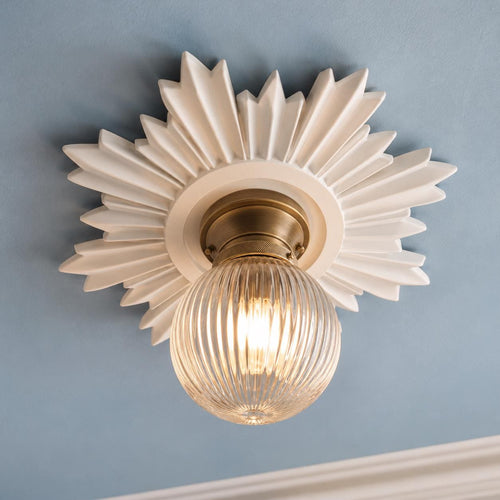
- Wall lights. A simple, ornament-free form works best. Place it low and let it wash light up the wall to show the texture. See wall light height and spacing and how to style a plaster wall light.
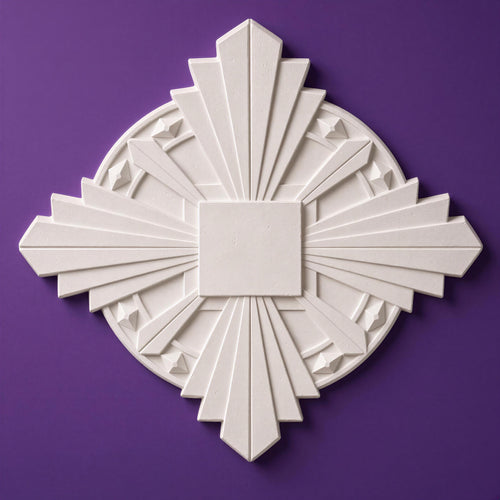
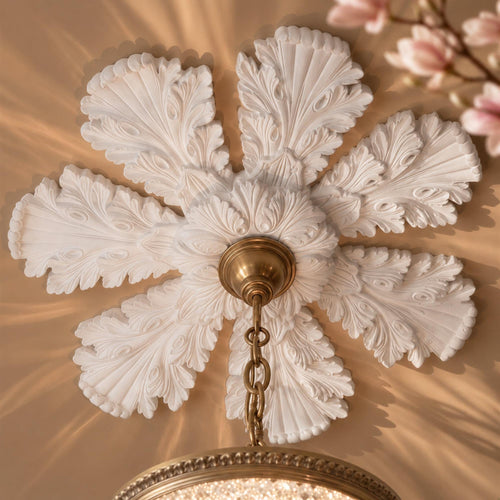
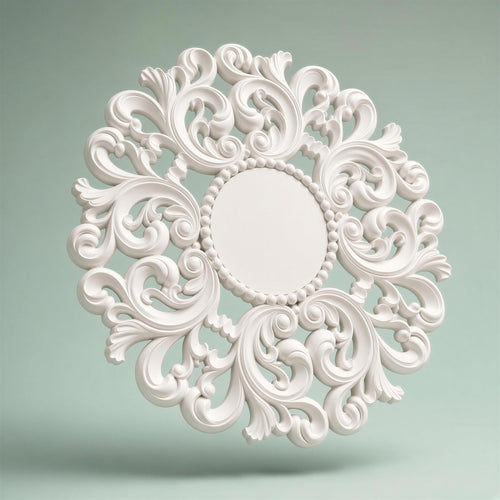
- Ceiling roses. A small, plain rose painted the same colour as the ceiling reads as shadow and form, not decoration. See how to paint a plaster ceiling rose.
- Colour. Paint the piece the same colour as the wall, or one shade lighter. A wabi-sabi room avoids contrast for its own sake.
- Bulbs. Warm and dimmable. The bulb guide explains which to buy for a plaster shade.
Mistakes that spoil the look
- Treating imperfection as an excuse for neglect. The wall may be uneven, but the room is clean, uncluttered and deliberate.
- Buying “distressed” items that are new. Fake ageing looks fake. Use things that are genuinely handmade or genuinely old.
- Too many objects. The idea depends on space around things.
- Cold white light. A cool white bulb flattens limewash and makes it look grey. Use warm white.
- Limewashing without a test. A colour that looks right on the tin may dry paler or greyer.
| Element | Choice |
|---|---|
| Wall | Limewash, clay plaster or a matt chalky paint |
| Colour | Warm white, clay, stone, soft sage |
| Lighting | Warm white bulbs, low and from more than one source |
| Objects | Few, handmade, natural, with room around them |
| Plaster pieces | Simple forms in the wall colour |
Keep reading
- Japandi style guide
- How to style a plaster wall light by room
- Can you paint a plaster ceiling rose?
- What bulb for a plaster wall light?
- Ceiling rose paint colours
- Syrie Maugham and white-on-white interiors
Shop the look


Frequently asked questions
What is wabi-sabi in interior design?
A Japanese aesthetic that values simplicity, imperfection and the marks of age. In a home it means soft, uneven walls, muted colours, natural materials and a few handmade objects.
What is limewash?
A traditional paint made from slaked lime and water, often with earth pigments. It is absorbed by the surface, cures slowly by reacting with carbon dioxide in the air, and dries to a soft, chalky finish with variation in tone.
How many coats of limewash do I need?
Typically two to four thin coats. Dampen the wall first, keep coats thin and let each dry. Always follow the maker’s instructions for your product.
Is limewash suitable for every wall?
It suits absorbent surfaces such as lime plaster, bare plaster, brick and stone. Sealed, glossy or vinyl-painted walls need preparation or a different product, so ask the supplier first.
What is tadelakt?
A polished, waterproof lime plaster from Morocco, burnished with stones and sealed with olive-oil soap. It is traditionally used in hammams and bathrooms and is usually applied by a specialist.
What is the difference between wabi-sabi and Japandi?
Wabi-sabi is the Japanese idea of beauty in imperfection and age. Japandi is a design style that blends Japanese calm with Scandinavian comfort and tends to be cleaner and smoother.
Do plaster wall lights suit a wabi-sabi room?
Yes. Handmade plaster carries small variations, and simple forms painted the same colour as the wall suit the style. Use warm, dimmable bulbs.
Can I get the limewash look without limewash?
Limewash-effect and mineral paints imitate the cloudy finish, but they sit on the wall like normal paint rather than being absorbed by it.
Sources
References and further reading
Harvard style. Web pages were checked on the access date shown.
- Wikipedia (2026) Wabi-sabi. Wikipedia, The Free Encyclopedia. Available at: en.wikipedia.org/wiki/Wabi-sabi (Accessed: 27 October 2026).
- Wikipedia (2026) Whitewash (limewash). Wikipedia, The Free Encyclopedia. Available at: en.wikipedia.org/wiki/Limewash (Accessed: 27 October 2026).
- Wikipedia (2026) Tadelakt. Wikipedia, The Free Encyclopedia. Available at: en.wikipedia.org/wiki/Tadelakt (Accessed: 27 October 2026).
- Loughnane, A. (2023) Japanese Aesthetics. The Stanford Encyclopedia of Philosophy. Available at: plato.stanford.edu/entries/japanese-aesthetics/ (Accessed: 27 October 2026).
- Babergh and Mid Suffolk District Councils (2025) Historic Environment Conservation Advice: Limewash and Paints. 3rd edn. Available at: midsuffolk.gov.uk/documents/d/asset-library-54706/limewas... (Accessed: 27 October 2026).
- Mike Wye (n.d.) How to Apply Limewash. Available at: www.mikewye.co.uk/guidesheets/limewashing/ (Accessed: 27 October 2026).
- Health and Safety Executive (2025) Construction hazardous substances: Cement. Available at: www.hse.gov.uk/construction/healthrisks/hazardous-substan... (Accessed: 27 October 2026).
- KREIDEZEIT Naturfarben GmbH (n.d.) Tadelakt. Available at: www.kreidezeit.de/en/?p=1877 (Accessed: 27 October 2026).
- Designing Buildings Wiki (n.d.) Limewash. Summarising Historic Scotland (2007) Interior Paint, A guide to internal paint finishes. Available at: designingbuildings.co.uk/wiki/Limewash (Accessed: 27 October 2026).
How to cite this article
Tire, G. (2026) ‘Wabi-Sabi and Limewash: Why Imperfect Plaster Looks So Good’, The Flare Journal. Flare Studio UK. Available at: https://flarestudio.uk/blogs/journal/wabi-sabi-and-limewash-plaster-imperfect-walls (Accessed: 12 November 2026).
Shop the style


Conversation
Join the conversation
Questions about the history, a room you are planning, or a piece you have seen in the wild? Leave a comment and Joseph will reply.