Art Nouveau: whiplash curves, nature and the designers behind the style


Art Nouveau was a deliberate break with the past. For most of the nineteenth century, architects and designers had revived older styles: Gothic, Classical, Renaissance. Around 1890, a new generation decided to stop copying and start again, using the living forms of plants, flowers and water as their guide.
A style with many names
The name comes from Maison de l'Art Nouveau, the Paris gallery opened by the dealer Siegfried Bing in 1895. But the movement had different names across Europe. In Germany it was Jugendstil, after the magazine Jugend. In Vienna it became the Secession. In Barcelona it was Modernisme, the world of Antoni Gaudí. In Scotland, it took the form of the Glasgow Style.
The designers who shaped it
Victor Horta is often credited with the first true Art Nouveau building: the Hôtel Tassel in Brussels (1893). Its iron columns branch like plant stems, and its staircase is painted and inlaid with tendrils that flow from floor to wall to ceiling.
Hector Guimard gave Paris its most famous Art Nouveau landmarks: the cast-iron Métro entrances, the first opening in 1900, with lamps that look like the buds of an exotic plant.
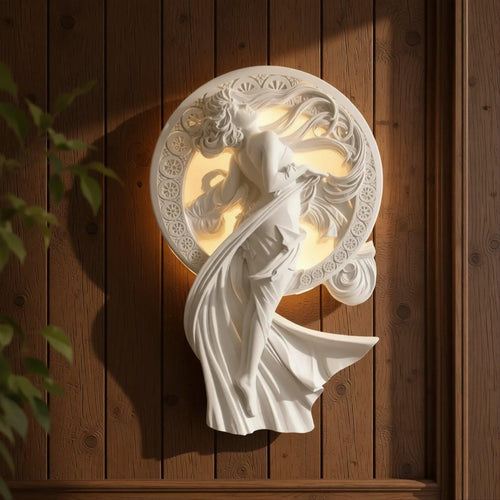
Alphonse Mucha, working in Paris, created the posters that defined the look for millions of people: women framed by halos of flowers, hair curling into decorative patterns.
Art Nouveau asked a simple question: why copy a column when you could grow one?
The whiplash line and other motifs
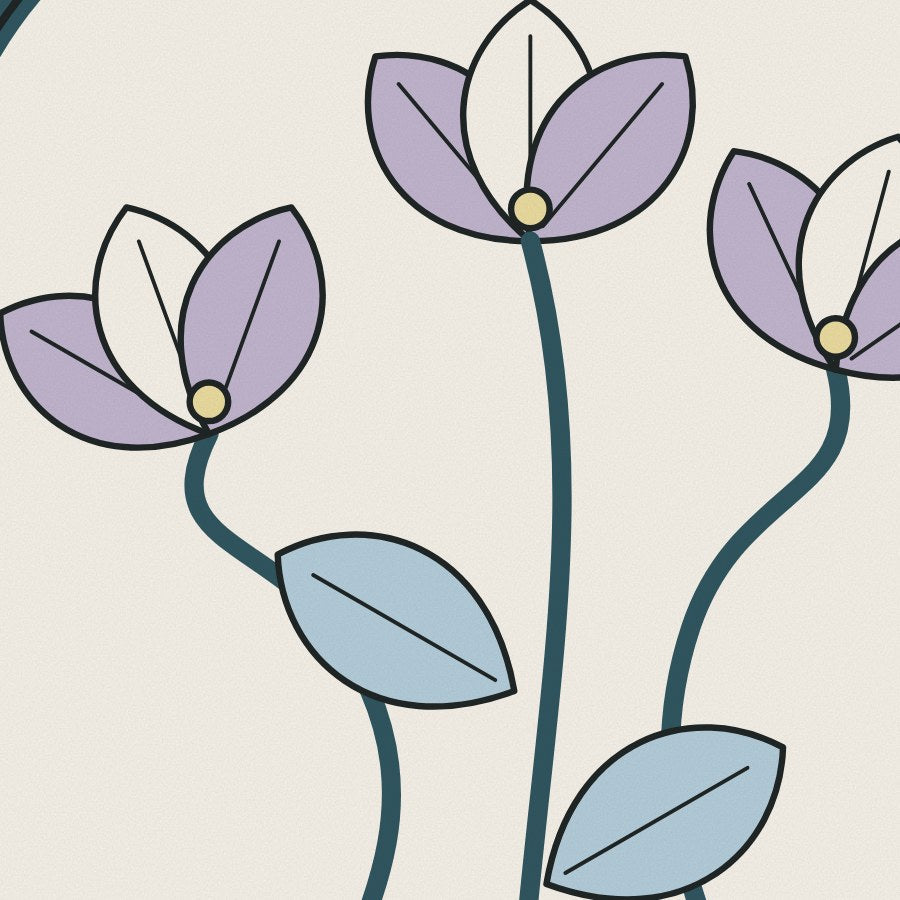
- The whiplash line. A long, flowing S-curve that snaps back on itself, like a stem caught in the wind.
- Lilies, irises and poppies. Flowers with long stems and dramatic petals.
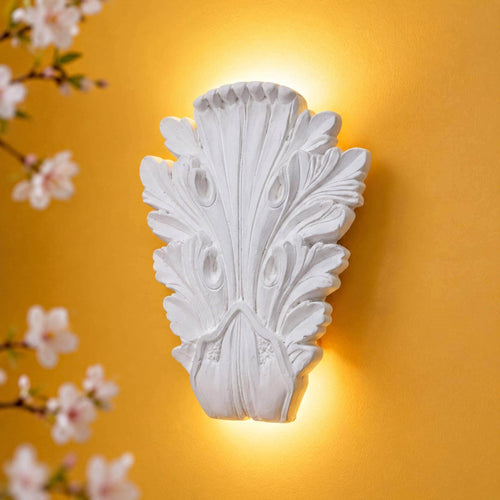
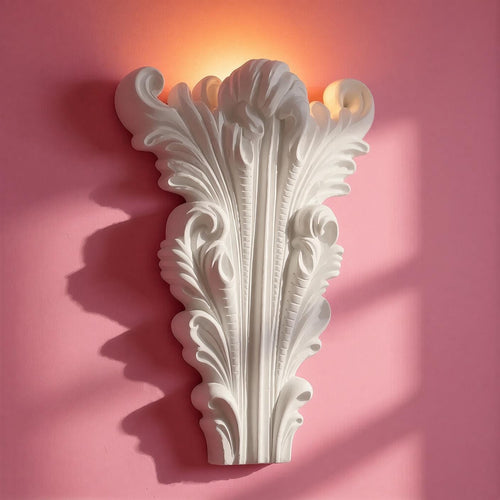
- Leaves and tendrils. Climbing forms that wrap around frames, doors and light fittings.
- Peacocks and dragonflies. Nature at its most decorative.
- Asymmetry. Unlike Art Deco, Art Nouveau is happy to be off-centre.
Why it still feels fresh
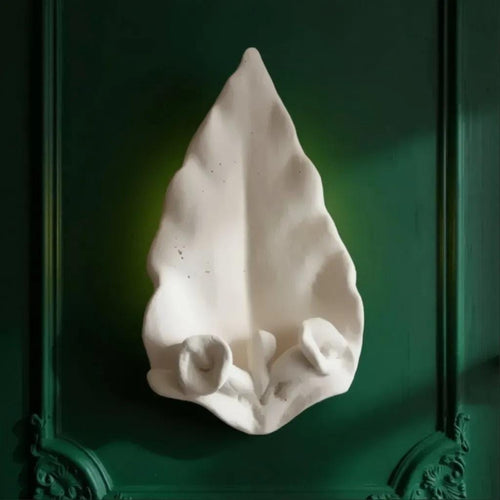
Art Nouveau was short-lived, fading by around 1910, but its love of natural form never really went away. Today it sits comfortably with the biophilic and cottage interiors many people are drawn to: rooms full of plants, soft greens and organic shapes. A single botanical piece can bring that warmth to a room without making it feel like a museum.
Bringing Art Nouveau home
- Choose one flowing, sculptural piece rather than many small ones.
- Botanical ceiling roses look beautiful painted to match the ceiling, so the leaves read as carved relief.
- Pair leaf and petal forms with warm, low lighting to soften the room in the evening.
Explore our Botanical & Art Nouveau collection, hand-cast in Shrewsbury and made to order.
Good to know
Common questions
What is Art Nouveau?
Art Nouveau was an international style of around 1890 to 1910 that rejected the revival of older styles. Instead it took its forms from nature: long-stemmed flowers, leaves, tendrils, peacocks and dragonflies. Its signature is the whiplash line, a flowing S-curve, and it is often asymmetrical, unlike the strict symmetry of Art Deco.
Why is it called Art Nouveau?
The name comes from the Maison de l'Art Nouveau, the Paris gallery opened by the dealer Siegfried Bing in 1895. The style had other names elsewhere: Jugendstil in Germany, the Secession in Vienna, Modernisme in Barcelona and the Glasgow Style in Scotland.
Who were the main Art Nouveau designers?
Key figures include Victor Horta, whose Hôtel Tassel in Brussels (1893) is often called the first Art Nouveau building; Hector Guimard, who designed the Paris Métro entrances from 1900; Alphonse Mucha, whose posters defined the look; and Antoni Gaudí in Barcelona. In Scotland, Charles Rennie Mackintosh led the Glasgow Style.
Sources
References and further reading
Harvard style. Web pages were checked on the access date shown.
- Greenhalgh, P. (ed.) (2000) Art Nouveau 1890–1914. London: V&A Publications.
- Victoria and Albert Museum (n.d.) Art Nouveau – an international style. Available at: www.vam.ac.uk/articles/art-nouveau-an-international-style (Accessed: 8 October 2026).
- Victoria and Albert Museum (n.d.) Art Nouveau – Explore the Collections. Available at: www.vam.ac.uk/collections/art-nouveau (Accessed: 8 October 2026).
- UNESCO World Heritage Centre (n.d.) Major Town Houses of the Architect Victor Horta (Brussels). Available at: whc.unesco.org/en/list/1005/ (Accessed: 8 October 2026).
How to cite this article
van Locke, J. (2026) ‘Art Nouveau: whiplash curves, nature and the designers behind the style’, The Flare Journal. Flare Studio UK. Available at: https://flarestudio.uk/blogs/journal/art-nouveau-guide (Accessed: 12 October 2026).
Shop the style