Soft brutalism: raw texture, rounded forms and calm rooms


Soft brutalism is an interiors style that takes the raw, honest materials of post-war Brutalist architecture and softens them with rounded, heavy, sculptural forms. Think chunky curved furniture, walls with visible texture, chalky limewash and plaster, pale stone and oak, and very little applied decoration. It is sometimes called sculptural minimalism: rooms feel weighty and calm rather than cold.
The difference from 1960s Brutalism is mainly one of scale and feeling. Brutalist buildings such as the Barbican and the National Theatre used exposed concrete at city scale, often with sharp angles. Soft brutalism borrows the texture and the honesty but works at the scale of a room, with curves, warmth and touchable surfaces.
Where Brutalism came from
Brutalism emerged in Britain in the 1950s, during post-war reconstruction, and lasted into the early 1980s. Alison and Peter Smithson used the phrase "new brutalism" in 1953, and their school at Hunstanton, completed in 1954, is usually counted as the first finished building to carry the label. In 1955 the critic Reyner Banham wrote an essay called "The New Brutalism" and linked the term to the French béton brut, meaning raw concrete. The best-known example of béton brut is Le Corbusier's Unité d'habitation in Marseille of 1952.
The idea was as much ethical as visual. Materials should be shown as they are, structure should be visible, and buildings should not pretend to be something else.
Two London landmarks
- The Barbican. Designed by Chamberlin, Powell and Bon, the estate was built between 1965 and 1976 and listed Grade II in 2001; its arts centre opened in 1982. Much of its concrete was pick-hammered by hand with pneumatic drills to give a rough, rusticated surface.
- The National Theatre. Denys Lasdun's building on the South Bank opened fully in 1976 and has been listed Grade II* since 1994. Its concrete was cast in formwork made from rough timber planks, and the grain of the wood is still printed on the walls inside and out.
Both buildings show what soft brutalism admires: texture that records how a surface was made. What it leaves behind is the hard edge and the overwhelming scale.
Brutalism showed us the beauty of raw material. Soft brutalism lets us live with it.
How soft brutalism differs
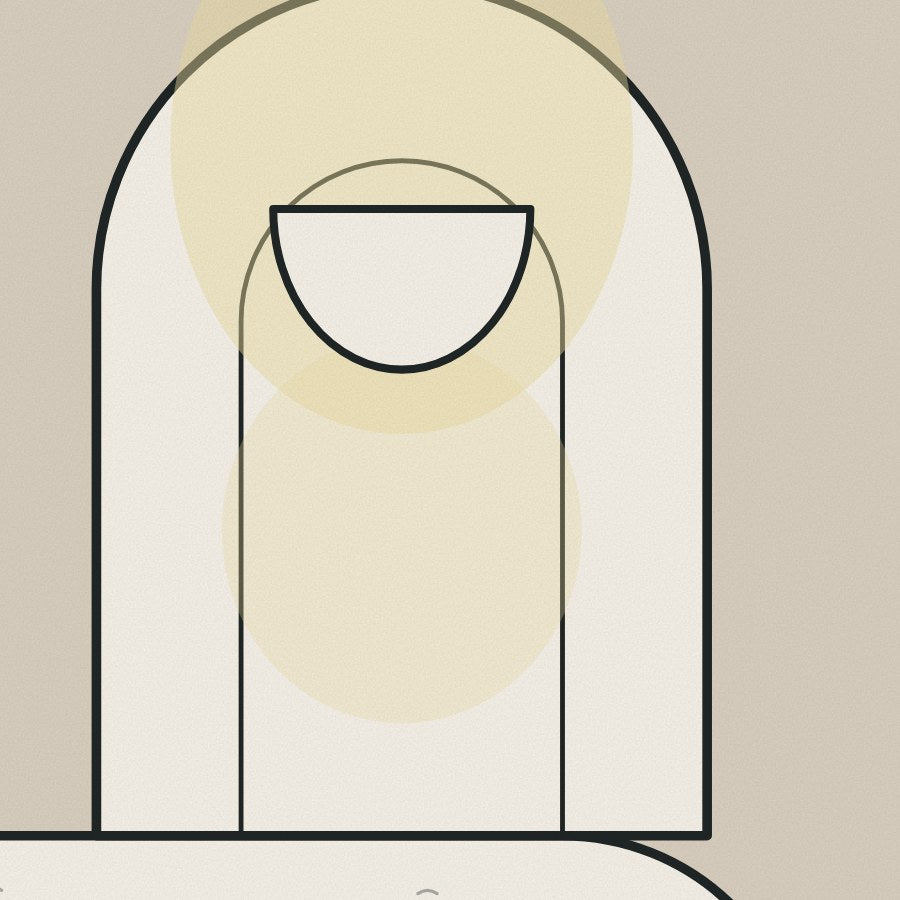
- Curves instead of corners. Rounded arches, bullnosed edges, half-moon and pebble shapes replace sharp concrete angles.
- Plaster and limewash instead of concrete. Walls are finished in lime plaster, polished plaster or limewash, which give a gentle, cloudy movement of colour.
- Warm, natural palette. Bone, putty, sand, clay and stone, with oak, linen and wool alongside.
- Weight without bulk. Fewer pieces, each solid and sculptural, with plenty of empty space around them.
- Light as a material. Low, warm light that rakes across textured surfaces rather than flat overhead brightness.
Bringing it into your home
As a designer, I start with the walls. A textured finish in a single warm neutral does more than any object. If limewash or lime plaster is not practical, a flat, chalky emulsion in a stone colour gets you most of the way. Then add two or three heavy, rounded pieces: a curved sofa, a stone or plaster side table, a thick ceramic lamp.
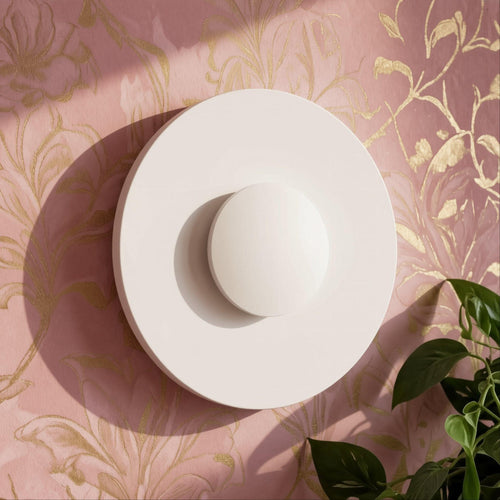
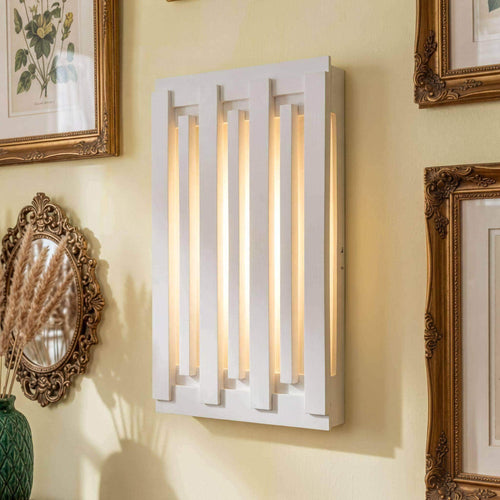
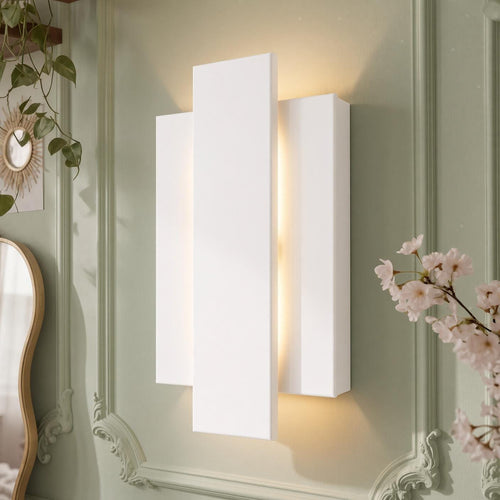
Lighting is where the style comes alive. Wall lights placed at eye level, washing light up and down a textured wall, show off every ripple. Raw plaster suits this perfectly because it is itself a mineral, slightly irregular surface. Leave it natural or paint it in the same colour as the wall so the light seems to grow out of the plaster. Keep the room from feeling heavy by leaving space around each piece and repeating one material more than once, so the eye reads calm rather than clutter. Texture should do the decorating. Patterned rugs, busy art and glossy finishes fight the look; a single woven rug, matt surfaces and one or two pieces of handmade ceramics support it. Soft brutalism also sits comfortably alongside Japandi, which shares its love of natural materials and quiet colour. Our guide to Bauhaus and modern minimalism covers the cleaner, more geometric branch of the same family.
A practical note on Flare pieces
Our Modern Minimal collection includes sculptural wall lights designed with this look in mind, among them our Soft Brutalism, Half Moon and Organic Round designs. Each is hand-cast to order in Shrewsbury, arrives in natural plaster and can be painted with ordinary emulsion. Wall lights come as shade only, battery LED with remote, or UK mains hardwired. Mains wiring should always be done by a qualified electrician; in England and Wales, notifiable electrical work falls under Part P of the Building Regulations. If you want to paint your piece to match a limewashed wall, see our notes on paintable plaster.
Good to know
Common questions
What is soft brutalism in interior design?
Soft brutalism is an interiors style that borrows Brutalism's honest, raw materials and visible texture but softens them with rounded, heavy, sculptural forms. Typical ingredients are limewash or plaster walls, curved furniture, pale stone, oak, linen and a warm neutral palette, with very little applied decoration.
How is soft brutalism different from Brutalism?
Brutalism was a post-war architectural movement of the 1950s to early 1980s, using exposed concrete at city scale, as at the Barbican and the National Theatre. Soft brutalism works at the scale of a room, replacing sharp angles and concrete with curves, plaster, limewash and warm, touchable surfaces.
What lighting suits a soft brutalist interior?
Low, warm light that washes across textured walls works best. Sculptural plaster wall lights at eye level show off limewash or plaster finishes. Battery LED wall lights avoid new wiring; mains wall lights should be installed by a qualified electrician, and in England and Wales notifiable work falls under Part P.
Sources
References and further reading
Harvard style. Web pages were checked on the access date shown.
- Banham, R. (1966) The New Brutalism: Ethic or Aesthetic? London: Architectural Press.
- Bryant-Mole, B. (2016) AD Classics: The Barbican Estate / Chamberlin, Powell and Bon Architects. ArchDaily, 12 July. Available at: www.archdaily.com/790453/ad-classics-barbican-estate-lond... (Accessed: 8 October 2026).
- Barbican Centre (n.d.) Building the Brutal. Google Arts & Culture. Available at: artsandculture.google.com/story/aQUR5-kgbg5mIQ (Accessed: 8 October 2026).
- National Theatre (n.d.) Our history. Available at: www.nationaltheatre.org.uk/about-us/our-history/ (Accessed: 8 October 2026).
- Ministry of Housing, Communities and Local Government (2013) Electrical safety: Approved Document P. Available at: www.gov.uk/government/publications/electrical-safety-appr... (Accessed: 8 October 2026).
How to cite this article
van Locke, J. (2026) ‘Soft brutalism: raw texture, rounded forms and calm rooms’, The Flare Journal. Flare Studio UK. Available at: https://flarestudio.uk/blogs/journal/soft-brutalism-interiors (Accessed: 12 October 2026).
Shop the style