Repairing cracked or damaged plaster cornice and ceiling roses

Most cracks in plaster cornice and ceiling roses are hairline cracks caused by normal movement, and they can be raked out, filled and painted in an afternoon. Wider cracks, sagging, or a cornice coming away from the wall point to a problem behind the plaster, such as failing laths, damp or a structural issue, and need a specialist. Missing sections of cornice can be rebuilt by running new plaster with a profile template or by casting a matching piece.
The first job is always the same: look closely and work out which kind of damage you have.
Hairline crack or something bigger?
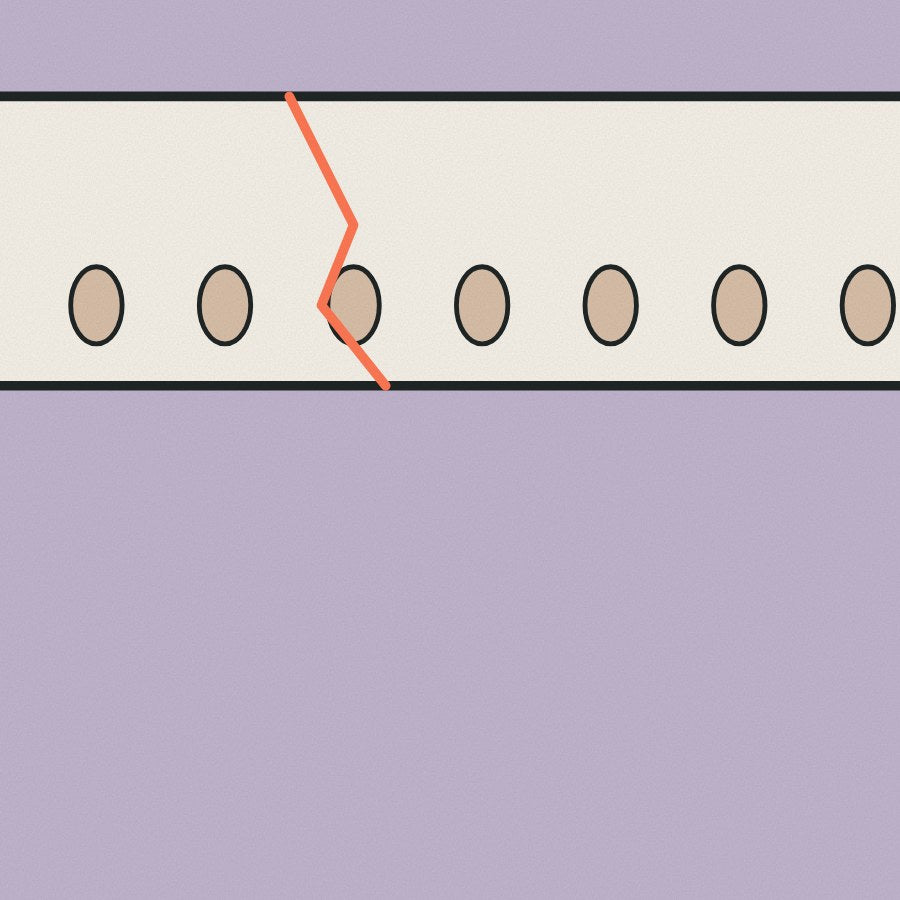
- Hairline cracks. Fine lines, often along the joint between cornice and ceiling or wall, or across a rose. Usually seasonal movement, heating cycles or old paint cracking. Cosmetic.
- Open cracks. Cracks you can fit a coin edge into, or that reappear soon after filling. These suggest ongoing movement.
- Sagging or bulging. A ceiling or cornice that has dropped, feels loose or sounds hollow when gently tapped. In older houses this often means the plaster has lost its key to the timber laths behind.
- Staining. Brown marks or powdery, crumbling plaster point to damp. Fix the source before any repair.
Never press hard on a sagging ceiling to test it. If a section looks loose, keep people out from under it and get advice.
Filling hairline cracks
Rake out the crack slightly with the edge of a filling knife or an old screwdriver, so the filler has something to hold. Brush out the dust and dampen the crack lightly. Press in a fine filler, or for an older lime-based cornice a compatible lime or gypsum repair plaster, and leave it a little proud. Once dry, sand or carve it back flush with the profile and paint.
Cracks along the joint between cornice and ceiling often return because that joint moves. A flexible decorator's caulk there will usually last longer than hard filler.
Fill what you can see, but fix what caused it first.
Clearing old paint first
Many old cornices are clogged with decades of paint, which blurs the detail and hides cracks. Before repairing, it is worth knowing what is on there. Older ornament often carries soft distemper, which is water-soluble and powdery. Emulsion painted over distemper tends to flake. Distemper can be softened with water and gently picked out of the detail with wooden tools and soft brushes. Modern paints are harder and may need a specialist stripping product. Work slowly; it is easy to damage the plaster underneath.
Be aware that very old paint can contain lead. Avoid dry sanding or heat on old layers, and follow current safety guidance.
Rebuilding a damaged run
Where a length of cornice is missing, there are two traditional approaches.
- Running in situ. A plasterer cuts a metal profile, traditionally zinc, to match the existing section, mounts it on a timber horse and runs it along a straight edge through wet plaster, building up the shape coat by coat.
- Casting a section. A plasterer takes a mould from a sound length of the existing cornice, casts new lengths, and fixes and joints them in place. This suits enriched cornice with repeating ornament, such as egg-and-dart or leaves, that cannot be run.
Small chips on a rose or a corner can be built up with repair plaster and carved back to shape once firm. It takes patience and a good eye, but it is very satisfying.
When to call a specialist
Call a specialist plasterer if the damage is widespread, the ceiling is sagging, cracks keep coming back, or the cornice is highly ornate. A structural engineer or surveyor is the right first call if you suspect movement in the building itself.
If your home is listed, check with your local authority conservation officer before any work beyond simple like-for-like maintenance. Under the Planning (Listed Buildings and Conservation Areas) Act 1990, works that affect the character of a listed building need listed building consent, and that includes historic plasterwork. Carrying out such works without consent is a criminal offence. Historic England publishes useful guidance on caring for traditional plaster.
Replacing what cannot be saved
Sometimes a rose or corner piece is too far gone, or was removed decades ago. A new hand-cast plaster piece is the like-for-like way to restore the room. Our glossary of cornice, coving and mouldings will help you describe what you have. Flare pieces are hand-cast to order in Shrewsbury in natural plaster. Browse the Heritage & Classical collection, or contact us to talk through what you need.
Good to know
Common questions
How do you fix a crack in plaster cornice?
Rake the crack out slightly, brush out the dust and dampen it lightly. Press in a fine filler, or a compatible lime or gypsum repair plaster for older cornice, leave it proud, then sand or carve back flush and paint. Joints that move often last better with flexible decorator's caulk.
When is a cracked ceiling dangerous?
Be cautious if the ceiling sags, bulges, feels loose or sounds hollow, or if cracks are wide or keep returning. These signs can mean the plaster has come away from the laths or that there is damp or movement. Keep people out from under it and get a specialist plasterer or surveyor.
Can old paint on cornice contain lead?
Yes. Paint applied before the 1990s may contain lead, especially older layers. Avoid dry sanding and blowtorches, which create harmful dust and fumes, and follow current safety guidance such as the British Coatings Federation's PaintSafe advice. Soft distemper can usually be softened with water and picked out gently.
Sources
References and further reading
Harvard style. Web pages were checked on the access date shown.
- Henry, A. and Stewart, J. (eds) (2011) Practical Building Conservation: Mortars, Renders and Plasters. Farnham: Ashgate, for English Heritage.
- Millar, W. and Bankart, G.P. (2010) Plastering Plain and Decorative. 4th revised edn. Abingdon: Routledge.
- FIS (n.d.) Repair of Historic Ceilings. Available at: www.thefis.org/membership-hub/publications/best-practice-... (Accessed: 8 October 2026).
- Planning (Listed Buildings and Conservation Areas) Act 1990, c. 9, s. 9. Available at: www.legislation.gov.uk/ukpga/1990/9/section/9 (Accessed: 8 October 2026).
- Historic England (n.d.) Living in a Grade I, Grade II-star or Grade II listed building. Available at: historicengland.org.uk/advice/your-home/owning-historic-p... (Accessed: 8 October 2026).
- British Coatings Federation (n.d.) PaintSafe. Available at: coatings.org.uk/page/PaintSafe (Accessed: 8 October 2026).
How to cite this article
Tire, G. (2026) ‘Repairing cracked or damaged plaster cornice and ceiling roses’, The Flare Journal. Flare Studio UK. Available at: https://flarestudio.uk/blogs/journal/repairing-cracked-plaster-cornice (Accessed: 12 October 2026).
Shop the style