

Christmas in a Period Home: Lighting, Garlands and Plaster

The short answer
Christmas in a period home works best when you decorate with the architecture rather than over it. Let the mantel, stair and picture rail carry the greenery, keep the light low and warm, and treat plaster ornament as something to frame, not something to fix things to. Underneath the styling sits a short list of fire and electrical rules that official advice repeats every December: check your lights, never leave a candle unattended, keep trees and paper well away from heat, and test your smoke alarms.[1][2]
This guide is about the room, not the presents. If you are shopping for someone else, our gift guides cover that. Here you will find the real history of the decorations (which is more interesting than the myths), a lighting plan you can follow, ideas for garlands on a mantel, staircase and door, and a clear view of what is safe to hang from old plaster.
What a period home gives you to work with
A Georgian, Victorian or Edwardian house arrives with built-in places to decorate. These are our observations rather than rules, but they hold in most houses of those periods.
- The chimney breast. A mantel shelf, often with an overmantel mirror above, is the natural focal point. A garland laid along the shelf and a mirror behind it doubles every light.
- The picture rail or dado. Where one survives, it is a ready-made line for ribbon, swags and cards.
- The staircase. A balustrade and newel post are made to carry a garland.
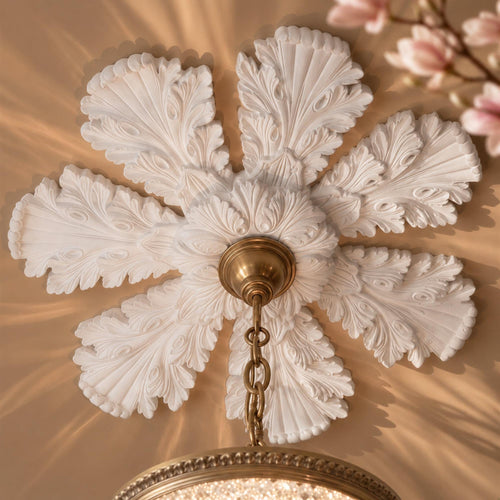
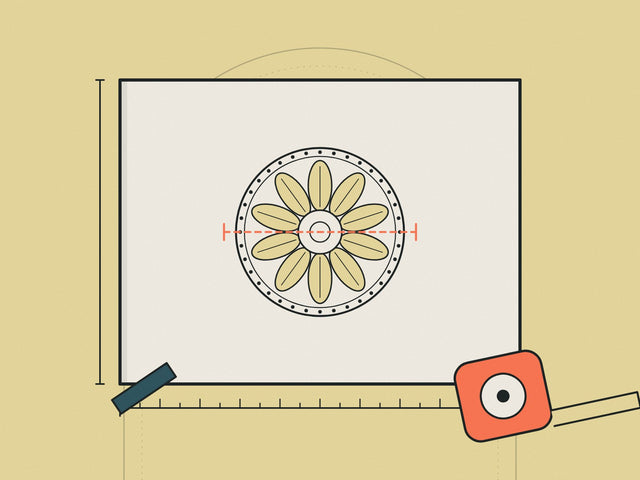
- The ceiling rose and cornice. These are the plaster details to frame with light. A pendant, a chandelier or an uplit ceiling lets them catch the glow.
- Tall windows and shutters. Sills and reveals hold candles (LED ones, see below), greenery and lights.
- The front door. A wreath or "welcome ring" is a very old idea, as the next section shows.
Our guide to styling a mantelpiece and shelves covers the everyday arrangement; this article adds the seasonal layer.
A short history of decking the house
Many Christmas habits are younger than people think, and a few are far older. The museum sources give a clear outline.
Greenery came first
English Heritage reports that by the late Middle Ages almost all surviving church records include purchases of holly and ivy for winter, and that the London historian John Stow cited an account from 1444 of homes and parish churches decked with "holme, ivie, bayes" and other greenery.[3] Evergreens were read as symbols of eternal life and of the return of life in spring.[3] Victorian homes often had holly and fir garlands on the mantelpiece, and nineteenth-century "welcome rings" for front doors were typically made of holly, ivy, pine cones and ribbons.[3]
The kissing bough
A kissing bough was a hoop-based spherical decoration, up to 1.5 metres across, hung as a gesture of welcome. Its origin is uncertain, though it is often linked to the Tudor period; Georgian versions were more elaborate, with apples, oranges, ribbons and paper roses.[3] The tradition was that a gentleman could pluck a berry and kiss a lady's cheek until the berries ran out, and English Heritage suggests this may have inspired kissing under mistletoe. The earliest recorded English kissing-under-mistletoe custom it cites is in the 1784 comic opera Two to One.[3]
The tree arrives
The sources differ in detail here. English Heritage says Queen Charlotte, wife of George III, set up the first known tree at Queen's Lodge, Windsor, in December 1800, and that Prince Albert is often credited with introducing the tree in 1840, when he imported spruce firs from Coburg.[3] The Royal Collection Trust says Charlotte introduced the tree in the late eighteenth century, using a yew rather than a fir, and that in 1848 the Illustrated London News published an illustration of Victoria, Albert and their family around a decorated tree, which inspired households across Britain.[4] The Royal Collection Trust adds that the royal trees were decorated with candles and artificial snow.[4] By 1860, English Heritage says, middle-class homes had trees decorated with candles, sweets, fruit, homemade ornaments and small gifts.[3]
Cards, crackers, baubles and lights
The V&A records that Sir Henry Cole introduced the Christmas card in 1843, that Tom Smith invented the cracker in the 1840s and perfected its bang in the 1860s, and that the first advertisements for tree ornaments appeared in 1853.[5] The Ironbridge Gorge Museum Trust adds that cards only became popular in the 1870s once the halfpenny stamp made sending them cheap, and that Edward H. Johnson, a friend and work partner of Thomas Edison, created the first Christmas lights in 1882.[6] The V&A also notes that the Victorian taste for bright, reflective ornaments was driven by how they glittered in candlelight.[5] That last point matters for lighting, as the next section explains.
Lighting: layer it, keep it warm, keep it safe
A period room was designed for flickering, low light. You can get the same feeling with modern fittings if you work in layers.
- Dim the main light. A ceiling pendant on a dimmer, or simply a lower-powered bulb, stops the room looking flat. If you are choosing bulbs, our guide to lumens and colour temperature gives the figures for a warm evening glow.
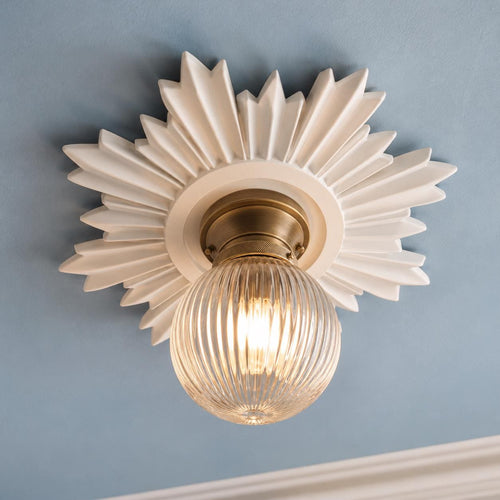
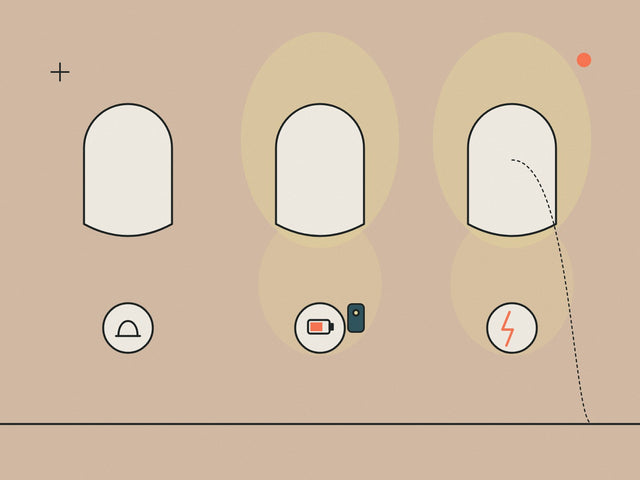
- Add wall lights. Plaster wall lights throw light up the wall and across the ceiling, which brings out the relief of cornice and rose. Ours come as a plaster shade only, as a battery LED version with a remote, or as a UK mains version; mains wiring must be done by a qualified electrician.
- Add low lamps and the tree. Tree lights and a table lamp fill the lower part of the room, where people actually sit.
- Finish with candle glow. Real flames or, more sensibly, LED candles on the mantel.
The V&A's point about glittering ornaments suggests a neat trick: shiny baubles, gold ribbon, mirrors and glass multiply a warm, low light, so you need less of it.[5] Our rule of thumb is to stay with warm white (the lumens guide explains what that means) so that the white plaster looks cream and soft rather than blue.
Fairy lights: what the safety bodies say
Electrical Safety First advises that LEDs are preferable to filament lamps because they run at extra-low voltage, produce little heat and have no glass lamps to break. It says to inspect lights before use, to throw away damaged sets rather than repair them, not to connect different lighting sets together, not to overload sockets or rely on extension leads, and to switch lights off before bed or when leaving the house.[7] The Home Office gives the same core advice: check that tree lights carry the British Standard sign, never overload sockets, and unplug lights before bed.[1] The Chief Fire and Rescue Adviser's office puts it as: ensure fairy lights conform to a British or European standard.[8] Warwickshire Fire and Rescue Service points to BS EN 60598 and asks you to check lights that have been in storage for a year.[2]
For anything outdoors, Electrical Safety First says to use only lights designed for it, to connect them through an RCD-protected socket, to look for an IP code whose last digit is 3 or higher, and to keep plugs and transformers indoors.[7] If you want to hang lights over a front door pediment or around a porch, that is the checklist.
Candles, flames and the fire
Period rooms and candles go together, but the official advice is firm. The Home Office says to keep candles away from the tree and anything that catches fire easily, never to leave a burning candle unattended, and to keep candles, lighters and matches away from children.[1] Warwickshire Fire and Rescue Service adds that candles should stand on a heatproof surface, away from decorations, cards, wrapping paper and fabrics.[2] Staffordshire Fire and Rescue Service says to secure candles in a proper holder, to put them out when you leave a room, and calls LED candles "a great and much safer alternative".[9]
Our recommendation, as a plaster maker, is to use LED candles on the mantel and by windows, and to keep any live flame to a supervised dinner table. It also protects your decoration: soot and heat do no favours to painted plaster.
If you light a real fire, the clearance rule applies to your garland. Staffordshire Fire and Rescue Service advises against placing paper or card decorations above or around a fireplace, and the same logic applies to dry greenery and ribbon.[9] The simplest approach is to dress the mantel only when the fire is not in use.
Garlands, wreaths and boughs
Greenery is the oldest decoration in the book, so it suits an old house. The plants English Heritage names are holly, ivy, bay, rosemary and mistletoe, plus fir.[3] A few practical points follow, all our suggestions rather than sourced rules.
- Mantel. Lay the garland along the shelf, tuck in LED candles, and let it hang a little at each end. Add one or two baubles that catch the light.
- Staircase. Tie the garland to the balusters with soft ribbon or florist's wire rather than nails. Check that nothing narrows the stair or snags clothing.
- Front door. A wreath is the old "welcome ring". Hang it from a hook on the door itself or a ribbon over the top edge, not from the plaster above.
- Picture rail. Use proper picture-rail hooks and ribbon for swags, as you would for pictures. Our guide to hanging pictures explains the method.
- Window sills. A short row of greenery and LED candles. Keep fresh stems off bare wood and paint, because wet greenery marks.
Plaster details: what you can and cannot hang
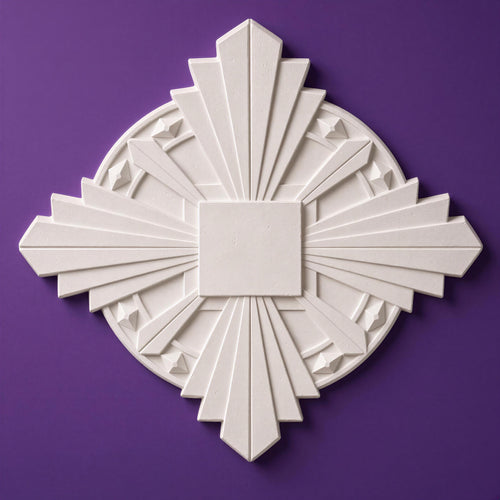
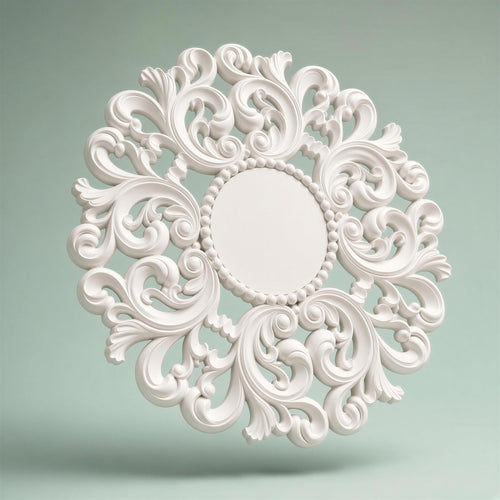
Plaster ornament is robust in its place and fragile when asked to carry weight. Ceiling roses, cornice and ornamental pediments are fixed to the wall or ceiling to hold their own weight, not yours. Our rule of thumb is simple: frame them, light them, drape things near them, but do not hang anything from them.
That is why a ceiling rose's weight limit matters. If you want a kissing bough, which English Heritage describes as up to 1.5 metres across, fix a proper ceiling hook into a joist beside the rose, or use a floor stand. Do not hang the bough from the rose itself.[3]
- Ceiling rose. Light it from a pendant or from below. Do not add weight.
- Cornice and coving. Do not pin garlands into it. Fine line or ribbon can sit along the top edge of a picture rail instead.
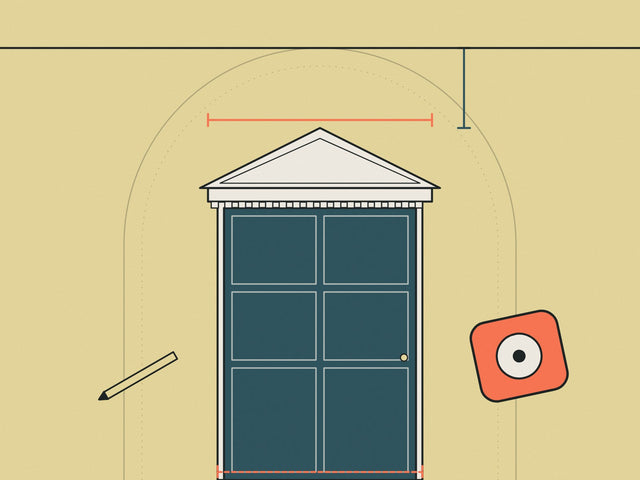
- Overdoor pediment. It can carry a thin, light garland draped loosely over it; a heavy swag belongs on a hook on the door frame. The Laureate Overdoor Pediment already carries a laurel motif that sits well with green.
- Switch surrounds and wall lights. Leave them clear. Never drape greenery over an electrical fitting, a point that matches the Home Office advice not to hang decorations on lights or heaters.[1]
- Adhesive hooks and tape. They can lift paint. Test on a hidden patch and remove slowly, as you would with any heritage paint.
Fresh greenery sheds water and sap, so if it touches painted plaster, protect the surface with a liner or keep a small gap. After the season, our guide to cleaning and caring for plaster décor covers dusting and spot-cleaning.
The tree: where it goes
Fire and rescue services give the same advice for real trees. Staffordshire Fire and Rescue Service says to buy from a reputable retailer, to keep the tree away from fireplaces, heating vents and candles because heat dries it out, and not to put it where it could block an escape route.[9] Warwickshire Fire and Rescue Service adds that the stand should be kept filled with water.[2] For artificial trees, English Heritage notes that the first bristle-style artificial tree was made by Addis Housewares in 1930, so a fake tree is not a modern invention.[3]
In a period room, the best spot is often a window bay or a corner opposite the fire, where the tree is lit by the room as well as lighting it. Keep the tree clear of wall lights and of the ceiling rose; a tall tree can brush a low pendant.
A worked plan for a Victorian terrace
Here is how the ideas above might be applied to a typical two-up, two-down with a hall. It is an example, not a prescription.
| Room | Light | Greenery | Watch out for |
|---|---|---|---|
| Hall | Warm lamp or wall light, LED candles on the radiator shelf | Wreath on the door, swag along the picture rail | Trip hazards and exits kept clear[9] |
| Front room | Dimmed pendant, wall lights each side of the chimney, tree lights | Garland on the mantel (fire out), a bough on a joist hook | Tree away from the fire[9] |
| Dining room | Candlelight at the table, LED candles on the sideboard | Low table garland, fruit and bay | Live flames never unattended[1] |
| Stairs | Landing wall light, low and warm | Garland tied to the balusters | Nothing loose that can snag |
| Bedroom | Soft lamp only | A single sprig, or none | Lights off at bedtime[7] |
Notice how little is attached to the plaster. Almost everything rests, ties or stands.
A quick fire-safety reference
| Topic | What the sources say | Source |
|---|---|---|
| Fairy lights | Check for the British Standard sign; unplug before bed | Home Office[1] |
| Standard | BS EN 60598 for fairy lights; check stored sets | Warwickshire[2] |
| Damaged lights | Replace, do not repair | Electrical Safety First[7] |
| Outdoor lights | RCD-protected socket; IP last digit 3 or more | Electrical Safety First[7] |
| Candles | Holder, heatproof surface, never unattended | Home Office; Warwickshire[1][2] |
| Real tree | Away from heat and escape routes; keep stand watered | Staffordshire; Warwickshire[9][2] |
| Paper decorations | Not above or around a fireplace | Staffordshire[9] |
| Smoke alarms | Test at least monthly | Home Office[1] |
This table summarises official advice. It does not replace the guidance of your local fire and rescue service or a qualified electrician.
Taking it down
Greenery has a traditional end date. English Heritage cites Robert Herrick, who wrote of Candlemas Eve as the day the rosemary, bay and mistletoe came down.[3] Candlemas falls on 2 February, so that is 1 February.
Pack lights carefully. Electrical Safety First suggests keeping the packaging and storing lights away from damp or great heat.[7] Dust the plaster details and the mantel, and replace any hooks you fixed with a dab of matching filler if you have left holes.
Common mistakes
- Hanging weight from a ceiling rose. Fix to a joist instead.
- Garlanding a lit fireplace. Keep dry greenery and paper clear.[9]
- Overloading one socket with lights and a tree stand.[7]
- Flat, bright overhead light. Dim it and add layers.
- Using live flames near the tree or cards.[1]
- Nailing into cornice or pediments. Tie, rest or drape.
What to do next
- Test smoke alarms and check every set of lights this week.[1]
- Choose one focal point, probably the mantel, and dress it first.
- Add warm light in layers using the animated diagram above.
- Keep plaster details free of weight.
- See Victorian terrace interior ideas for the rest of the year.
Keep reading
- How to style a mantelpiece and shelves
- How many lumens and what colour temperature for each room
- How much weight can a ceiling rose hold?
- How to clean and care for plaster décor
- Victorian terrace interior ideas
- How to layer lighting in a living room
Shop the look


Frequently asked questions
What is a kissing bough?
A hoop-based, spherical Christmas decoration, up to 1.5 m across, covered in greenery and hung as a welcome. Georgian versions added apples, oranges, ribbons and paper roses, according to English Heritage.
When did people start putting up Christmas trees in Britain?
Sources differ. English Heritage says Queen Charlotte set up the first known tree at Windsor in December 1800; the Royal Collection Trust says late eighteenth century. Prince Albert popularised it, and an 1848 Illustrated London News picture spread the custom.
Can I hang a garland from a ceiling rose?
We advise against it. A ceiling rose is designed to hold its own weight. Fix a hook into a joist beside it, or use a stand, for anything with weight.
Are LED candles safer than real ones?
Staffordshire Fire and Rescue Service calls LED candles a great and much safer alternative. If you use real candles, use a holder, a heatproof surface, keep them away from the tree and fabrics, and never leave them unattended.
How should I check fairy lights?
Inspect for damage, check the British Standard mark, avoid overloading sockets, do not join sets together and unplug at bedtime. Warwickshire Fire and Rescue Service cites BS EN 60598. Replace damaged sets rather than repairing them.
Where should I put a real Christmas tree?
Away from fireplaces, heating vents and candles, and not blocking an escape route. Keep the stand filled with water, as fire services advise.
When should Christmas greenery come down?
Tradition says Candlemas Eve (1 February). English Heritage cites Robert Herrick on this. Many people take it down after Twelfth Night; there is no rule.
Can I decorate a lit fireplace?
Fire services advise against placing paper decorations above or around a fireplace, and dry greenery and ribbon are the same. Dress the mantel when the fire is not in use, or use the picture rail and stair.
Sources
References and further reading
Harvard style. Web pages were checked on the access date shown.
- Home Office (2022) Wishing you a safe and happy Christmas (accessible), GOV.UK. Available at: www.gov.uk/government/publications/fire-safety-tips-for-c... (Accessed: 27 October 2026).
- Warwickshire County Council (with Warwickshire Fire and Rescue Service) (2025) Stay fire safe this Christmas with these festive tips (10 December 2025), Warwickshire County Council. Available at: www.warwickshire.gov.uk/news/article/7273/stay-fire-safe-... (Accessed: 27 October 2026).
- English Heritage (n.d.) A Short History of Christmas Greenery, English Heritage. Available at: www.english-heritage.org.uk/learn/histories/christmas-gre... (Accessed: 27 October 2026).
- Royal Collection Trust (n.d.) A Royal Christmas (collection story), Royal Collection Trust. Available at: www.rct.uk/collection/stories/a-royal-christmas (Accessed: 27 October 2026).
- Victoria and Albert Museum (2024) Victorian Christmas traditions (page updated 17 April 2024), V&A. Available at: www.vam.ac.uk/articles/victorian-christmas-traditions (Accessed: 27 October 2026).
- Denton, E. (n.d.) Victorian Origins: Christmas Cards & Crackers, Ironbridge Gorge Museum Trust. Available at: www.ironbridge.org.uk/museum-collections/stories/victoria... (Accessed: 27 October 2026).
- Electrical Safety First (2016) Christmas lights: electrical safety for the festive season (ESC14), Electrical Safety First. Available at: web.archive.org/web/20250708195853/www.electricalsafetyfi... (Accessed: 27 October 2026).
- Chief Fire and Rescue Adviser (2011) Chief fire adviser urges fire-safe behaviour over the festive period (news story, 2 December 2011), GOV.UK. Available at: www.gov.uk/government/news/chief-fire-adviser-urges-fire-... (Accessed: 27 October 2026).
- Staffordshire Fire and Rescue Service (2022) Think about fire safety over the Christmas period (2 December 2022), Staffordshire Fire and Rescue Service. Available at: www.staffordshirefire.gov.uk/news/posts/think-about-fire-... (Accessed: 27 October 2026).
How to cite this article
Tire, G. (2026) ‘Christmas in a Period Home: Lighting, Garlands and Plaster’, The Flare Journal. Flare Studio UK. Available at: https://flarestudio.uk/blogs/journal/christmas-in-a-period-home-lighting-garlands-plaster-details (Accessed: 12 November 2026).
Shop the style


Conversation
Join the conversation
Questions about the history, a room you are planning, or a piece you have seen in the wild? Leave a comment and Joseph will reply.