What is Art Deco? The style, its motifs and how to bring it home


Few styles are as instantly recognisable as Art Deco. A sunburst over a doorway, a fan-shaped wall light, a stepped cornice catching the evening light: these shapes still feel glamorous a century after they first appeared. As a designer, it is the style I return to most, because its geometry is so well suited to plaster.
Where the name comes from
Art Deco takes its name from the 1925 Exposition internationale des Arts décoratifs et industriels modernes in Paris, a huge exhibition of modern decorative arts. At the time, designers simply called the work "modern". The shorter name "Art Deco" only became widespread in the 1960s, when a new generation of writers and collectors looked back at the period between the wars.
The style drew on everything that felt new in the 1910s and 1920s: the sharp planes of Cubism, the speed of machines and aeroplanes, and a fashion for ancient Egypt after the discovery of Tutankhamun's tomb in 1922. The result was ornament that felt modern rather than historical.
The motifs that define Art Deco
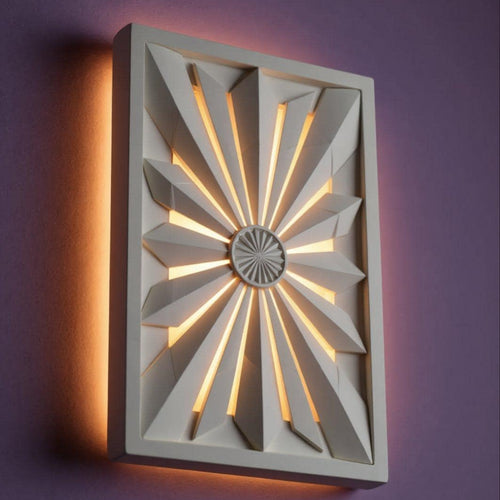
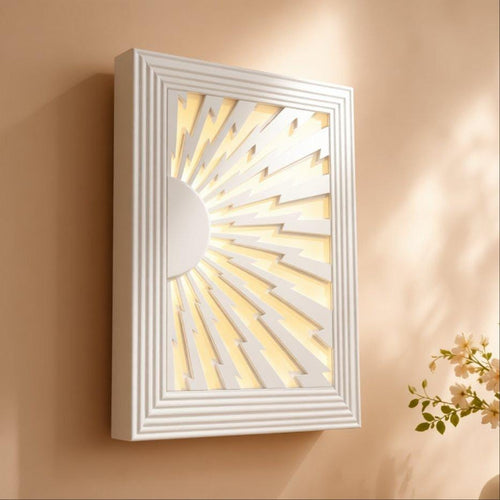
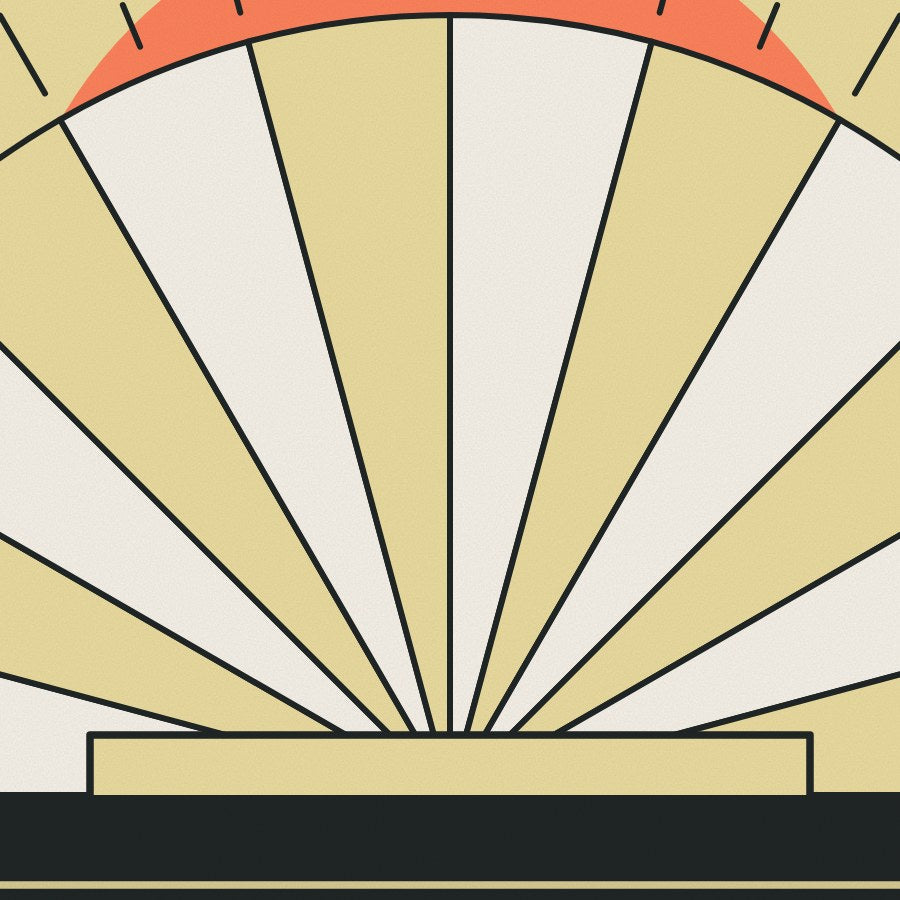
- The sunburst. Rays fanning out from a central point, used on everything from garden gates to radios and ceilings.
- The fan. A half-sunburst, perfect for wall lights and the tops of doors.
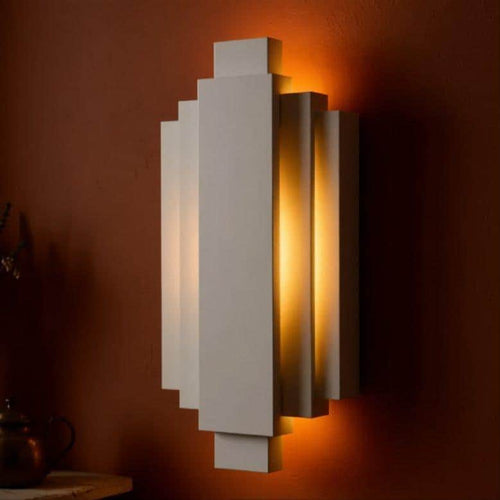
- Stepped forms. Ziggurat-like profiles that step back in layers, borrowed from skyscraper design.
- Chevrons and zigzags. Repeating angles that add rhythm to borders and friezes.
- Symmetry. Art Deco is almost always balanced around a centre line.
Art Deco is geometry with a little glamour: strict lines, softened by light.
Art Deco in buildings you can still visit
In New York, the Chrysler Building (1930) remains the style's most famous landmark, its crown made of stacked stainless-steel sunbursts. In Britain, look at the Hoover Building on London's Western Avenue, the Midland Hotel in Morecambe, and the 1930s interiors at Eltham Palace. Many British cinemas, lidos and seaside pavilions of the 1930s were built in a streamlined version of the style.
Streamline Moderne: Art Deco's later chapter
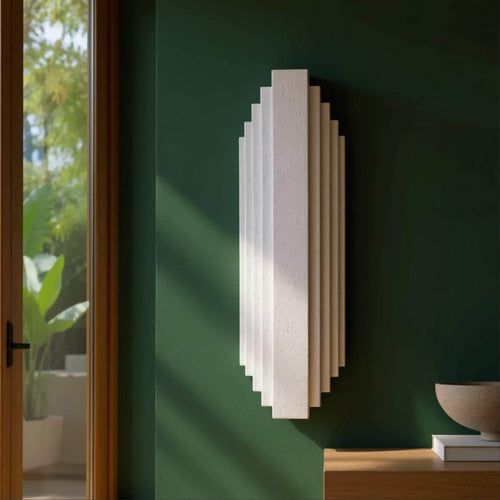
By the mid-1930s the style had become smoother. Sharp zigzags gave way to long horizontal lines, rounded corners and "speed stripes" inspired by ocean liners and trains. This later phase is often called Streamline Moderne, and it is a lovely fit for wall lights, where a curved, layered profile throws a soft wash of light.
How to bring Art Deco home
The trick with Art Deco is restraint. One strong piece of geometry usually does more than a room full of pattern.
- Start with the ceiling. A sunburst ceiling rose around a simple globe pendant instantly sets the period.
- Use light to show the form. Stepped and fan-shaped wall lights create shadows that change through the evening.
- Pick a confident colour. Deep inky blues, greens and blacks suit the style, with plaster pieces painted to match the wall or picked out in a contrasting tone.
- Repeat a single motif. Echo a fan on the wall light in a switch surround or a mirror.
Every piece in our Art Deco collection is cast by hand to order in Shrewsbury, and arrives as natural plaster ready to leave raw or paint to suit your room.
Good to know
Common questions
When was Art Deco popular?
Art Deco flourished between the two world wars, peaking in the 1920s and 1930s. It took its name from the 1925 Paris exhibition of modern decorative arts. By the mid-1930s it had softened into Streamline Moderne, with long horizontal lines, rounded corners and speed stripes inspired by ocean liners and trains.
What are the main Art Deco motifs?
The key Art Deco motifs are the sunburst, the fan or half-sunburst, stepped ziggurat-like profiles, chevrons and zigzags. Designs are almost always symmetrical about a centre line. Egyptian details, encouraged by the discovery of Tutankhamun's tomb in 1922, and the speed of machines and aeroplanes also shaped the look.
Where can I see Art Deco buildings in Britain?
Good examples include Eltham Palace in south-east London, with its 1930s interiors cared for by English Heritage, the Hoover Building on Western Avenue in west London, and Oliver Hill's Midland Hotel in Morecambe. Many 1930s cinemas, lidos and seaside pavilions also use a streamlined version of the style.
Sources
References and further reading
Harvard style. Web pages were checked on the access date shown.
- Benton, C., Benton, T. and Wood, G. (eds) (2003) Art Deco 1910–1939. London: V&A Publications.
- Hillier, B. (1968) Art Deco of the 20s and 30s. London: Studio Vista.
- Victoria and Albert Museum (n.d.) Art Deco – Explore the Collections. Available at: www.vam.ac.uk/collections/art-deco (Accessed: 8 October 2026).
- English Heritage (n.d.) Eltham Palace and Gardens: History and stories. Available at: www.english-heritage.org.uk/visit/places/eltham-palace-an... (Accessed: 8 October 2026).
- Twentieth Century Society (2001) The Midland Hotel, Morecambe. Available at: c20society.org.uk/botm/the-midland-hotel-morecambe/ (Accessed: 8 October 2026).
How to cite this article
van Locke, J. (2026) ‘What is Art Deco? The style, its motifs and how to bring it home’, The Flare Journal. Flare Studio UK. Available at: https://flarestudio.uk/blogs/journal/what-is-art-deco (Accessed: 12 October 2026).
Shop the style