Mid-century modern: atomic shapes, starbursts and the optimism of the 1950s


Mid-century modern is the name we now give to design from roughly 1945 to the end of the 1960s. It is one of the most popular styles for today's homes, and it is easy to see why: it is optimistic, practical and full of character.
A new world after the war
After the Second World War, designers had new materials to work with, including moulded plywood, fibreglass and new plastics, and a huge demand for new homes. The space race and atomic science also caught the public imagination, and that energy found its way into everyday objects in the form of starbursts, orbits and boomerang shapes.
Icons of the era
- The Eames Lounge Chair (1956). Charles and Ray Eames's moulded plywood and leather chair, still in production.
- The Ball Clock (c.1948–49). Produced by the George Nelson studio, with coloured balls on spokes instead of numbers.
- The Egg Chair (1958). Arne Jacobsen's sculptural chair for the SAS Royal Hotel in Copenhagen.
- The Atomium (1958). The giant model of an iron crystal built for the Brussels World's Fair.
The British story: the Festival of Britain
In 1951 the Festival of Britain on London's South Bank showcased modern British design to millions of visitors. Lucienne Day's "Calyx" furnishing fabric, with its abstract, plant-like forms, became one of the defining patterns of the decade, and her husband Robin Day designed seating for the Royal Festival Hall. Their work helped bring modern design into ordinary British homes.
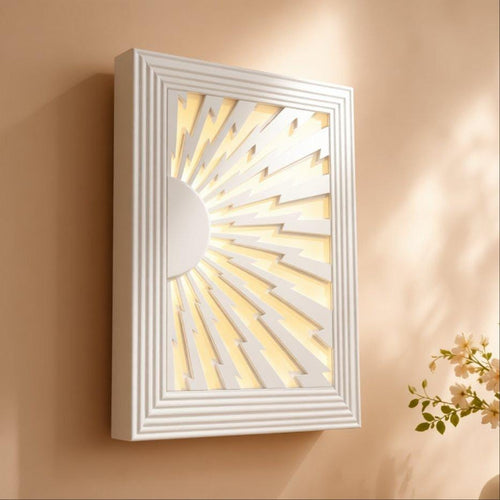
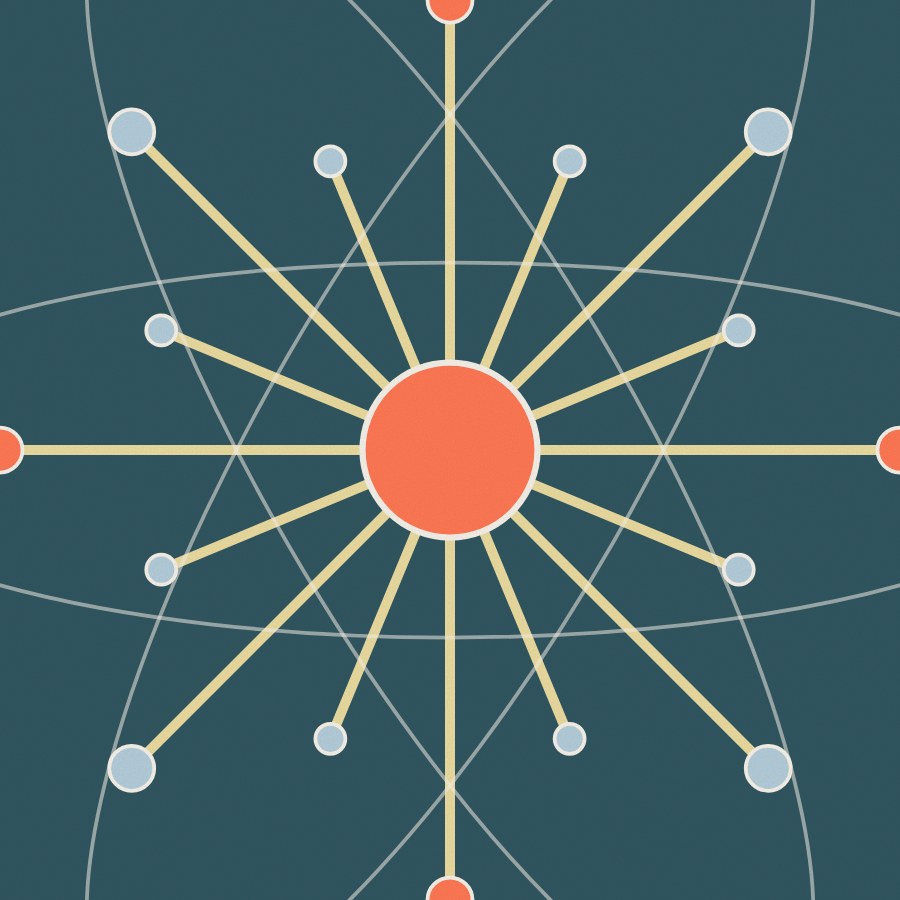
The starburst is the 1950s in a single shape: energy, light and a little bit of the space age.
How to use mid-century style
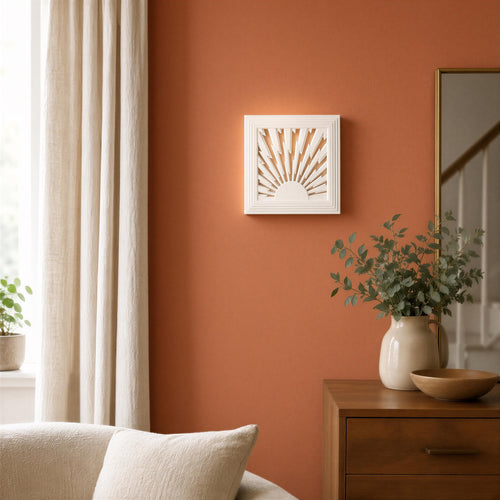
Combine warm woods and simple shapes with one or two graphic accents. A starburst or atomic-inspired ceiling rose around a simple globe pendant is an easy way to set the tone. Teals, mustards and burnt orange suit the era, and a plaster piece painted in one of these colours becomes a playful focal point. Browse our Mid-Century collection.
Good to know
Common questions
What years are mid-century modern?
Mid-century modern usually refers to design from about 1945 to the end of the 1960s. It grew from post-war optimism, new materials such as moulded plywood, fibreglass and plastics, and the excitement of atomic science and the space race, which inspired starbursts, orbits and boomerang shapes.
What are some iconic mid-century modern designs?
Famous pieces include the Eames Lounge Chair (1956), the Ball Clock from the George Nelson studio (about 1948 to 1949), Arne Jacobsen's Egg Chair (1958) and the Atomium in Brussels (1958). In Britain, Lucienne Day's Calyx fabric and Robin Day's seating defined the look of the 1951 Festival of Britain.
What colours suit a mid-century modern room?
Teal, mustard and burnt orange are classic mid-century colours, used against warm woods such as teak and walnut and simple, clean-lined furniture. One or two graphic accents, such as a starburst motif or an atomic-inspired ceiling rose painted in an accent colour, set the tone without overloading the room.
Sources
References and further reading
Harvard style. Web pages were checked on the access date shown.
- Jackson, L. (1991) The New Look: Design in the Fifties. London: Thames and Hudson.
- Jackson, L. (2001) Robin and Lucienne Day: Pioneers of Contemporary Design. London: Mitchell Beazley.
- Victoria and Albert Museum (n.d.) The Festival of Britain. Available at: www.vam.ac.uk/articles/the-festival-of-britain (Accessed: 8 October 2026).
- Atomium (n.d.) Discover the Atomium. Available at: atomium.be/discover (Accessed: 8 October 2026).
How to cite this article
van Locke, J. (2026) ‘Mid-century modern: atomic shapes, starbursts and the optimism of the 1950s’, The Flare Journal. Flare Studio UK. Available at: https://flarestudio.uk/blogs/journal/mid-century-modern-design-guide (Accessed: 12 October 2026).
Shop the style