

Sash Windows: Repair, Draught-Proof or Replace? A Guide for Period Homes

The idea in one minute
If your sash windows rattle, stick or leak air, the sources we read agree on the order of work: repair, then draught-proof, then consider secondary glazing, and replace only as a last resort. Historic England says traditional windows ‘can be simply and economically repaired, usually at a cost significantly less than replacement’, and notes that many historic components keep working after 150, 200 or even 250 years.[1]
This guide covers what a sash is, how it works, what to repair, how to cut draughts without wrecking it, and when you need permission. England only.
What you need: a torch, a bradawl or screwdriver to probe timber gently, and the confidence to ask questions of a specialist. Not legal advice: your council decides whether work needs consent.[2]
If the date of your windows is part of the puzzle, our guide on how to date a house from the outside helps.
How a sash window works
Historic England says vertically sliding sashes were probably introduced from France in the mid-17th century, and that the double-hung sash with counterweights appears to be a British invention, with the earliest surviving example dating from 1701.[1] Each sash is balanced by weights hidden in the box frame, connected by cord over pulleys. Cotton cords were used in the Georgian period; chain replaced cord in some substantial houses in the later 19th century; and the spiral balance was patented in 1930.[1]
The glass tells a story too. Historic England says crown glass, the earliest known English example of which dates from the 1440s, was widely used until the mid-19th century, when cylinder glass became cheaper; float glass was invented in the late 1950s.[1] The slight waviness of old panes is a reason to keep them. The SPAB says historic sash windows, including their glass, should almost always be kept rather than replaced.[3]
Glazing bars carry clues about date. Early bars were often almost 40 mm thick, usually oak; late 17th- and early 18th-century bars were mostly based on the ovolo profile in deal; and by 1820 some bars were only 12 mm wide.[1] Our guide to Georgian interiors shows how those proportions fit the room.
Step 1: assess before you decide
Probe the timber at the cill, the bottom rail and the joints, where water collects. The SPAB cautions against condemning a window based on surface appearance alone, and says decay can usually be tackled without total destruction of the window.[4] It has a strong presumption in favour of repairing old single-glazed windows, and observes that many replacements installed in the last 30 years have already decayed while original 18th-century windows survive.[4]
If the timber is wet, find out why. The SPAB says wet rot calls for finding and removing the moisture source, promoting drying and removing only the decayed timber, while dry rot usually needs an independent timber decay consultant.[4] Do not ignore a gap above the cill: the SPAB says it may indicate structural distress.[3]
Step 2: repair the sash
Day-to-day faults are often simple. The SPAB says not to force a stuck sash, because it often causes damage, and to check for broken cords, paint build-up on running surfaces and pulleys, poorly positioned beads, fouled weights and warped sashes.[3] It suggests easing movement with beeswax, candle wax or soap on the sash edges. If a cord breaks, test the others by bending them and replace all the cords on that window, using durable, low-stretch yarn sized to the weights and pulleys.[3]
For rot, the SPAB’s repair note describes splice repairs: remove only as much decayed timber as needed, shape new timber to the existing line, use sloped or undercut splices so water drains outward, and combine glue with mechanical fixings such as timber pegs or non-ferrous screws.[4] It advises against modern mastic sealants and foam fillers, which can trap moisture, and says preservatives buy time but are not a substitute for good detailing and maintenance.[4]
Reglazing: the SPAB recommends linseed oil putty after priming the rebates, painted within a day or two, with the paint taken slightly onto the glass to seal it.[4] Old paint layers may contain lead; the SPAB notes lead-based paint is restricted by law to exempt buildings.[4] Our caution: assume old paint on pre-modern windows may contain lead, avoid dry sanding, and use a contractor who knows how to handle it.
Step 3: paint and maintain
The SPAB says softwood frames need regular painting to resist decay, and that neglected paint lets water into the timber, causing swelling and further decay.[3][4] On double-hung windows, open the sashes almost fully, paint the exposed parts of the far sash, then return both near their closed positions. Avoid thick coats, keep cords paint-free and use a pointed sash brush.[3] Caustic soda or acid-bath stripping is ruled out because it deforms timber and weakens joints.[4]
Colour choice is a separate question; our guide to heritage colour palettes helps, and paint finishes room by room covers sheens.
Step 4: draught-proof the sash
Historic England describes draught-proofing as the best-value measure, with the largest energy saving and conservation benefit for the lowest financial and environmental cost.[5] Its 2015 guide reports that draught-proofing can reduce air leakage in windows by 33 to 50%, and that in sash-window testing it cut air exchange through the sash by as much as 86%.[1] The SPAB mentions good draught-proofing including sealed parting and staff beads, cam-action catches and repositioning faulty beads.[3]
Choose the product carefully. The Energy Saving Trust says self-adhesive foam strips do not work well on sliding sash windows; use brush strips or a professional. Its page, updated in May 2026, puts professional draught proofing of windows and doors at around £250 for a whole house, and says draught proofing windows, floors and doors could save around £85 a year in Great Britain.[7] Those are national averages, not a promise for your home.
Do not seal everything. The Trust warns not to block fixed ventilation needed for open-flue or flueless gas heaters, not to seal rooms with open fires or flues, and that a home with no trickle vents or mechanical ventilation may already be too airtight.[7] Historic England adds that ventilation helps prevent dampness and decay in older buildings, so ‘a careful balance must be struck’.[5] Our fireplace guide covers flues in more detail.
Step 5: add secondary glazing, curtains or shutters
If the room is still cold or noisy, Historic England describes secondary glazing as an efficient, low-risk option that reduces heat loss and noise, performs better for noise than double glazing, and can be improved with low-emissivity glass.[5] The 2015 guide reports that secondary glazing can cut heat loss by nearly 60%, thermal roller blinds by 57% and closed thick curtains by 41%, with shutters or secondary glazing combined with curtains or blinds reaching 62%.[1] It adds that secondary glazing is usually more thermally efficient than double glazing in multi-paned windows because of thermal bridging through frames and glazing bars.[1]
Cheap options help too: insulated curtains, cellular blinds, low-emissivity film and interior shutters can reduce night-time heat loss.[5] Our guide to hanging curtains shows how to fit them properly.
Step 6: replace only if you must
Historic England says significant windows in listed buildings should be repaired where possible, and if beyond repair replaced with accurate copies. It calls PVCu unsuitable for older buildings, with a service life under 25 years and a higher carbon cost than well-maintained timber or metal windows.[5] It also says windows account for a relatively small share of heat loss in many older houses, so a broader approach is recommended.[5] The 2015 guide adds that heating savings from new windows can take many years to repay the energy used to make PVC-u units.[1]
The 2015 guide warns that pressure to fit double glazing in historic windows ‘in most cases ends up in their complete renewal or inappropriate adaptation’.[1] The SPAB prefers repairing single-glazed windows and adding secondary glazing to fitting double-glazed replacements.[4] If you do replace, replacement windows must comply with building regulations.[5]
Consent: listed buildings and conservation areas
Listed buildings. Historic England says consent is needed to alter a listed building in a way that affects its character, there is no fee, and unauthorised work is a criminal offence; check first with the conservation officer.[2] GOV.UK says listed building consent is separate from planning permission and that a listing covers the whole building.[8] Gravesham Borough Council’s guidance says consent is required for most window works to listed buildings, including adding double or secondary glazing, replacing units or changing colour, while repairs that exactly match the original form and materials do not need it.[6] That is one council’s wording; yours may differ.
Conservation areas. Historic England says there are around 10,000 in England.[9] The Gravesham guidance says Article 4 Directions remove some permitted development rights, so work that would otherwise be allowed needs a planning application first. In its area, replacing windows where the design, materials or profile changes materially needs permission, while like-for-like repairs and replacements do not.[6] Flats and maisonettes do not have the same permitted development rights as houses.[6] If you are unsure whether your house is listed, see how to find out if your house is listed.
Common mistakes
- Forcing a stuck sash. The SPAB says it often causes damage.[3]
- Fitting foam strips to sashes. The Energy Saving Trust says they do not work well on sliding sashes.[7]
- Replacing when repair would do. Repair usually costs significantly less.[1]
- Using mastic or foam fillers on timber. They can trap moisture.[4]
- Sealing every gap in a room with a fire. Keep ventilation.[7]
- Assuming a conservation-area window needs no permission. Article 4 can change that.[6]
Quick-reference table
| Question | Short answer | Source |
|---|---|---|
| Repair or replace first? | Repair | Historic England; SPAB |
| Air leakage cut by draught-proofing? | 33 to 50% | Historic England |
| Heat loss cut by secondary glazing? | Nearly 60% | Historic England |
| Foam strips on sashes? | Not recommended | Energy Saving Trust |
| PVCu service life? | Under 25 years | Historic England |
| Listed consent fee? | None | Historic England |
| Cords: replace one or all? | All on that window | SPAB |
| Linseed putty or mastic? | Linseed putty | SPAB |
Glossary
| Term | Meaning |
|---|---|
| Box sash | A sliding window whose weights hide in a boxed frame |
| Meeting rail | The rails where the two sashes meet |
| Glazing bar | The slender timber dividing panes |
| Horn | A small projection on the sash stile that strengthens the meeting-rail joint |
| Parting bead | The thin strip separating the two sashes in the frame |
| Staff bead | The inner strip holding the lower sash in the frame |
| Crown glass | Hand-spun glass used until the mid-19th century |
| Article 4 Direction | A council direction removing some permitted development rights |
What to do next
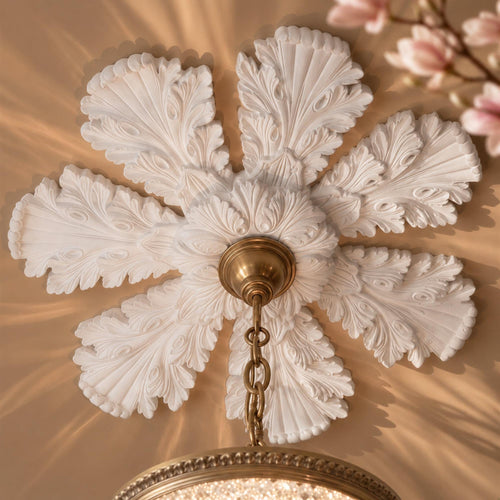
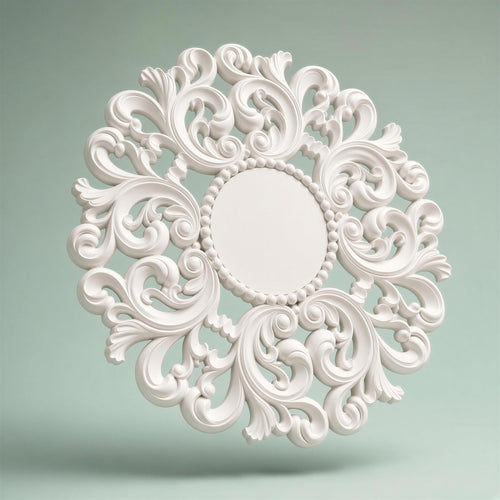
Tune up and draught-proof first, then judge the result over a winter. If you are replacing curtains or the surrounding decoration, see insulating a period home without ruining it for the next steps. Handmade plaster ceiling roses and overdoors suit Georgian and Regency rooms, but the window comes first: a sound sash frames everything else.
Keep reading
- How to date a house from the outside
- How to find out if your house is listed
- A guide to Georgian interiors
- Victorian terrace interior ideas
- How to hang curtains
- Georgian Shrewsbury architecture guide
Shop the look


Frequently asked questions
Should I repair or replace my sash windows?
Repair first. Historic England says traditional windows can usually be repaired at a cost significantly less than replacement, and the SPAB has a strong presumption in favour of repairing old single-glazed windows.
Does draught-proofing sash windows work?
Historic England reports that draught-proofing can reduce window air leakage by 33 to 50%, and by as much as 86% in sash-window tests. The Energy Saving Trust advises brush strips or a professional for sashes, not foam strips.
Is secondary glazing better than double glazing for old windows?
Historic England says secondary glazing is usually more thermally efficient than double glazing in multi-paned windows because of thermal bridging, can cut heat loss by nearly 60%, and is an efficient, low-risk option.
Do I need permission to replace sash windows?
It depends. Listed buildings usually need listed building consent for most window changes, and Article 4 areas can remove permitted development rights. Ask your local planning authority before any work.
How much does draught-proofing cost?
The Energy Saving Trust, in a page updated May 2026, puts professional draught proofing of windows and doors at around £250 for a whole house. Prices vary by home and installer.
What should I do if a sash cord breaks?
The SPAB advises testing the other cords by bending them and replacing all the cords on that window, using durable low-stretch yarn sized to the weights and pulleys.
Can I use PVC-u windows in an old house?
Historic England considers PVCu unsuitable for older buildings, citing a service life under 25 years and a higher carbon cost than well-maintained timber or metal windows.
Is old window paint safe?
Not necessarily. The SPAB notes lead-based paint is restricted by law to exempt buildings, so assume old layers may contain lead and avoid dry sanding. This is our caution, not legal advice.
Sources
References and further reading
Harvard style. Web pages were checked on the access date shown.
- Pickles, D., McCaig, I. and Wood, C. (2015) Traditional Windows: Their Care, Repair and Upgrading. Historic England (copy hosted by Chichester District Council). Available at: chichester.gov.uk/media/24868/Historic-England---Traditio... (Accessed: 27 October 2026).
- Historic England (n.d.) Listed building consent. Available at: historicengland.org.uk/advice/hpg/consent/lbc/ (Accessed: 27 October 2026).
- Society for the Protection of Ancient Buildings (n.d.) Sash window maintenance. SPAB. Available at: spab.org.uk/node/549 (Accessed: 27 October 2026).
- Townsend, A. and Clarke, M. (2019) Repair of Wood Windows (SPAB Technical Advice Note, edition 3). Society for the Protection of Ancient Buildings. Available at: www.spab.org.uk/sites/default/files/SPAB%20Technical%20ad... (Accessed: 27 October 2026).
- Historic England (n.d.) Modifying historic windows as part of retrofitting energy saving measures. Available at: historicengland.org.uk/whats-new/statements/modifying-his... (Accessed: 27 October 2026).
- Gravesham Borough Council (2020) Conservation Areas: Maintenance and Replacement Windows and Doors Guidance (Supplementary Planning Document). Available at: www.gravesham.gov.uk/downloads/file/247/conservation-area... (Accessed: 27 October 2026).
- Energy Saving Trust (2026) Draught proofing. Available at: energysavingtrust.org.uk/advice/draught-proofing/ (Accessed: 27 October 2026).
- GOV.UK (n.d.) Planning practice guidance: Conserving and enhancing the historic environment. Available at: www.gov.uk/guidance/conserving-and-enhancing-the-historic... (Accessed: 27 October 2026).
- Historic England (n.d.) Conservation areas. Available at: historicengland.org.uk/advice/hpg/has/conservation-areas/ (Accessed: 27 October 2026).
How to cite this article
Tire, G. (2026) ‘Sash Windows: Repair, Draught-Proof or Replace? A Guide for Period Homes’, The Flare Journal. Flare Studio UK. Available at: https://flarestudio.uk/blogs/journal/sash-windows-repair-draught-proof-or-replace (Accessed: 12 November 2026).
Shop the style







Conversation
Join the conversation
Questions about the history, a room you are planning, or a piece you have seen in the wild? Leave a comment and Joseph will reply.