Sir John Soane: light, domes and lessons for lighting your home


Sir John Soane (1753–1837) was the most original architect of late Georgian Britain, and his great subject was light. He designed the Bank of England, Dulwich Picture Gallery and his own extraordinary house at 13 Lincoln's Inn Fields in London, now Sir John Soane's Museum, which is free to visit.
His signature devices were the shallow "handkerchief" dome, light dropped in from above through lanterns and skylights, mirrors set into walls and ceilings, and coloured glass that warms daylight. Together they make rooms that feel larger, softer and more mysterious than their size. Almost all of it can be adapted to an ordinary home.
Who was Soane?
Soane was the son of a bricklayer from Goring-on-Thames. He trained with George Dance the Younger and Henry Holland, won a Royal Academy travelling scholarship, and spent two years in Italy studying ancient buildings. In 1788 he was appointed architect to the Bank of England, a post he held for some forty-five years. He became Professor of Architecture at the Royal Academy and was knighted in 1831.
The Bank of England
Soane rebuilt the Bank as a sequence of top-lit halls behind a windowless outer wall, a sensible plan for a building full of gold. Daylight came from lanterns in shallow domes and vaults, with very little classical ornament: just incised lines and simple mouldings. Sadly, most of his interiors were demolished in the 1920s and 1930s when the Bank was rebuilt. The outer wall survives, and the Bank of England Museum includes a reconstruction of his Bank Stock Office, which gives a good sense of the light.
The house-museum at Lincoln's Inn Fields
Soane bought and rebuilt three houses on the north side of Lincoln's Inn Fields, numbers 12, 13 and 14, over several decades. He filled them with his collection of antiquities, casts, paintings and architectural fragments, including the alabaster sarcophagus of the Egyptian pharaoh Seti I and Hogarth's series A Rake's Progress. In 1833 he secured an Act of Parliament to preserve the house and collection after his death, which is why it survives much as he left it.
The rooms are small, but they never feel it. The Dome rises through the full height of the house, lit from above, with casts stacked up its walls. The Picture Room has hinged panels that swing open to reveal more paintings. Light arrives from unexpected places at every turn.
Soane rarely lit a room from where you would expect. He lit it from above, from the side, from a mirror, and let the shadows do the rest.
The handkerchief dome
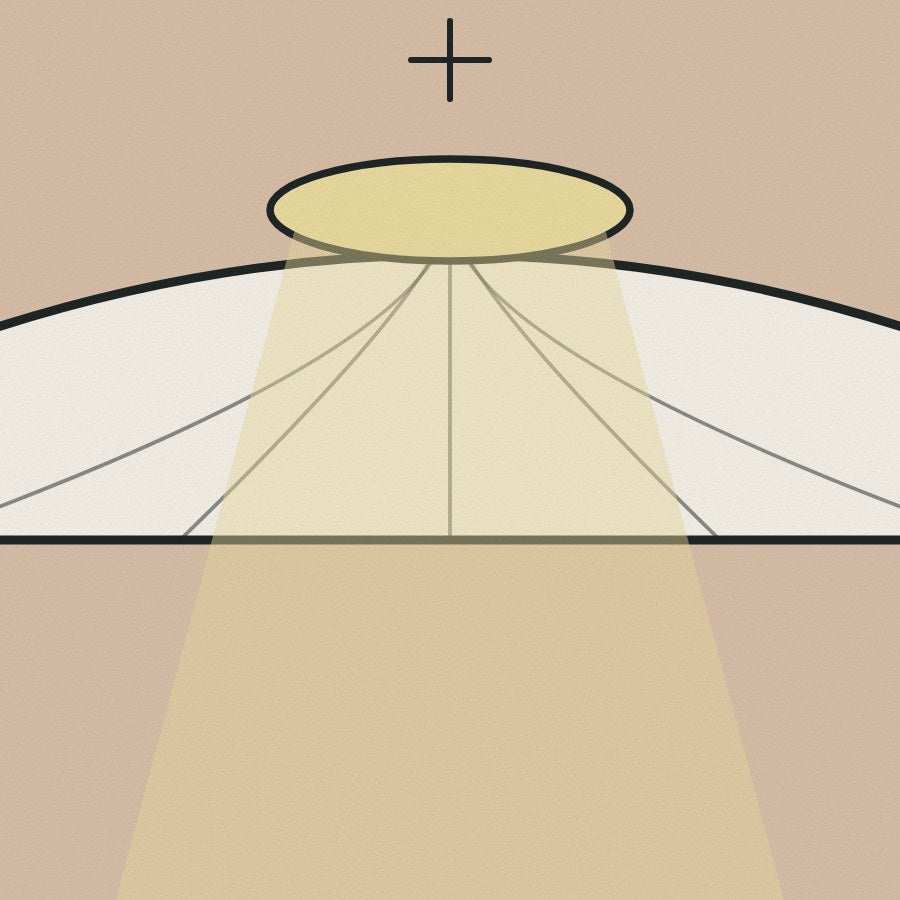
The Breakfast Parlour at number 13 is the best place to see Soane's most famous idea. Its ceiling is a very shallow dome resting on four slender arches, so that it seems to float like a cloth held at the corners, hence the name "handkerchief" dome. Light enters from a lantern at the centre and from skylights at the sides, and small convex mirrors are set into the ceiling and walls. The result is a low room that feels airy and alive.
Soane used the same form on a grander scale at the Bank and at Dulwich Picture Gallery, which opened in 1817 and is one of the earliest purpose-built public art galleries in the world. Its top-lit rooms are still the model for gallery lighting today.
Lessons for lighting a home
- Light from more than one direction. A single central fitting flattens a room. Combine a ceiling light with wall lights and lamps.
- Use the ceiling as a reflector. Upward light washing across a pale ceiling gives the soft, even glow Soane got from his domes.
- Borrow light. Glazed doors, fanlights and internal windows carry light deeper into a house.
- Mirrors in the right place. A mirror opposite or beside a light source doubles it.
- Warm the light. Soane used yellow glass to warm daylight. Warm-white bulbs do the same job in the evening.
- Celebrate shadow. Plaster mouldings only show their shape when light rakes across them.
Putting it into practice
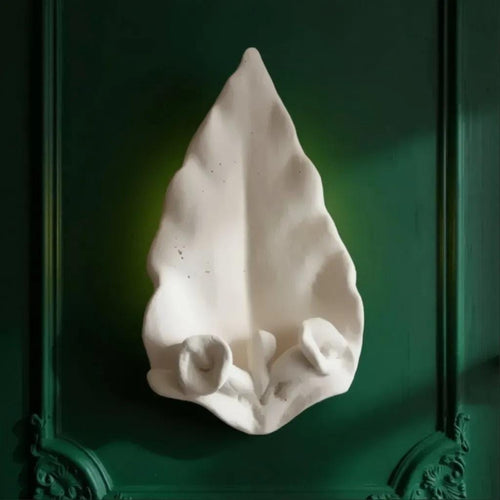
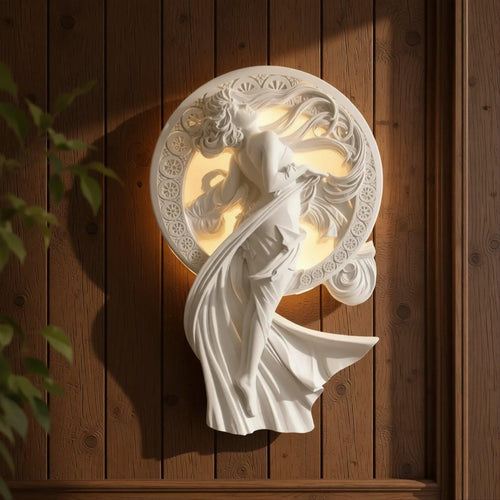
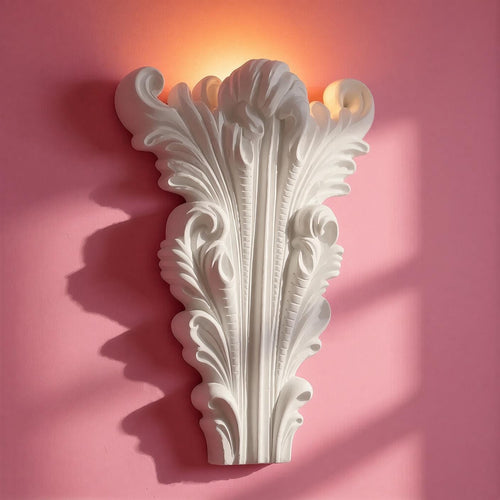
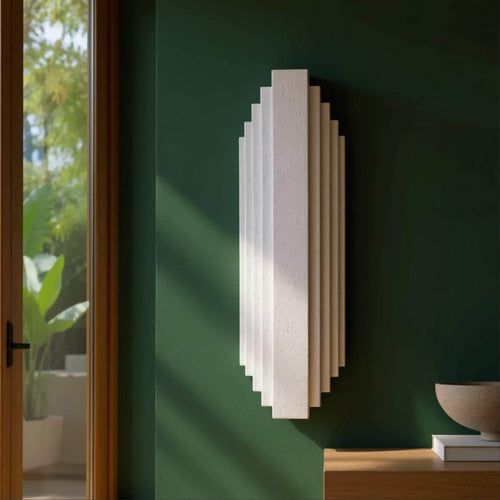
Wall lights are the simplest way to bring Soane's layered approach into a room. A pair of plaster uplighters throws light up across the wall and ceiling, softening corners and giving a domed ceiling effect even in a flat-ceilinged room. Our wall lights are hand-cast to order in Shrewsbury in natural plaster and come as a shade only, as a battery LED version with a remote, or as UK mains hardwired. Mains wiring should always be carried out by a qualified electrician; in England and Wales notifiable electrical work falls under Part P of the Building Regulations.
Browse the wall lights collection and read our fitting instructions. For the wider period, our guide to Georgian interiors is a good companion.
Good to know
Common questions
Is Sir John Soane's Museum free?
Yes. Soane secured a private Act of Parliament in 1833 to keep his house and collection at 13 Lincoln's Inn Fields as he left them, open and free to the public. Some special tours and events may carry a charge.
What is a handkerchief dome?
A handkerchief dome is a very shallow dome resting on four arches, so it seems to float like a cloth held at the corners. Soane's best-known example is the Breakfast Parlour at his house, lit by a central lantern and side skylights with convex mirrors.
How can I light a room like Soane?
Light from more than one direction, bounce light off a pale ceiling, use mirrors beside light sources and choose warm-white bulbs. Uplighting wall lights are an easy way in. Any hardwired fitting must be installed by a qualified electrician; battery LED versions avoid wiring.
Sources
References and further reading
Harvard style. Web pages were checked on the access date shown.
- Darley, G. (1999) John Soane: An Accidental Romantic. New Haven, CT and London: Yale University Press.
- Sir John Soane's Museum (n.d.) Our history. Available at: www.soane.org/about/our-history (Accessed: 8 October 2026).
- Bank of England (2021) The Bank of England's architects and architecture. Available at: www.bankofengland.co.uk/museum/online-collections/blog/th... (Accessed: 8 October 2026).
- Dulwich Picture Gallery (n.d.) Our history. Available at: www.dulwichpicturegallery.org.uk/about/our-history (Accessed: 8 October 2026).
- Ministry of Housing, Communities and Local Government (2013) Electrical safety: Approved Document P. Available at: www.gov.uk/government/publications/electrical-safety-appr... (Accessed: 8 October 2026).
How to cite this article
van Locke, J. (2026) ‘Sir John Soane: light, domes and lessons for lighting your home’, The Flare Journal. Flare Studio UK. Available at: https://flarestudio.uk/blogs/journal/sir-john-soane-light-and-space (Accessed: 12 October 2026).
Shop the style