Slip shades and Art Deco lighting: a guide to 1920s and 1930s fittings


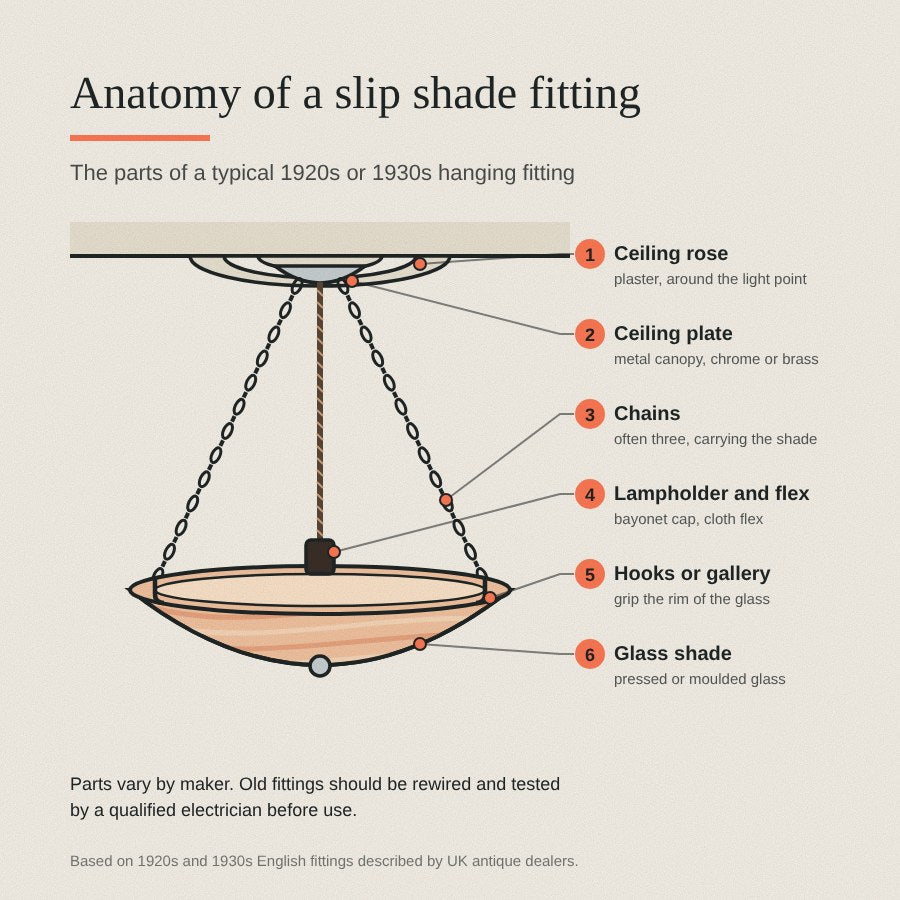
A slip shade is a glass shade that rests in a hanging fitting rather than being screwed to it. In the typical British version, a pressed or moulded glass bowl sits in hooks or a metal gallery, hung on chains from a ceiling plate, with the lampholder and flex inside. It was one of the commonest ceiling lights of the 1920s and 1930s, and it is still the easiest way to give a period room a period light.
These fittings existed because the British home was being wired at speed. This guide covers how that happened, the parts of a slip shade, the other lights of the period and the glass behind them, with four real examples annotated and advice on restoring a vintage fitting safely.
How electricity reached the British home
In 1919 only 6% of British homes were wired for electricity. By the end of the 1930s, according to the Science Museum Group, about two thirds were. The turning point was the Electricity (Supply) Act of 1926, which set up the Central Electricity Board to build a national grid of high-voltage transmission lines.
Construction began in central Scotland in 1928. The last tower of the main system went up near the New Forest in September 1933, completing a network of 26,265 towers carrying 132,000 volts. By 1934, the Science Museum Group notes, the grid was serving most parts of Britain.
The new light changed the look of rooms. Electric light was cleaner than gas, which made paler decorating schemes practical, and pale, simple fittings followed. New houses in the suburbs were built with a light point in the middle of each ceiling, and the slip shade was the obvious thing to hang from it.
Slip shade anatomy
Period dealers describe the same few parts again and again. One English bowl fitting of the 1920s or 1930s hangs its moulded glass bowl from a patinated brass ceiling plate with three hooks, on cloth flex with a bayonet cap lampholder. Another, made in England in the 1930s, carries marbled pink glass shades on chrome chains. The diagram below shows how the ceiling rose, plate, chains, hooks, lampholder and glass fit together.
The fittings of the 1920s and 1930s
- Slip shades and bowls. The everyday ceiling light. A shallow bowl hung on chains throws light down into the room and, through the glass, a soft glow to the sides.
- Plafonniers. A bowl or dish fixed close to the ceiling, useful in rooms with lower ceilings. Dealers use the word loosely, so check the drop before you buy.
- Uplighters. Bowls or dishes that throw light up onto the ceiling. London Transport Museum holds a bronze uplighter of 1931 from Holborn station, made by GEC and probably designed by Charles Holden. It lit the curved escalator ceiling, but the light was not very bright, and most were later replaced with fluorescent tubes.
- Wall lights. Fan, shell and half-bowl shapes washed light up the wall. Our history of the wall sconce traces how the form grew from the candle bracket.
- Daylight and concealed light. In grand houses, light could be built into the architecture. At Eltham Palace, a 1934 drawing by John Healey Ltd shows a Novalux dome light over the lobby. Our guide to Art Deco ceilings and plasterwork looks at the coves and domes that held these lights.
Glass, chrome and Bakelite
British pressed glass. Pressed glass made Art Deco shapes affordable. Bagley of Knottingley in Yorkshire, set up in 1871, became the biggest maker of pressed glass in England by the mid-20th century. Davidson's and Sowerby's of Gateshead and Jobling of Sunderland also made Art Deco pressed glass, at much lower prices than René Lalique.
Prismatic glass. Holophane, established in 1896, sold prismatic glass that bent light where it was needed. George Davidson and Co. began making it for Holophane that year, and Grace's Guide notes the glass had to be made to high precision to work.
French and North American glass. Ernest-Marius Sabino, born in Sicily and trained in Paris, set up a factory after the First World War making light fittings in wood and bronze, then moved to pressed and moulded glass. He showed at the 1925 Paris exhibition and supplied the liner Normandie. The Jefferson Glass Company's Toronto plant, opened in the early 1910s, specialised in light shades and illuminated signs.
Chrome. Commercial chromium plating took off from 1926, after work at Columbia University. Its cool shine suited the later, streamlined style. Our guide to Streamline Moderne follows that look.
Bakelite. Leo Baekeland filed his patent for the first synthetic plastic in July 1907. The Science Museum notes that fillers such as wood and asbestos were pressed into the resin, a good reason to leave damaged old Bakelite parts to a specialist.
Art Deco lighting, annotated
Here are four real examples, from a Tube station to a country house saloon. Each photograph is numbered with the features worth noticing. The colour swatches are sampled from the photographs, so treat them as a guide rather than a paint match.
1. Uplighters on the Underground
Turnpike Lane station in north London opened in 1932 and was designed by Charles Holden. Historic England lists it at Grade II and notes a central bronze uplighter on a tapered, fluted column in the booking hall. These are the matching uplighters down in the lobby between the platforms.

- Glass top above the lamp
- Wide metal dish
- Ribbed column
- Square base
- A second uplighter on the same line
- The curved ceiling catches the light
- Glazed wall tiles above a dark base band
Colours in this photo:
Black band #080808Lit ceiling #A27F53
Take from it: An uplighter turns the ceiling into the light source. A pale, curved or coved ceiling gives the softest result.
2. A ceiling light and its surround
Freemasons' Hall on Great Queen Street, London, was built in 1927 to 1933 to designs by H. V. Ashley and Winton Newman, and is listed Grade II*. This ceiling light hangs in a hall beside one of its vestibules.

- Opal glass lantern
- Metal grille of interlocking squares
- Stepped, many-sided frame
- Green and gold zigzag band
- Square medallions with four-pointed stars
- Fluted, gilded ring
- Plain outer moulding
Colours in this photo:
Gilding #775D23Malachite green #2D3520Wall #7A6F4F
Take from it: The light and the ceiling ornament were designed as one piece. A stepped or sunburst ceiling rose does the same job at home.
3. Layered light in a country house
The saloon at Coleton Fishacre in Devon. The D'Oyly Carte family moved into the newly built house in 1926, and the National Trust describes it as an Arts and Crafts house with Art Deco interiors. Notice that there is no central pendant at all.

- Wall light between the windows
- Wall light beside the arched recess
- Rounded cove where wall meets ceiling
- Standard lamp
- Table lamp on the bureau
- Stepped mirror over the fireplace
- Leaded windows
- Chrome and glass side table
Colours in this photo:
Polished floor #543124Armchair blue-green #2C3738Ceiling #AFA69F
Take from it: Wall lights, a standard lamp and a table lamp light a long room better than one pendant. Our guide to layered lighting explains how to plan it.
4. A brass and glass pendant
For international context, an Art Deco ceiling light in the Estonian Students' Society building in Tartu, Estonia. It mixes two ideas: a glass lantern and a ring of opal globes on curved arms.

- Opal globes
- Frosted glass panels in a many-sided lantern
- Brass frame
- Curved brass arms
- Brass cups holding each globe
- One globe hanging below the lantern
Colours in this photo:
Brass #B7A284Frosted glass #808B87Ceiling #D9D8D6
Take from it: Opal glass hides the bulb and spreads the light evenly. Look for the same soft, milky glass in a vintage shade.
Where to see interwar lighting in Britain
Original fittings are best understood in the rooms they were made for. These four places, all mentioned above, let you see interwar light in use.
- Turnpike Lane station, north London. Opened in 1932 and still in daily use. Historic England's listing notes the central bronze uplighter on a tapered, fluted column in the booking hall. Stand under it and look at how the light spreads across the ceiling.
- Coleton Fishacre, Devon. The National Trust describes Art Deco features, sea views and light and airy designs inside the D'Oyly Carte family's 1920s house. Check the house opening times before you go, and look for how the saloon is lit from the walls and lamps rather than one pendant.
- Eltham Palace, south-east London. English Heritage invites visitors to explore the Art Deco dining room, and a 1934 drawing in the Historic England Archive shows the Novalux dome light planned for the lobby. See our Art Deco ceilings article for the dining room and entrance hall, annotated.
- Freemasons' Hall, London. The ceiling light in our second example hangs in this working building. Guided tours last about 55 minutes and are booked online, and the route varies with what is in use that day.
What to look for: where the light source is hidden, whether light goes up, down or both, and how the fitting relates to the plasterwork around it. Those three questions will tell you more about a period scheme than the style of the glass.
How to buy and restore a vintage fitting
- Buy the glass, budget for the wiring. Treat old flex, lampholders and ceiling plates as parts to be replaced. Good dealers say whether a fitting has been rewired and tested. One English dealer's 1930s chrome fitting was sold fully rewired and PAT tested, ready for connection by a qualified electrician.
- Use a qualified electrician. Mains wiring is not a DIY job. In England and Wales, Part P of the Building Regulations requires fixed electrical installations in homes to be designed, installed, inspected and tested safely, and notifiable work must be reported to building control unless it is done by an electrician registered with a Competent Person Scheme.
- Metal fittings need an earth. A chrome or brass fitting must have a working earth connection. Lighting maker Dowsing and Reynolds asks for a valid earth on its own vintage-style wall lights, and advises a qualified electrician if you are in any doubt. Older lighting circuits do not always have one, so ask your electrician to check before you choose a metal fitting.
- Measure the fitter. If you are replacing a shade, the opening it sits in is called the fitter. Antique Lamp Supply explains that its size is the diameter of the opening, so measure it before you buy glass.
- Listed homes. If your house is listed, Historic England advises checking with your local authority's conservation officer before making changes that affect its character. Our guide to restoring a 1930s Art Deco home covers what to keep.
How to bring it home
- Pair the shade with the rose. A slip shade hangs well below the ceiling, so the rose shows. A stepped or sunburst rose, such as our Aurora Ceiling Rose or Sunburst Ceiling Rose, suits the period. Make it roughly the width of the shade or a little smaller, so the two read as a pair. Our guide on choosing a ceiling rose size explains how to measure.
- Keep the plate visible. The ceiling plate sits on the rose. Choose a rose with a flat centre wide enough for the plate.
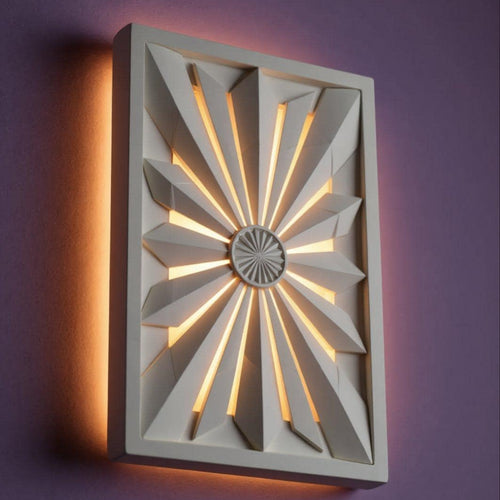
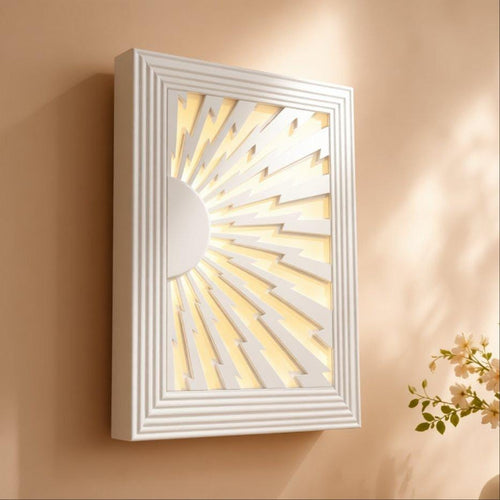
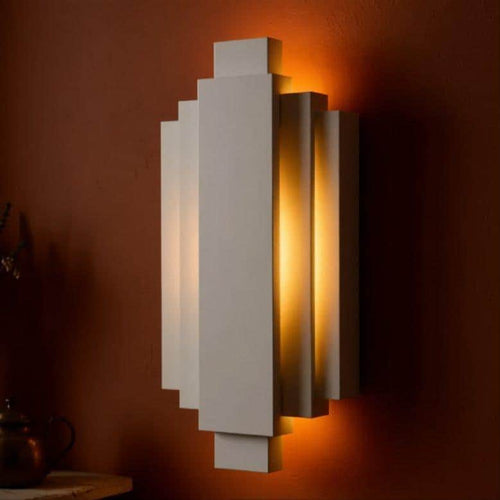
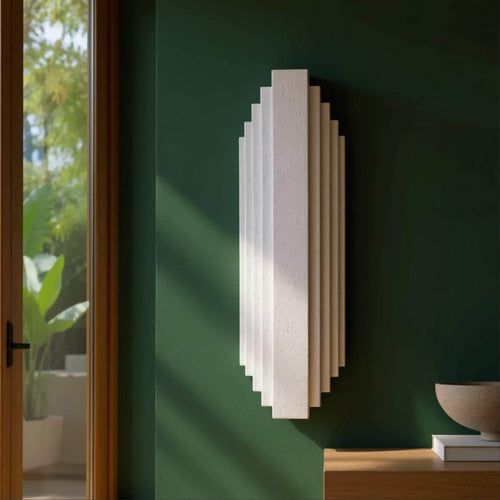
- Add wall lights that wash upward. A fan or half-bowl wall light, used as an uplighter, such as our Fan Wall Light or Neo-Deco Wall Light, recreates the 1930s effect with a modern fitting. Use pairs, either side of a fireplace or mirror.
- Layer it. Coleton Fishacre lights its saloon with wall lights and lamps, not one pendant. Our guide to layered lighting in a living room shows how to combine them.
- Choose warm, diffused light. Opal and frosted glass were chosen to hide the bulb. A warm-white bulb keeps that soft glow.
Common mistakes to avoid
- Using old flex as it is. Original cloth flex and lampholders are a fire and shock risk. Have the fitting rewired and tested.
- Fitting a metal light without an earth. Ask your electrician first, not after.
- Hanging a shade too low. Chains can be shortened. Leave clear headroom where people walk.
- Too many motifs. A patterned shade, a busy rose and fussy wall lights compete. Let one piece lead.
Shop the look
Fan wall lights to wash the walls and stepped roses to frame a slip shade.


Art Deco wall lights and ceiling roses in plaster
A fan-shaped plaster wall light gives the upward wash of a 1930s uplighter, and a stepped or sunburst ceiling rose frames a slip shade. Browse our wall lights to light the walls, and see our guide to Art Deco buildings to visit in Britain for more ideas. Every piece in our Art Deco collection is designed and hand-cast in Shrewsbury, and arrives as natural plaster ready to leave raw or paint to suit your room.
Good to know
Common questions
What is a slip shade light?
A ceiling fitting in which a glass shade rests in hooks or a metal gallery rather than being screwed on. In the typical 1920s and 1930s British version, the shade hangs on chains from a metal ceiling plate, with the lampholder and flex inside the bowl.
Is it safe to use an original 1930s light fitting?
Only once it has been rewired and tested by a qualified electrician. Old flex and lampholders should be replaced, and metal fittings need a working earth connection. In England and Wales, electrical work in homes falls under Part P of the Building Regulations.
What ceiling rose goes with a slip shade?
A stepped or sunburst rose suits the period. Choose one roughly the width of the shade or a little smaller, with a flat centre wide enough for the fitting's ceiling plate.
Sources
References and further reading
Harvard style. Web pages were checked on the access date shown.
- Antique Lamp Supply (n.d.) How to choose a replacement glass lampshade. Available at: www.antiquelampsupply.com/04-how-to-choose-glass-shade-size/ (Accessed: 13 October 2026).
- Colin (2017) Freemasons' Hall, London 2017-09-17-6 [Photograph]. Wikimedia Commons. CC BY-SA 4.0. Available at: commons.wikimedia.org/wiki/File:Freemasons%27_Hall,_Londo... (Accessed: 13 October 2026).
- Cooper Hewitt, Smithsonian Design Museum (n.d.) Ernest-Marius Sabino. Available at: www-3.collection.cooperhewitt.org/people/404576057/bio (Accessed: 13 October 2026).
- Dowsing and Reynolds (2018) Vintage Wall Light: instructions. Available at: www.dowsingandreynolds.com/wp-content/uploads/2017/10/AC-... (Accessed: 13 October 2026).
- English Heritage (n.d.) Eltham Palace and Gardens. Available at: www.english-heritage.org.uk/visit/places/eltham-palace-an... (Accessed: 13 October 2026).
- Grace's Guide (n.d.) Holophane. Available at: www.gracesguide.co.uk/Holophane (Accessed: 13 October 2026).
- Grace's Guide (n.d.) National Grid. Available at: gracesguide.co.uk/National_Grid (Accessed: 13 October 2026).
- HAES Antiques (n.d.) Deep bowl glass plafonnier. Decorative Collective. Available at: www.decorativecollective.com/product/haes-antiques/deep-b... (Accessed: 13 October 2026).
- Hemswell Antique Centres (n.d.) Art Deco original 1930s marbled pink glass chrome ceiling light. Available at: www.hemswell-antiques.com/antiques/antique-lighting/antiq... (Accessed: 13 October 2026).
- Heritage Toronto (n.d.) Jefferson Glass Company. Available at: exploredundascarlaw.heritagetoronto.org/jefferson-glass-c... (Accessed: 13 October 2026).
- Historic England (1934) Blueprint showing a section of the Novalux dome light over the lobby at Eltham Hall [MP/ELT0412]. Available at: historicengland.org.uk/images-books/photos/item/MP/ELT0412 (Accessed: 13 October 2026).
- Historic England (n.d.) Freemasons Hall, List Entry 1113218. Available at: historicengland.org.uk/listing/the-list/list-entry/1113218 (Accessed: 13 October 2026).
- Historic England (n.d.) Listed Building Consent. Available at: historicengland.org.uk/advice/hpg/consent/lbc/ (Accessed: 13 October 2026).
- Historic England (n.d.) Turnpike Lane London Regional Transport Underground Station, List Entry 1263624. Available at: historicengland.org.uk/listing/the-list/list-entry/1263624 (Accessed: 13 October 2026).
- Linz, J. (2021) 'Plate like chrome', Art Deco New York, 6(1). Art Deco Society of New York. Available at: www.artdeco.org/plate-like-chrome (Accessed: 13 October 2026).
- London Transport Museum (n.d.) Light fitting; Bronze uplighter from escalator at Holborn Underground station, 1931. Available at: www.ltmuseum.co.uk/collections/collections-online/infrast... (Accessed: 13 October 2026).
- Museum of Freemasonry (n.d.) Tour Freemasons' Hall London. Available at: museumfreemasonry.org.uk/tour-freemasons-hall-london (Accessed: 13 October 2026).
- National Trust (n.d.) Coleton Fishacre. Available at: www.nationaltrust.org.uk/visit/devon/coleton-fishacre (Accessed: 13 October 2026).
- Ribble Valley Borough Council (n.d.) Electrical safety: Building Regulations. Available at: ribblevalley.gov.uk/building-control-regulations/electric... (Accessed: 13 October 2026).
- Riley, A. (2015) Turnpike Lane Underground Station [Photograph]. Wikimedia Commons. CC BY-SA 4.0. Available at: commons.wikimedia.org/wiki/File:Turnpike_Lane_UndergrounD... (Accessed: 13 October 2026).
- Science Museum (n.d.) Bakelite: the first synthetic plastic. Available at: blog.sciencemuseum.org.uk/bakelite-the-first-synthetic-pl... (Accessed: 13 October 2026).
- Science Museum Group (n.d.) Central Electricity Board 1926. Available at: collection.sciencemuseumgroup.org.uk/people/ap10875 (Accessed: 13 October 2026).
- Science Museum Group (n.d.) Light Fitting, 1920–1940 [Object Y7001.995]. Available at: collection.sciencemuseumgroup.org.uk/objects/co8419520/li... (Accessed: 13 October 2026).
- Trickett, K. (2025) 'Art-glass for the masses', Art Deco Society UK, 17 November. Available at: artdecosociety.uk/art-glass-for-the-masses (Accessed: 13 October 2026).
- Veterine (n.d.) Lamp EÜSi majas [Photograph]. Wikimedia Commons. CC BY-SA 4.0. Available at: commons.wikimedia.org/wiki/File:Lamp_E%C3%9CSi_majas.jpg (Accessed: 13 October 2026).
- Voller, D. (2015) The superb Art Deco style Saloon, Coleton Fishacre House [Photograph]. Geograph, via Wikimedia Commons. CC BY-SA 2.0. Available at: commons.wikimedia.org/wiki/File:The_superb_Art_Deco_style... (Accessed: 13 October 2026).
How to cite this article
van Locke, J. (2026) ‘Slip shades and Art Deco lighting: a guide to 1920s and 1930s fittings’, The Flare Journal. Flare Studio UK. Available at: https://flarestudio.uk/blogs/journal/slip-shades-art-deco-lighting (Accessed: 18 October 2026).
Shop the style