Art Deco Britain: buildings to visit


The best Art Deco buildings to visit in Britain are spread from Glasgow to the Sussex coast. In London, start with Eltham Palace, Battersea Power Station and the Hoover Building. Further afield, the Midland Hotel in Morecambe, the De La Warr Pavilion in Bexhill, Saltdean Lido and Coleton Fishacre in Devon are all open to visitors, and newspaper offices in Fleet Street and Manchester can be admired from the pavement.
This guide covers twelve buildings. For each one you will find where it is, when it was built and by whom, why it matters, and whether you can go inside. Opening arrangements change, so where we could not confirm them from an official source we say so. Check before you travel.
Why British Art Deco is so varied
The style took its name from the 1925 Paris exhibition, which we cover in Paris 1925: the exhibition that gave Art Deco its name. In Britain it arrived late and was used by clients who wanted to look modern: newspapers, railway companies, power stations, seaside councils and factory owners on the new arterial roads.
That is why the British buildings look so different from one another. A newspaper office in black glass, a power station with marble control rooms and a white seaside pavilion all belong to the same years. Some are jazzy and decorated. Others are plain and streamlined, a later strand we explore in Streamline Moderne: speed lines, curves and the ocean-liner style. For a refresher on the basics, see What is Art Deco?
Twelve buildings at a glance
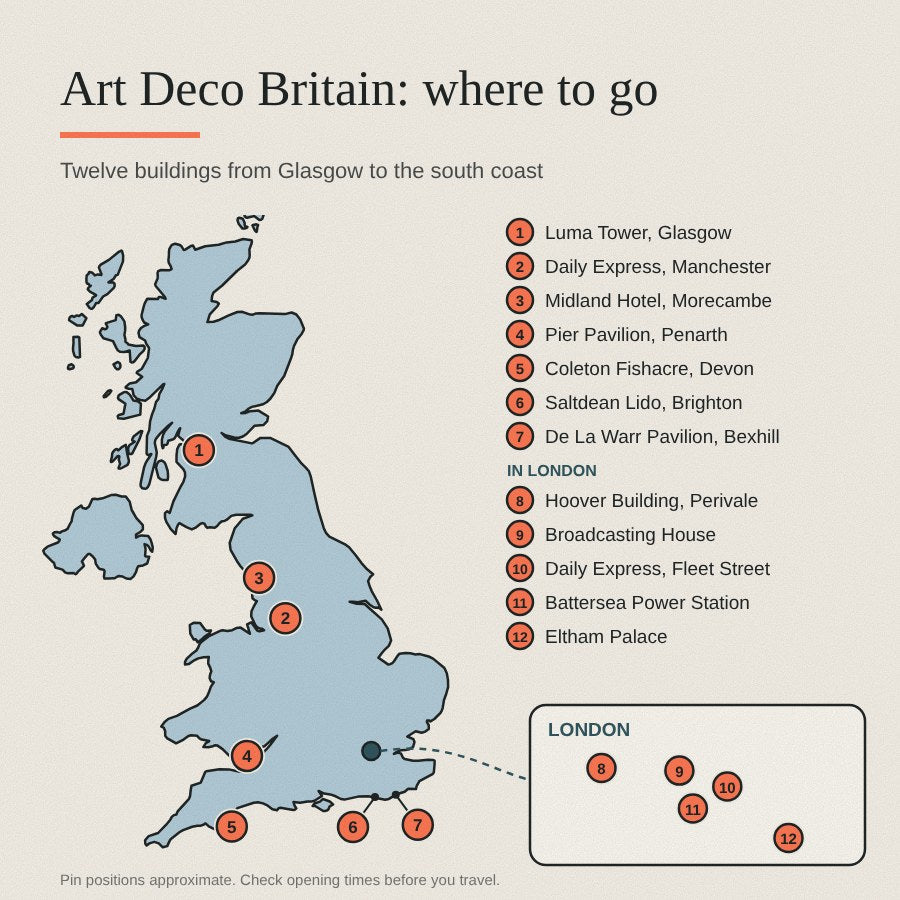
The numbers match the map below. Seven are outside London and five are in the capital, close enough to see two or three in a day.
- Scotland and the north. 1. Luma Tower, Glasgow. 2. Daily Express Building, Manchester. 3. Midland Hotel, Morecambe.
- Wales and the west. 4. Penarth Pier Pavilion, Vale of Glamorgan. 5. Coleton Fishacre, near Kingswear, Devon.
- The south coast. 6. Saltdean Lido, Brighton. 7. De La Warr Pavilion, Bexhill-on-Sea.
- London. 8. Hoover Building, Perivale. 9. Broadcasting House, Portland Place. 10. Daily Express Building, Fleet Street. 11. Battersea Power Station. 12. Eltham Palace.
London: five buildings in a weekend
Eltham Palace, Greenwich (1933 to 1935). In 1933 Stephen and Virginia Courtauld took a 99-year lease from the Crown and commissioned Seely and Paget to build a new house beside the medieval great hall. The outside is traditional; the inside ranges from historical to moderne, with a dining room under an aluminium-leaf ceiling and Virginia's gold mosaic bathroom. English Heritage has run the whole site since 1995 and has been restoring the Courtauld-era rooms. Visit: open daily, 10am to 5pm, at the time of writing. Book online for a discount.
Battersea Power Station (1929 to 1935, and 1937 to 1941). Engineer Leonard Pearce designed it, with J. Theo Halliday and Sir Giles Gilbert Scott as architects. It is listed Grade II*. Historic England describes Halliday's interiors as jazz-age cinema style carried into industry. Visit: the restored building opened to the public in October 2022. Turbine Hall A is now lined with shops and Control Room A was planned as an events space, so seeing the control room itself depends on what is on.
Hoover Building, Perivale (1932 to 1935). Wallis, Gilbert and Partners designed this Grade II* factory front on Western Avenue, with a recessed entrance in an "Egyptian Art Deco manner" and coloured tiles. Historic England calls it possibly the most significant arterial road factory of its date. Visit: it was converted into 66 homes in 2017 to 2018, so this is a building to see from outside.

Daily Express Building, Fleet Street (1932). Ellis and Clarke with Sir Owen Williams, listed Grade II*, with black glass facing and a rounded corner. The entrance hall is famous for its metalwork. Visit: the hall is not generally open. Redevelopment plans approved in 2021 promised to open the lobby to the public permanently, but no date was given. Check before you travel.
Broadcasting House, Portland Place (1930 to 1932). The BBC's headquarters by G. Val Myer and Watson Hart, in Portland stone, listed Grade II*. Above the entrance is Eric Gill's sculpture of Prospero and Ariel. Most of the original interiors, by designers including Wells Coates and Serge Chermayeff, have gone. Visit: the BBC ended public tours in 2016 on security grounds, so enjoy the outside and the sculpture from the street.
One London interior now lives in a museum store. The foyer of the Strand Palace Hotel, designed by Oliver Bernard in 1930 to 1931 in marble, glass and chrome, was dismantled in 1969 and given to the V&A. Its record lists it at V&A East Storehouse, not on public display, so ask the museum before you plan a trip around it.
If Eltham Palace is on your list, watch this first. English Heritage's short film looks at how the Courtaulds' travels shaped the house, which is a good way to make sense of its very different rooms before you walk round them.
Video: English Heritage, "The travels that shaped Eltham Palace", via YouTube.
Beyond London: Scotland, the north and Wales
Luma Tower, Glasgow (designed 1936). A lamp factory on Shieldhall Road, designed by Cornelius Armour, a staff architect of the Scottish Co-operative Wholesale Society. Its glazed tower was used for testing lamps. It was converted to housing in 1995 to 1996 and is listed Category B. Visit: private homes; view from the street.
Daily Express Building, Manchester (1939). Sir Owen Williams again, listed Grade II*, and very like its sister in Fleet Street. Black glass in continuous bands, with clear glass between. Visit: it is an office building, so admire it from Great Ancoats Street.
Midland Hotel, Morecambe (1932 to 1933). Built for the London Midland and Scottish Railway to designs by Oliver Hill, with seahorses, a ceiling relief and a stone panel by Eric Gill, and murals by Eric Ravilious in the circular café. Visit: it is a working hotel, now part of The Inn Collection Group; afternoon tea needs a reservation.
Penarth Pier Pavilion (1929). A Grade II listed ferro-concrete pavilion at the landward end of the pier, which the Theatres Trust describes as early Art Deco with an Indian flavour, from its tapering corner towers and bracketed eaves. It was renovated in 2013. Visit: it hosts exhibitions, events and film screenings; opening hours vary.
The south coast and Devon
De La Warr Pavilion, Bexhill-on-Sea (opened 1935). The 9th Earl De La Warr persuaded the town council to hold an international competition. Erich Mendelsohn and Serge Chermayeff won it, and the pavilion opened on 12 December 1935. It was upgraded to Grade I in 1986 and reopened after restoration in 2005. Visit: open seven days a week, 10am to 5pm, and entry to the building is free.
Saltdean Lido, Brighton (1938). Designed by R. W. H. Jones and listed Grade II*. Historic England calls it "architecturally probably the finest lido in England". Visit: after a long restoration the pool and buildings are open year-round; check swim times first.
Coleton Fishacre, near Kingswear (1925 to 1926). Oswald Milne designed this country house for Rupert D'Oyly Carte. The National Trust describes it as an Arts and Crafts house with Art Deco interiors. Historic England's listing notes its original electric light fittings. Visit: National Trust; open days vary through the year, so check dates before you go.
Five buildings, annotated
Here are five of the twelve, from a domed entrance hall to a seafront hotel. Each photograph is numbered with the features worth looking for when you visit. Where the photo is in colour, the swatches are sampled from the photograph itself, so treat them as a guide rather than a paint match.
1. Eltham Palace: the entrance hall
English Heritage calls this the most authentic Art Deco interior at Eltham. It was designed by the Swedish designer Rolf Engströmer and is lit from above by a glass dome.

- Band of windows below the domed roof
- Marquetry figure of a Roman soldier
- Marquetry figure of a Viking
- Inlaid city views of Italy and Scandinavia
- Walls lined in blackbean veneer
- Doorway with a view through to the garden
- Rug with a bold curving pattern, a recreation of the original
- Curved upholstered furniture, also recreated
Colours in this photo:
Rug terracotta #9E705F
Take from it: One rich material on the walls, one bold rug and plenty of daylight. The ornament is kept to a single band at eye level.
2. Battersea Power Station: Control Room A
The control room window seen from Turbine Hall A. Historic England describes Control Room A as lavish Art Deco, with marble walls, a coffered ceiling and a walnut-veneer control panel.

- Steel-framed oriel window projecting into the hall
- Control panel with painted circuit lines
- Rows of round dials
- Panel lettering, here for Generator 3
- Riveted steelwork overhead
- Faience-clad wall of the turbine hall
- Window frames painted a soft green
Colours in this photo:
Window frame green #7A857FFaience #8E8A7CRiveted steel #4C392A
Take from it: Industrial Art Deco relies on repetition: the same dial, the same glazing bar, the same tile, again and again.
3. De La Warr Pavilion, Bexhill
The sea-facing side of the pavilion, which opened in December 1935. Historic England notes it was the first public welded-steel building in Britain.

- Projecting semicircular bow
- Spiral staircase behind the glass
- Cantilevered balconies with iron rails
- Fully glazed south side
- Ground-floor piers, faced with ceramic tiles
- Flat roof with a railing
- Rendered wall of the assembly hall
- Older seafront houses, for contrast
Colours in this photo:
Render #F6E0BD
Take from it: Long horizontal lines and one strong curve. It is the seaside version of the style, calmer than the jazz-age interiors.
4. Daily Express Building, Manchester
Sir Owen Williams' northern newspaper office of 1939 on Great Ancoats Street. Historic England lists early use of glazed curtain walling among its key features.

- Rounded corner
- Continuous bands of black glass
- Clear glazing between the black bands
- Narrow tower at the left end
- Top storeys set back
- Entrance in the glass front
- Slim horizontal fins on the end wall
Colours in this photo:
Black glass #040509
Take from it: Black and clear glass in bands gives a building speed without any ornament at all.
5. The Midland Hotel, Morecambe
Oliver Hill's hotel of 1932 to 1933, seen from the promenade. Historic England describes its curved plan, convex towards the sea.

- Convex front curving towards the sea
- Projecting horizontal bands between floors
- Recessed balconies
- Round, single-storey wing
- Glazed ground-floor frontage
- Glazed top storey
- The promenade, part of the setting
Colours in this photo:
Render #B9B1A8
Take from it: The curve does all the work. A plain white wall, bent, is enough to make a building feel modern.
Planning your visit
- Check opening times on the day. Eltham Palace, Coleton Fishacre and the De La Warr Pavilion publish their hours online, and open days can change through the year.
- Group by region. Saltdean and Bexhill are on the same stretch of coast. Morecambe and Manchester make a north-west pair.
- Look up and look at the details. Door furniture, light fittings, ceiling profiles and lettering tell you as much as the outline. Our guide to Art Deco ceilings and plasterwork explains what to look for overhead.
- Watch for Open House weekends. Buildings that are usually private sometimes open for a day or two each year.
- Add a cinema. Many towns still have an interwar picture house. See Odeon and the Art Deco picture palace.
What the listing grades tell you
Almost every building in this guide is listed, and the grade is a quick guide to how special it is. It also tells you how carefully any change will be watched.
- Grade I. Historic England describes these as buildings of exceptional interest. Only about 2.5% of listed buildings in England are Grade I, which puts the De La Warr Pavilion in rare company.
- Grade II*. Particularly important buildings of more than special interest, about 5.8% of the total. Battersea Power Station, the Hoover Building, Broadcasting House, both Express buildings and Saltdean Lido are all here.
- Grade II. Buildings of special interest, about 91.7% of the total and the grade most homeowners meet. Penarth Pier Pavilion, in Wales, is Grade II.
- Scotland's categories. Scotland uses categories A, B and C instead, which Historic Environment Scotland says show relative importance by period, style or building type. The Luma Tower in Glasgow is Category B.
Listing covers the whole building, inside and out, so works to an interior can need consent too. Reading a building's list entry before you visit is also the best way to learn which details are original.
Common mistakes to avoid
- Assuming you can go inside. The Hoover Building, Luma Tower and both Express buildings are homes or offices.
- Travelling for one room. Control rooms, lobbies and museum pieces such as the Strand Palace foyer may be closed or in store.
- Only seeing London. Some of the finest examples are by the sea, where councils and railways built for holidaymakers.
- Ignoring later changes. Many buildings have been restored or extended. Listing descriptions are a good guide to what is original.
Shop the look
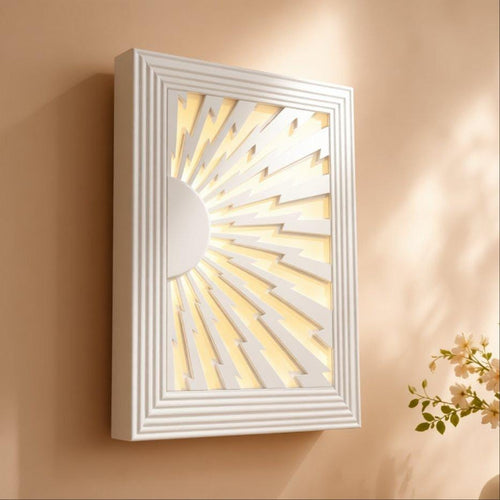
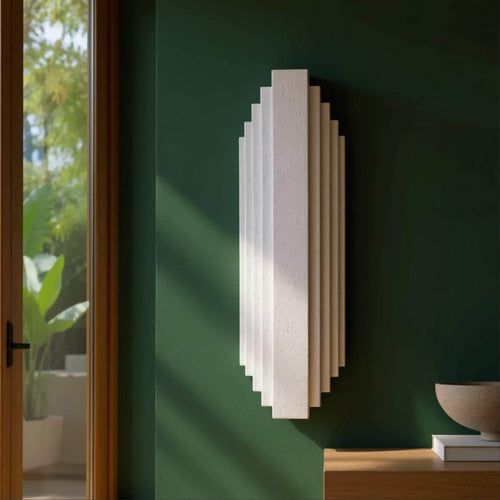
Plaster pieces that bring the curves and steps of these buildings indoors, each designed and hand-cast in Shrewsbury.
 Cosmos Ceiling Rose
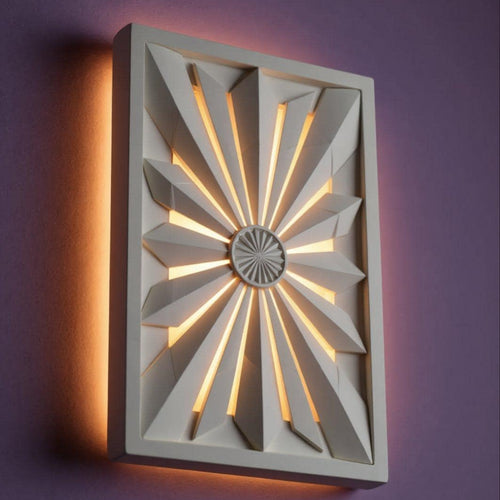
 Neo-Deco Wall Light
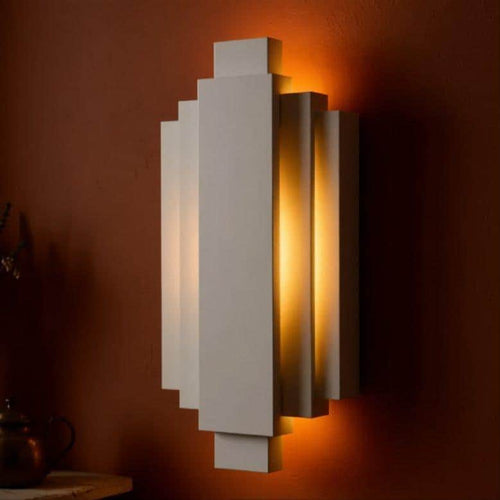
 Streamline Moderne Wall Light (14.5 in)
 Astoria Ceiling Rose
Bringing Art Deco Britain home
The curves of the Midland Hotel and the stepped lines of Battersea translate well indoors: a stepped ceiling rose such as the Cosmos Ceiling Rose, a fan-shaped wall light such as the Neo-Deco Wall Light or a simple overdoor. Our British 1930s interiors guide shows how the style reached ordinary homes, and our wall lights pair well with a plain painted wall. Every piece in our Art Deco collection is designed and hand-cast in Shrewsbury, and arrives as natural plaster ready to leave raw or paint to suit your room.
Good to know
Common questions
What is the best Art Deco building to visit in Britain?
For interiors, Eltham Palace in south-east London is hard to beat: English Heritage has restored the Courtaulds' 1930s rooms and the house is open to visitors. For seaside architecture, the De La Warr Pavilion in Bexhill is free to enter and open seven days a week.
Can you go inside the Hoover Building?
Not as a visitor. The Grade II* factory front in Perivale was converted into 66 homes in 2017 to 2018, so it is best seen from Western Avenue.
Are there Art Deco buildings in Scotland and Wales?
Yes. In Glasgow, the Luma Tower is a 1930s lamp factory with a glazed testing tower, now housing. In Wales, Penarth Pier Pavilion, built in 1929, is an early Art Deco ferro-concrete pavilion that now hosts exhibitions and events.
What do the listing grades mean?
In England, Grade I buildings are of exceptional interest (about 2.5% of listed buildings), Grade II* are particularly important (about 5.8%) and Grade II are of special interest (about 91.7%). Scotland uses categories A, B and C. Listing covers the whole building, including interiors.
Sources
References and further reading
Harvard style. Web pages were checked on the access date shown.
- amandabhslater (2023) Battersea A Power Station: Control Room A [Photograph]. Wikimedia Commons. CC BY-SA 2.0. Available at: commons.wikimedia.org/wiki/File:Battersea_A_Power_Station... (Accessed: 13 October 2026).
- Battersea Power Station (n.d.) Heritage: safeguarding our heritage. Available at: batterseapowerstation.co.uk/about/heritage-safeguarding-o... (Accessed: 13 October 2026).
- British Listed Buildings (n.d.) Broadcasting House, Westminster. Available at: britishlistedbuildings.co.uk/101265570 (Accessed: 13 October 2026).
- Coppins, M. (2022) Bexhill-on-Sea, De La Warr Pavilion [Photograph]. Wikimedia Commons. CC BY-SA 4.0. Available at: commons.wikimedia.org/wiki/File:Bexhill-on-Sea_-_De_La_Wa... (Accessed: 13 October 2026).
- De La Warr Pavilion (n.d.) Information and FAQs. Available at: www.dlwp.com/information-and-faqs/ (Accessed: 13 October 2026).
- De La Warr Pavilion (n.d.) Our heritage. Available at: www.dlwp.com/about-us/our-heritage/ (Accessed: 13 October 2026).
- Dezeen (2025) 'Eltham Palace', Art Deco Centenary, 20 March. Available at: www.dezeen.com/2025/03/20/eltham-palace-art-deco-centenary/ (Accessed: 13 October 2026).
- Ellis-Miller Architects (n.d.) The Hoover Building residential conversion. Available at: www.ellis-miller.com/commercial/the-hoover-building (Accessed: 13 October 2026).
- English Heritage (n.d.) Description of Eltham Palace. Available at: www.english-heritage.org.uk/visit/places/eltham-palace-an... (Accessed: 13 October 2026).
- English Heritage (n.d.) Eltham Palace and Gardens. Available at: www.english-heritage.org.uk/visit/places/eltham-palace-an... (Accessed: 13 October 2026).
- English Heritage (n.d.) History of Eltham Palace. Available at: www.english-heritage.org.uk/visit/places/eltham-palace-an... (Accessed: 13 October 2026).
- English Heritage (n.d.) The travels that shaped Eltham Palace [Video]. YouTube. Available at: www.youtube.com/watch?v=XEogIGOJYSI (Accessed: 13 October 2026).
- Historic England (n.d.) Battersea Power Station, List Entry 1357620. Available at: historicengland.org.uk/listing/the-list/list-entry/1357620 (Accessed: 13 October 2026).
- Historic England (n.d.) Coleton Fishacre, List Entry 1324859. Available at: historicengland.org.uk/listing/the-list/list-entry/1324859 (Accessed: 13 October 2026).
- Historic England (n.d.) Daily Express Building, List Entry 1218285. Available at: historicengland.org.uk/listing/the-list/list-entry/1218285 (Accessed: 13 October 2026).
- Historic England (n.d.) De La Warr Pavilion, List Entry 1352840. Available at: historicengland.org.uk/listing/the-list/list-entry/1352840 (Accessed: 13 October 2026).
- Historic England (n.d.) Eltham Palace, List Entry 1001410. Available at: historicengland.org.uk/listing/the-list/list-entry/1001410 (Accessed: 13 October 2026).
- Historic England (n.d.) Listed Buildings. Available at: historicengland.org.uk/listing/what-is-designation/listed... (Accessed: 13 October 2026).
- Historic England (n.d.) Main Front Block to Hoover Factory, List Entry 1079353. Available at: historicengland.org.uk/listing/the-list/list-entry/1079353 (Accessed: 13 October 2026).
- Historic England (n.d.) Midland Hotel, List Entry 1208988. Available at: historicengland.org.uk/listing/the-list/list-entry/1208988 (Accessed: 13 October 2026).
- Historic England (n.d.) Saltdean Lido, List Entry 1380905. Available at: historicengland.org.uk/listing/the-list/list-entry/1380905 (Accessed: 13 October 2026).
- Historic England (n.d.) The Daily Express Building, List Entry 1064659. Available at: historicengland.org.uk/listing/the-list/list-entry/1064659 (Accessed: 13 October 2026).
- Historic Environment Scotland (n.d.) Luma Tower, Shieldhall Road, LB33308. Available at: portal.historicenvironment.scot/designation/LB33308 (Accessed: 13 October 2026).
- Historic Environment Scotland (n.d.) What is listing?. Available at: www.historicenvironment.scot/advice-and-support/listing-s... (Accessed: 13 October 2026).
- Kanter, J. (2016) 'We went on the final public tour of the BBC's headquarters', Business Insider, 10 September. Available at: sg.finance.yahoo.com/news/went-final-public-tour-bbc-0938... (Accessed: 13 October 2026).
- Marathon (2024) The Entrance Hall at Eltham Palace [Photograph]. Geograph, via Wikimedia Commons. CC BY-SA 2.0. Available at: commons.wikimedia.org/wiki/File:The_Entrance_Hall_at_Elth... (Accessed: 13 October 2026).
- Midland Hotel Morecambe (n.d.) The Midland. Available at: www.midlandhotelmorecambe.com/ (Accessed: 13 October 2026).
- Munro, E. (2011) Hoover Building No. 3 [Photograph]. Wikimedia Commons. CC BY-SA 2.0. Available at: commons.wikimedia.org/wiki/File:Hoover_Building_No._3.jpg (Accessed: 13 October 2026).
- National Trust (n.d.) Coleton Fishacre. Available at: www.nationaltrust.org.uk/visit/devon/coleton-fishacre (Accessed: 13 October 2026).
- Nilfanion (2014) Midland Hotel in Morecambe, Lancashire [Photograph]. Wikimedia Commons. CC BY-SA 4.0. Available at: commons.wikimedia.org/wiki/File:Midland_Hotel_in_Morecamb... (Accessed: 13 October 2026).
- Noble, W. (2021) 'Fleet Street's Art Deco Express building will open to the public', Londonist, 26 October. Available at: londonist.com/london/news/fleet-street-s-art-deco-express... (Accessed: 13 October 2026).
- Penarth Pier Pavilion (n.d.) Penarth Pier Pavilion. Available at: www.penarthpavilion.co.uk/ (Accessed: 13 October 2026).
- Place North West (2019) 'Express Building restoration completes', 4 November. Available at: placenorthwest.co.uk/express-building-restoration-completes (Accessed: 13 October 2026).
- Royal Commission on the Ancient and Historical Monuments of Wales (n.d.) Penarth Pier, Coflein NPRN 34272. Available at: coflein.gov.uk/en/site/34272 (Accessed: 13 October 2026).
- Saltdean Lido (n.d.) Saltdean Lido. Available at: saltdeanlido.co.uk/ (Accessed: 13 October 2026).
- Sputzer, S. (2011) Express building, Manchester from Great Ancoats Street [Photograph]. Wikimedia Commons. CC BY 2.0. Available at: commons.wikimedia.org/wiki/File:Express_building,_Manches... (Accessed: 13 October 2026).
- Theatres Trust (n.d.) Pier Pavilion, Penarth. Available at: database.theatrestrust.org.uk/resources/theatres/show/101... (Accessed: 13 October 2026).
- Twentieth Century Society (n.d.) The Midland Hotel, Morecambe. Available at: c20society.org.uk/botm/the-midland-hotel-morecambe/ (Accessed: 13 October 2026).
- Victoria and Albert Museum (n.d.) Hotel foyer, Oliver Bernard. Available at: collections.vam.ac.uk/item/O297408/hotel-foyer-oliver-ber... (Accessed: 13 October 2026).
- WilkinsonEyre (2022) Battersea Power Station opens. Available at: wilkinsoneyre.com/news/battersea-power-station-opens (Accessed: 13 October 2026).
How to cite this article
van Locke, J. (2026) ‘Art Deco Britain: buildings to visit’, The Flare Journal. Flare Studio UK. Available at: https://flarestudio.uk/blogs/journal/art-deco-buildings-britain (Accessed: 17 October 2026).
Shop the style