

Art Deco wall lights: how to choose them for a 1930s home


Quick answer
Art Deco wall lights are built from bold geometric shapes, chiefly the fan, the stepped tier, the sunburst and the streamlined band, and most of them throw light up the wall rather than down. For a 1920s or 1930s home, choose the shape first, then the scale, then whether you need battery or mains power. Matt plaster versions can be painted to suit any scheme.
Art Deco takes its name from the Exposition Internationale des Arts Décoratifs et Industriels Modernes, held in Paris in 1925, where the style was first shown on a grand scale [2][1]. It became a major style across western Europe and the United States in the 1930s, which is why so many British semis, flats and cinemas built between the wars still carry its shapes [2]. This guide explains how to choose Art Deco wall lights that look right in those homes, and in modern ones too.
What makes a wall light Art Deco?
Encyclopaedia Britannica describes Art Deco as a style of simple, clean shapes, often streamlined, with geometric or stylised ornament such as sun rays and conventionalised foliage [2]. It drew on Cubism, the Bauhaus and Egyptian sources, and on an admiration for machines and machine-made things [2]. In a wall light that translates into four shapes you will see again and again: the fan, the stepped tier, the sunburst and the streamlined band.
Materials mattered too. Designers of the period used chrome, glass and new plastics such as Bakelite alongside luxurious natural materials [2]. Plaster belongs to the same story: it was the material of Deco ceilings and cornices, and it takes crisp geometric edges well. Our Art Deco motifs glossary explains each motif in more detail.
Which Art Deco shape suits which room?
| Shape | Where it works best |
|---|---|
| Fan | Halls, landings and stairs, where a soft upward spray of light makes a narrow space feel taller. |
| Stepped | Living rooms, either side of a chimney breast or a mirror, where a pair gives the symmetry Deco loved. |
| Sunburst | Bedrooms and feature walls, where one sunburst can be the star of the room. |
| Streamline | Kitchens, studies and modern flats; the rounded ends soften a plain wall. |

- 1Stepped top: each tier steps back, the ziggurat profile borrowed from 1930s architecture.
- 2The edges of the steps catch the light and throw fine bands of shadow.
- 3A matt plaster face diffuses light softly and takes ordinary emulsion.
- 4A deep wall colour, here a dark green, makes white plaster stand out.
- 5Keep the console below uncluttered so the light has somewhere to land.
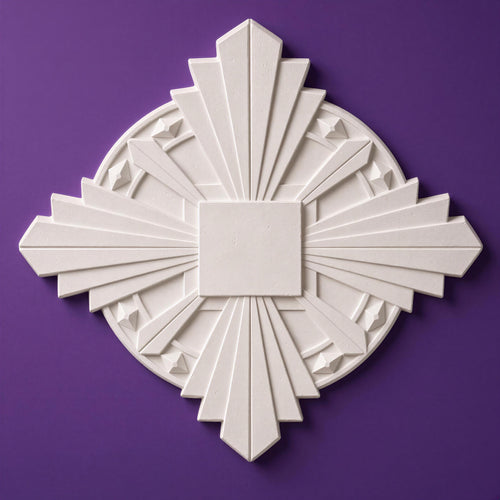
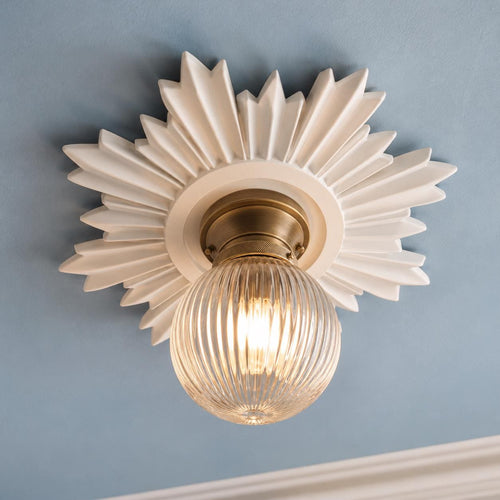
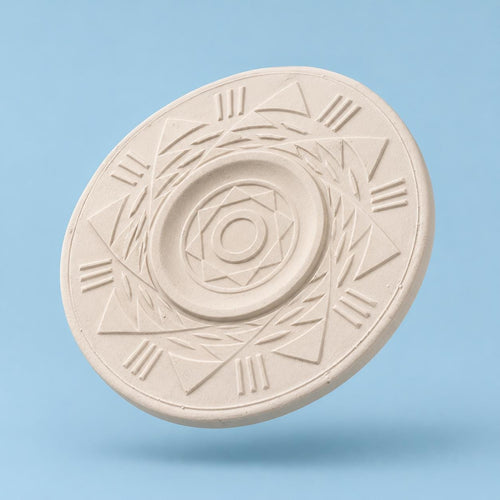
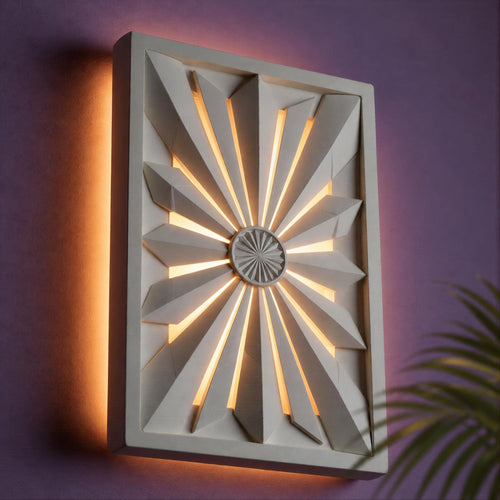
These are our own Art Deco wall lights, hand-cast in plaster in Shrewsbury. Each comes as shade only, battery LED with a remote, or UK mains hardwired.


How high should Art Deco wall lights go?
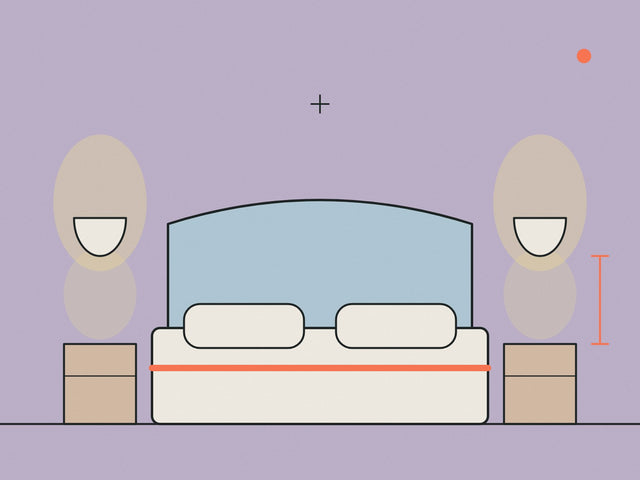
A common starting point is around 1.6 to 1.8 metres from the floor to the centre of the fitting, which keeps the light above the eye line of people sitting down [7]. In a pair, set both at exactly the same height and centre them on the feature between them, whether that is a fireplace, a mirror or a bed. Our guide to wall light height and spacing goes into the details, room by room.
Uplighting shapes need space above them. Leave at least a hand's width between the top of a fan or sunburst and the cornice or ceiling, so the glow can spread instead of pooling in a hot spot.
Battery or hardwired: which should you choose?
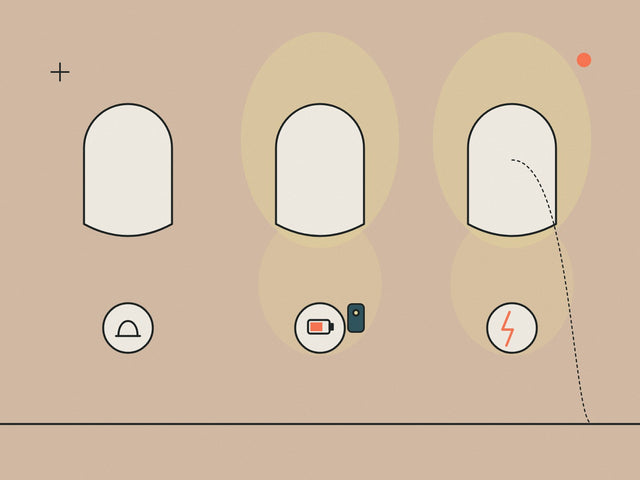
Battery LED versions need no wiring, which makes them a good fit for rented homes, for walls with no cable in the right place, and for trying a position before you commit. Mains versions are permanent and can go on a wall switch or a dimmer. In England and Wales, new lighting circuits and other notifiable electrical work fall under Part P of the Building Regulations, so hardwired fittings should be installed by a registered electrician [5]. We compare the options in plug-in, battery or hardwired wall lights.
What bulb and colour temperature suit Art Deco lighting?
Warm white is the closest match to the glow of the 1930s. The Energy Saving Trust describes very warm white bulbs, about 2700K, as suiting living rooms and bedrooms, and recommends judging brightness in lumens rather than watts [4]. About 470 lumens replaces an old 40-watt bulb and 800 lumens a 60-watt [4]. For more, see what bulb to use in a plaster wall light.
Eltham Palace
Stephen and Virginia Courtauld lease Eltham and commission Seely & Paget to build a modern house [3].
Restoration
English Heritage takes over the whole Eltham site and begins restoring the 1930s rooms [3].
LED and battery
Warm LED bulbs and battery options make period-style wall lights easy to fit [4].
How should you paint an Art Deco wall light?
Leave it chalk white against a deep wall for maximum contrast, or paint it the wall colour so only the shape and its shadows show. Period schemes leaned towards cream, pale green, peach and soft gold, set against darker woodwork. Our pieces arrive as natural plaster: seal with a thinned mist coat, then use ordinary matt emulsion. Choosing the best paint for plaster details explains why matt keeps the edges crisp.
If you want to understand how Art Deco light and ornament worked in a real 1930s house, this episode of The Country House Podcast is about Eltham Palace, the Courtaulds' London home [6].
Video: The Country House Podcast, “Eltham Palace: An Art Deco icon | The Country House Podcast | Ep. 70”, via YouTube.
Where can you see Art Deco lighting in Britain?
Eltham Palace in south-east London is the best place to start. The Courtaulds leased the site in 1933 and built a modern house beside the medieval great hall, full of the latest technology, from mains-regulated clocks to a loudspeaker system for playing records [3]. English Heritage has been restoring the 1930s interiors since it took over the site in 1995 [3]. For a wider tour, read our guides to Art Deco buildings in Britain and Odeon cinemas.
| Term | What it means |
|---|---|
| Art Deco | The decorative style named after the 1925 Paris exhibition [2]. |
| Stepped (ziggurat) | A profile that steps back in tiers, borrowed from 1920s and 1930s skyscrapers. |
| Sunburst | Rays spreading from a half-sun, a favourite Deco motif [2]. |
| Streamline Moderne | The rounded, horizontal late phase of Deco; see our Streamline Moderne guide. |
| Uplighter | A wall light that sends most of its light up the wall and onto the ceiling. |
| Bakelite | An early plastic used for switches and fittings in the period [2]. |
Good to know
Common questions
What is an Art Deco wall light?
A wall light in the geometric style of the 1920s and 1930s, usually a fan, stepped, sunburst or streamlined shape, often throwing light up the wall.
Do Art Deco wall lights suit a modern home?
Yes. Their clean geometric outlines sit well in plain modern rooms, especially painted to match the wall so only the shape shows.
How high should Art Deco wall lights be?
A good starting point is 1.6 to 1.8 metres from the floor to the centre of the light, with pairs at exactly the same height.
Can I get Art Deco wall lights without wiring?
Yes. Battery LED versions with a remote need no wiring, which suits rented homes and walls without a cable.
What colour bulb suits Art Deco lighting?
Very warm white, about 2700K, which is closest to the warm glow of 1930s lighting.
Sources
References and further reading
Harvard style. Web pages were checked on the access date shown.
- Benton, C., Benton, T. and Wood, G. (eds) (2003) Art Deco 1910–1939. London: V&A Publications.
- Encyclopaedia Britannica (n.d.) Art Deco. Available at: www.britannica.com/art/Art-Deco (Accessed: 10 November 2026).
- English Heritage (n.d.) History of Eltham Palace and Gardens. Available at: www.english-heritage.org.uk/visit/places/eltham-palace-an... (Accessed: 13 October 2026).
- Energy Saving Trust (n.d.) Energy saving light bulbs and lighting. Available at: energysavingtrust.org.uk/advice/lighting/ (Accessed: 8 October 2026).
- Ministry of Housing, Communities and Local Government (2013) Electrical safety: Approved Document P. Available at: www.gov.uk/government/publications/electrical-safety-appr... (Accessed: 8 October 2026).
- The Country House Podcast (n.d.) Eltham Palace: An Art Deco icon | The Country House Podcast | Ep. 70 [Video]. YouTube. Available at: www.youtube.com/watch?v=xqSVf2Pu10E (Accessed: 10 November 2026).
- Innes, M. (2012) Lighting for Interior Design. London: Laurence King.
- Hillier, B. (1968) Art Deco of the 20s and 30s. London: Studio Vista.
How to cite this article
van Locke, J. (2026) ‘Art Deco wall lights: how to choose them for a 1930s home’, The Flare Journal. Flare Studio UK. Available at: https://flarestudio.uk/blogs/journal/art-deco-wall-lights-guide (Accessed: 12 November 2026).
Shop the style


Conversation
Join the conversation
Questions about the history, a room you are planning, or a piece you have seen in the wild? Leave a comment and Joseph will reply.