Coastal interiors: Regency resorts, beach huts and the scallop shell


Coastal style is the look of a house by the sea: pale walls, plenty of daylight, painted timber and a few things brought back from the beach. In Britain it grew out of real places, from the cream Regency terraces of Brighton and Hove to the Edwardian villas of Frinton and the painted beach huts along the shore. In America it took a different turn in the shingle-covered houses of New England. This guide covers where the style came from, its colours and details, four real places annotated, and how to get the look in any home.
What is coastal style?
Coastal style is a light, relaxed way of decorating that borrows its colours, materials and motifs from the seaside: sand, sea and sky, painted wood, natural textures and the scallop shell. It began with the British seaside resort. In the 1750s Dr Richard Russell promoted sea bathing for health, and his treatise on sea water, first published in Latin in 1750, helped turn the fishing village of Brighthelmstone into Brighton. The Prince of Wales, later George IV, first visited in 1783, and his Royal Pavilion was built in stages between 1787 and 1822, first by Henry Holland and then remodelled by John Nash.
Kemp Town was laid out in 1823 by the architects Amon Wilds and Charles Busby for Thomas Read Kemp, and Brunswick Town in Hove followed in the same decade. These estates gave the resort its look: stucco terraces with bow fronts and balconies built for looking at the sea. Brighton and Hove’s own paint guidance explains that Regency stucco was coloured to resemble fashionable Portland or Bath stone, which is why the seafront still reads as a long run of creams.
Later resorts softened the formula. At Frinton-on-Sea in Essex, Richard Powell Cooper bought land in 1893 and allowed only costly detached houses on large plots, in red brick or lightly painted render with balconies, porches and gables. Across the Atlantic, the American shingle style, which flourished from about 1879 to 1890, wrapped seaside houses entirely in wooden shingles, with open plans and open porches. Modern coastal style mixes all three. For the earlier English side of the shell motif, read our guide to Rococo in Britain.
The coastal palette
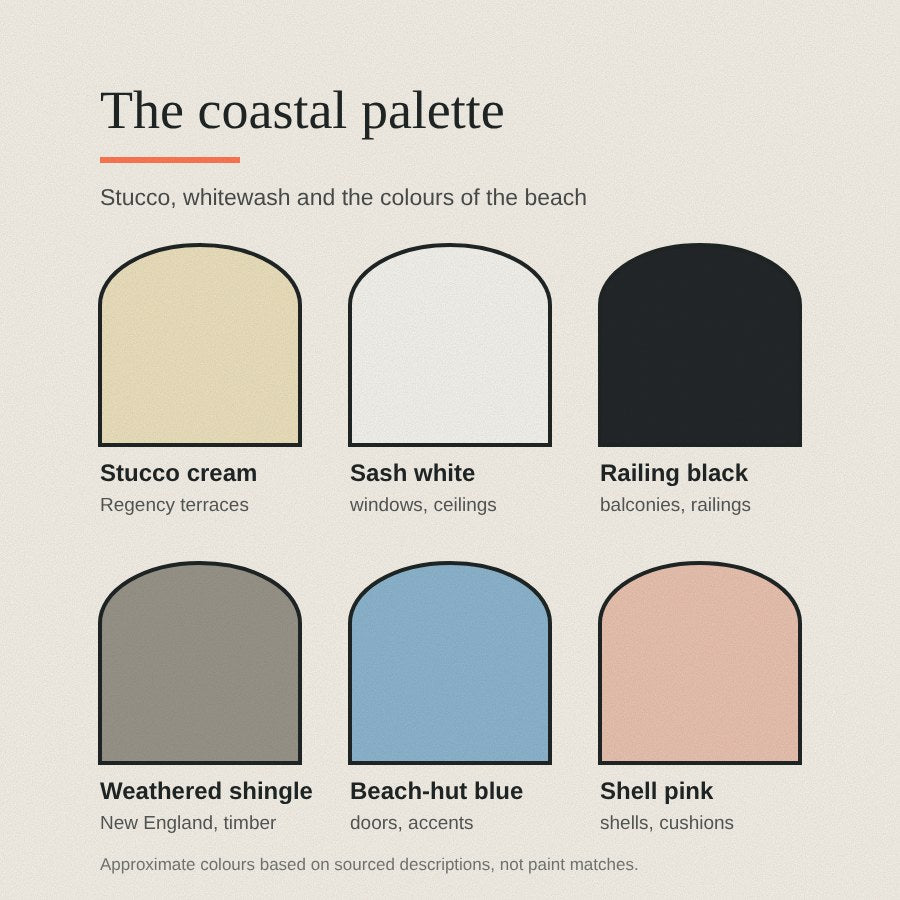
Start with the base. Brighton and Hove’s guidance recommends mostly pale whites and creams for its nineteenth-century painted facades, with railings in dark colours, often black, and windows in white or the colour of the facade. The Brunswick estate is still repainted every five years in a single cream. That gives three reliable colours: stucco cream, sash white and railing black.
Then add the beach. Weathered timber and shingle greys come from New England houses clad entirely in wood, while beach huts supply the brights: sky blue, cobalt, butter yellow and soft pink. Use the brights in small amounts against pale walls. Our guide to heritage colour palettes helps with choosing a cream.
Signature motifs, shapes and materials
The scallop shell. The most recognisable coastal motif, and much older than the seaside holiday. At A La Ronde in Devon, the Parminter cousins used real shells to decorate rooms and a whole Shell Gallery. Our article on the scallop shell in design traces the full story.
The bow and the balcony. Regency seaside houses curve outwards to catch the view, with iron balconies along the first floor. Indoors, a bay window with a seat is the same idea at room scale.
Painted timber. Tongue-and-groove boards, window seats and simple panelling, painted white or a pale colour, recall beach huts and boathouses.
Natural textures. Bare or limed floorboards, rope, rush, linen and woven patterns.
Stripes and simple pattern. Ticking and deckchair stripes, plain checks and small sprigs rather than large formal damasks.
The details that define a coastal room
- Ceiling. White or the palest cream, to bounce light around. A simple ceiling rose (ceiling medallion) in a shell, rope or woven pattern adds a quiet focal point.
- Walls. Cream, warm white or a soft blue-green, often with painted panelling or tongue-and-groove to dado height.
- Windows. White-painted sashes, a bay with a window seat if you have one, and light curtains in linen or ticking.
- Floors. Bare boards, painted or limed, with a flat-weave or striped rug.
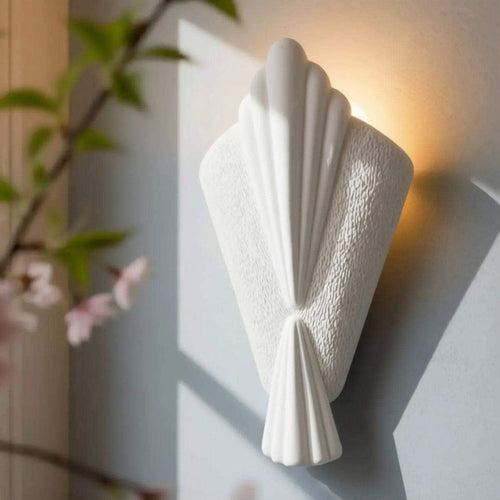
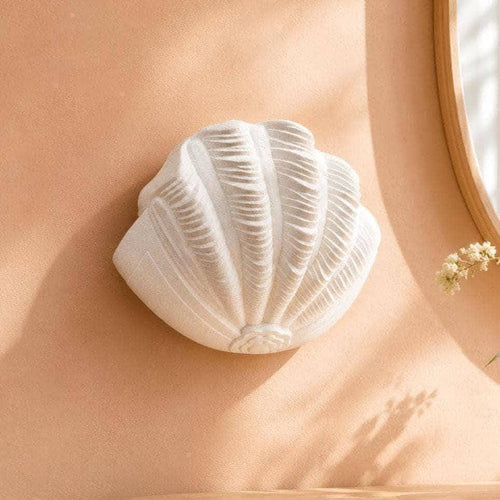
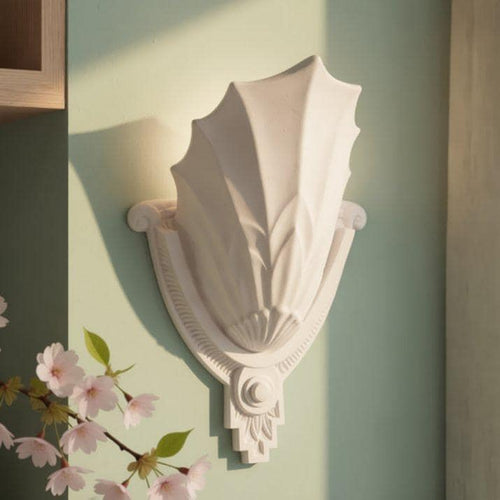
- Lighting. Soft, low light from wall lights and lamps rather than one bright overhead source. A shell-shaped wall sconce is the most direct coastal reference.
- Furniture. Painted or pale wood, cane and rattan, and a few antiques with simple lines.
- Textiles. Linen, cotton and wool in stripes and plain colours, in sea blues, sand and white.
Real coastal rooms, annotated
Here are four real places, from a Regency terrace in Hove to a shingle-style house in Rhode Island. Each photograph is numbered with the features worth noticing. Where we have sampled colours, they come from the photograph itself, so treat them as a guide rather than a paint match.
1. Brunswick Square, Hove (Regency resort)
The west side of Brunswick Square, part of the Brunswick estate that the architect Charles Busby laid out in the 1820s. The Regency Town House, a museum of Brighton and Hove life between the 1780s and 1840s, occupies number 13 on this square. One cream, one black, and a curve repeated all the way to the sea.

- Full-height bow front, curving out towards the sea view
- Ionic capital at the top of a giant column
- Tall sash window, divided into two large panes
- Black-painted iron balcony that follows the curve of the bow
- Cream-painted stucco: one colour for the whole terrace
- Fluted column running through two storeys
- The same bow and balcony repeated down the terrace
- Black railings to the front area
Colours in this photo:
Railing black #14120B
Take from it: Keep the background pale and even, and let curves and slim black ironwork do the decorating. Indoors, that means cream or warm white walls, a white ceiling and a few dark, fine-lined accents.
2. A La Ronde, Exmouth (shells indoors)
A reception room at A La Ronde, the sixteen-sided house that the cousins Jane and Mary Parminter built in 1796 on a hilltop above the Exe estuary. The National Trust describes its interiors as decorated by hand with shell and feather work.

- Seashells piled in the fireplace and on its shelf
- Border studded with shells framing the chimneypiece
- Pale blue-green walls
- Brass light fitting with two glass shades
- Oval portrait in a gilt frame
- Small display table holding shells
- Octagonal table on a single turned stem
- Shell-studded edging around the shelved recess
Take from it: Shells work best as a collection with a frame around it. Group them in one place, such as a fireplace, a shelf or a single wall light, rather than scattering them through the room.
3. Beach huts at Old Felixstowe (colour)
Not a room, but the source of most British coastal colour. Felixstowe is credited with pioneering purpose-built beach huts in the 1880s, which in time replaced the old wheeled bathing machines. The row is a ready-made palette.

- Huts set in a tight row along the slope above the beach
- Soft pink
- Strong cobalt blue
- Pale sky blue
- White trim on the gables, some cut in a scalloped edge
- Plain grey roofs that let the colours stand out
- Timber groynes running into the sea
- Shingle and sand beach
- More huts on the lower promenade
Colours in this photo:
Hut pink #CA7E7BHut yellow #EDDB97Hut blue #3F6895Pale blue #A1B8C1Shingle sand #926F50
Take from it: Bright colour looks right when it is set against something plain. Use a hut colour on one door, a painted chair or a window seat, and keep the walls around it white or sandy.
4. Isaac Bell House, Newport, Rhode Island (New England)
A bay window in the Isaac Bell House, built in 1883 by McKim, Mead and White for the cotton broker Isaac Bell. The Preservation Society of Newport County calls it one of the finest surviving shingle-style houses in America, and notes its open layout, natural materials and minimal furnishings.

- Open lattice frieze across the top of the bay
- Wall panels with a woven, basket-like pattern
- Three sash windows with many small panes
- Curved window seat painted white
- Bare wooden floorboards
- Shelf on slender turned posts above the fireplace
- Marble fireplace surround
- Panel of small-patterned wallpaper
Colours in this photo:
Painted white #D2D6DFMarble #473433
Take from it: Natural textures do the work here: woven pattern, plain boards and painted timber. Add a window seat or a built-in bench and the room feels coastal without a single anchor or stripe.
Where to see the seaside indoors
A La Ronde and the Regency Town House in Hove both appear above. Two more places on the Kent coast show how differently the sea can shape a home.
Prospect Cottage, Dungeness
The film-maker Derek Jarman bought this fisherman’s cottage on the shingle at Dungeness in the spring of 1986. Art Fund describes pitch-black walls with daffodil-yellow windows and doors. Around it Jarman made a garden with no walls or fences, using flints he collected from the shore, driftwood and seaside plants such as sea kale. Inside are dark wooden walls, glass-fronted bookshelves and doors with windows he etched with flowers and poems. After a 2020 campaign supported by more than 8,000 members of the public, the cottage and its contents were secured for the public, with Creative Folkestone as custodian. Visits are guided, last 40 minutes and must be booked ahead.

Art Fund’s short film about the cottage gives a feel for the place, the light and the garden in a way a single photograph cannot.
Video: Art Fund, "Derek Jarman's Prospect Cottage", via YouTube.
Shell Grotto, Margate
Discovered in 1835, this Grade I listed grotto runs for about 70 feet underground, and its walls are lined with around 4.6 million shells. Nobody knows who made it, when or why. It is the most complete lesson in Britain in what shells can do as pattern: stars, flowers and borders built from thousands of small pieces.

Take from them: Two very different coastal looks: one of dark timber, bright paint and a wild garden, the other of pure pattern. At home, one strongly painted window frame or a single shell shape repeated is truer to both than a room of nautical props. For a shell repeated in plaster, see our Hollywood Scallop Wall Light or the Scallop Wall Light.
How to get the coastal look
- Pick one strand. Regency cream and black for a townhouse, Edwardian villa colours for a family house, or New England timber and white for a relaxed living room.
- Keep the ceiling light. Paint it white or pale cream and choose a small ceiling rose with a gentle pattern. It suits living rooms, bedrooms and hallways. See how to paint a plaster ceiling rose if you want to pick out the detail in a second colour.
- Light from the walls. A pair of shell wall lights either side of a bed, a mirror or a fireplace gives a soft, low glow. Our fitting guide explains how to put up a ceiling rose or wall light.
- Borrow one beach-hut colour. Paint a front door, a kitchen chair or the inside of a cupboard in sky blue, yellow or pink, and keep everything around it calm.
- Choose texture over theme. Linen, rush, rope and bare boards say coast more convincingly than signs, anchors or painted slogans.
- Edit your shells. Display a few good ones together on a mantelpiece or shelf, as A La Ronde does in its fireplace.
Common mistakes to avoid
- The theme-park room. Lifebuoys, anchors, rope knots and seagull prints all at once look like a seafront café. One or two references are enough.
- Cold whites everywhere. Brilliant white walls in a north-facing room can feel chilly. Warmer creams, like Regency stucco, are kinder.
- Heavy ornament overhead. A deep, leafy Victorian rose fights with plain painted wood and light fabrics. Keep the ceiling detail simple.
- Ignoring the house. A Victorian terrace, an Edwardian villa and a new-build flat each suit a different strand of coastal style. Let the architecture lead, as our Edwardian interiors guide explains for houses of that period.
Shop the look
Shell and woven designs in natural plaster, ready to leave chalk white or paint in a beach-hut colour.
 Scallop Shell Wall Light
 Coastal Scallop Wall Light
 Seaside Cottage Ceiling Rose
 Hollywood Scallop Wall Light
Coastal ceiling roses, wall lights and plaster details
For a direct shell reference, our Scallop Shell Wall Light and Coastal Scallop Wall Light suit bedrooms, bathrooms and hallways, while the Victorian Shell Wall Light sits naturally in a period seaside house. Overhead, the Seaside Cottage Ceiling Rose brings a woven pattern to a pale ceiling. Every piece in our Coastal collection is designed and hand-cast in Shrewsbury, and arrives as natural plaster ready to leave raw or paint to suit your room.
Good to know
Common questions
What colours are used in coastal interiors?
A pale base of cream, warm white and soft blue-green, with black for fine metalwork and weathered greys and sandy tones from timber. Beach-hut colours such as sky blue, yellow and soft pink work best in small amounts on a door, a chair or cushions.
How do I make a room look coastal without it feeling like a theme?
Choose texture over objects: painted timber, linen, rush and bare boards. Keep walls and ceiling light, add one or two shell or stripe references, and group any shells or pebbles together in one place.
What ceiling rose and lighting suit a coastal room?
A small, simple ceiling rose with a gentle pattern, painted the ceiling colour, keeps the ceiling light. For lighting, use soft wall lights and lamps; a pair of shell wall lights either side of a bed, mirror or fireplace is the most direct coastal touch.
Sources
References and further reading
Harvard style. Web pages were checked on the access date shown.
- Brighton & Hove City Council (2026) Brunswick Square and Terrace re-painting programme. Available at: design.brighton-hove.gov.uk/news/2026/brunswick-square-an... (Accessed: 12 October 2026).
- Brighton & Hove City Council (n.d.) External paint finishes and colours (Supplementary Planning Guidance SPGBH 2). Available at: design.brighton-hove.gov.uk/sites/default/files/migrated/... (Accessed: 12 October 2026).
- Country Life (n.d.) The remarkable tale of the bathing machine. Available at: www.countrylife.co.uk/out-and-about/the-remarkable-tale-o... (Accessed: 12 October 2026).
- Dobraszczyk, P. (n.d.) 'Seeing and being seen: seaside balconies', Ragpicking History. Available at: www.ragpickinghistory.co.uk/post/seeing-and-being-seen-se... (Accessed: 12 October 2026).
- Encyclopaedia Britannica (n.d.) Royal Pavilion. Available at: www.britannica.com/place/Royal-Pavilion (Accessed: 12 October 2026).
- Encyclopaedia Britannica (n.d.) Shingle style. Available at: www.britannica.com/art/Shingle-style (Accessed: 12 October 2026).
- Hassocks5489 (2012) Detail of West Side of Brunswick Square, Hove (January 2012) [Photograph]. Wikimedia Commons. CC0. Available at: commons.wikimedia.org/wiki/File:Detail_of_West_Side_of_Br... (Accessed: 12 October 2026).
- Historic England (1995) Kemp Town Enclosures, National Heritage List for England, list entry 1001313. Available at: historicengland.org.uk/listing/the-list/list-entry/1001313 (Accessed: 12 October 2026).
- Jack1956 (2019) A la Ronde shells [Photograph]. Wikimedia Commons. CC BY-SA 4.0. Available at: commons.wikimedia.org/wiki/File:A_la_Ronde_shells.jpg (Accessed: 12 October 2026).
- Mortimer, S. (2020) Beach huts and the beach at Old Felixstowe [Photograph]. Geograph, via Wikimedia Commons. CC BY-SA 2.0. Available at: commons.wikimedia.org/wiki/File:Beach_huts_and_the_beach_... (Accessed: 12 October 2026).
- National Trust (n.d.) A La Ronde. Available at: www.nationaltrust.org.uk/visit/devon/a-la-ronde (Accessed: 12 October 2026).
- Preservation Society of Newport County (n.d.) Isaac Bell House: history. Available at: www.newportmansions.org/mansions-and-gardens/isaac-bell-h... (Accessed: 12 October 2026).
- Reddeleon (2025) Isaac Bell House bay window interior [Photograph]. Wikimedia Commons. CC0. Available at: commons.wikimedia.org/wiki/File:Isaac_Bell_House_bay_wind... (Accessed: 12 October 2026).
- Regency Town House (n.d.) About. Available at: rth.org.uk/about (Accessed: 12 October 2026).
- Rotondi, J.P. (n.d.) 'How the sea cure created the beach resort', History.com. Available at: www.history.com/articles/sea-cure-beach-resort (Accessed: 12 October 2026).
- Tendring District Council (n.d.) Frinton and Walton Conservation Area Character Appraisal and Management Plan. Available at: tdcdemocracy.tendringdc.gov.uk/documents/s68824/A7%20Appe... (Accessed: 12 October 2026).
- Art Fund (2020) Creativity unbound: the story of Derek Jarman's Prospect Cottage. Available at: www.artfund.org/our-purpose/news/the-story-of-derek-jarma... (Accessed: 13 October 2026).
- Creative Folkestone (n.d.) Prospect Cottage. Available at: www.creativefolkestone.org.uk/prospect-cottage/ (Accessed: 13 October 2026).
- Shell Grotto (n.d.) The Shell Grotto, Margate. Available at: shellgrotto.co.uk/ (Accessed: 13 October 2026).
- Art Fund (n.d.) Derek Jarman's Prospect Cottage [Video]. YouTube. Available at: www.youtube.com/watch?v=rJib1-mJL3U (Accessed: 13 October 2026).
- Doyle of London (2025) Prospect Cottage, Dungeness (South Face - 01) [Photograph]. Wikimedia Commons. CC BY-SA 4.0. Available at: commons.wikimedia.org/wiki/File:Prospect_Cottage,_Dungene... (Accessed: 13 October 2026).
- No Swan So Fine (2021) Shell Grotto, Margate, November 2021 10 [Photograph]. Wikimedia Commons. CC BY-SA 4.0. Available at: commons.wikimedia.org/wiki/File:Shell_Grotto,_Margate,_No... (Accessed: 13 October 2026).
How to cite this article
van Locke, J. (2026) ‘Coastal interiors: Regency resorts, beach huts and the scallop shell’, The Flare Journal. Flare Studio UK. Available at: https://flarestudio.uk/blogs/journal/coastal-style-guide (Accessed: 17 October 2026).
Shop the style